
Home Extension Cost Australia: 2026 Price Guide & Cost Calculator
In Australia, a standard ground floor home extension cost ranges from $2,500 to $4,500 per m², while second-storey additions cost between $3,800 and $7,000+ per m². For a typical 50m² rear ground-floor addition, homeowners should budget between $140,000 and $225,000 for standard finishes, or up to $350,000+ for high-end structural works and wet area inclusions.
Get a Building Quote TodayAverage Cost of Home Extension in Australia per m2
Understanding the baseline average cost of home extension projects requires looking at square metre rates across different structural scope levels. Builders in Australia quote primary construction on a per square metre basis before layering in fixtures, structural engineering, and wet area plumbing.
The house extension cost per m2 australia wide currently ranges from $2,000 to $4,500 per m² for straightforward ground-floor additions. However, if your project involves high-end architectural finishes, complex structural steel, or second-storey building works, rates quickly climb to $5,500 to $8,000+ per m².
Average Ground Floor Extension: $2,500 - $4,500 per m²
Average Second Storey Addition: $3,800 - $7,000+ per m²
When calculating how much does it cost to extend a house, you must differentiate between “dry space” (living rooms, bedrooms, home offices) and “wet space” (kitchens, bathrooms, laundries). Dry space extensions sit at the lower end of the pricing spectrum, whereas wet areas require extensive plumbing, waterproofing, tiling, and trade coordination.
Dry Space Base Rate: $2,200 - $3,500 per m²
Wet Space Base Rate: $4,500 - $8,500+ per m²
Ground Floor Extension Costs per Square Metre
A ground-floor expansion remains the most popular home extension option across Australian suburban blocks. Ground-floor builds require site excavation, concrete slab pouring or subfloor timber framing, and direct tie-ins to existing brickwork and roofing.
For standard quality materials, such as concrete roof tiles, timber clad or brick veneer walls, and standard aluminium window frames, expect extension costs per square metre to sit between $2,800 and $4,000. Higher-grade architectural designs featuring floor-to-ceiling double-glazed glass, polished concrete slabs, and custom timber joinery pushed extension cost per sqm rates to $4,500 – $6,500+.
Second Storey Addition Costs per Square Metre
Building vertically is significantly more expensive than spreading outward. A second-storey addition requires structural propping, temporary weatherproofing, roof removal, staircase installation, and foundation underpinning.
On average, a second-storey build carries a 30% to 50% price premium over ground-floor square metre rates. Standard upper-level building costs for an extension sit between $3,800 and $5,500 per m², while luxury master suites with upper-floor retreats reach $8,000 per m².
The Cost of a 50m2 Extension vs Small Extensions
The cost of 50m2 extension projects represents the sweet spot for many growing Australian families. A 50-square-metre footprint allows for an open-plan kitchen and dining expansion, or a large master suite accompanied by a living area.
A basic 50m² ground-floor cost to extend starts around $140,000 for basic shell construction and standard finishes. However, if that 50m² footprint includes a brand-new kitchen and a luxury bathroom, total project fees frequently settle between $225,000 and $325,000.
Conversely, a small extension cost (such as a 15m² to 25m² single-room pushout) incurs higher relative overheads. Fixed preliminary expenses, such as council permits, site setup, scaffolding, and delivery fees are spread across fewer square metres, pushing the effective rate per square metre up by 15% to 25%.
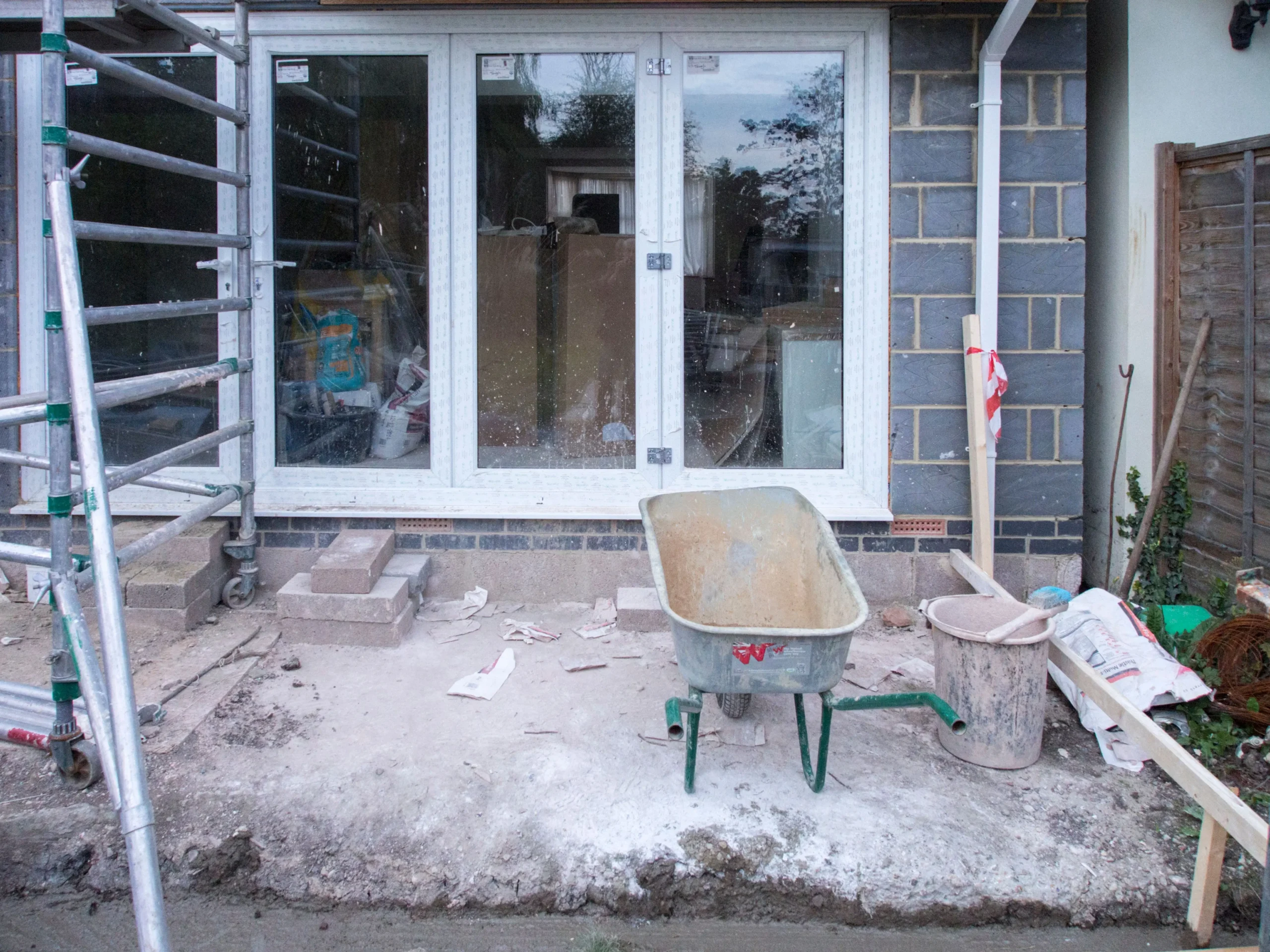
Home Extension Cost Matrix Table
To help you compare home extensions prices across various sizes and finish grades, the matrix below outlines realistic budgeting expectations for Australian residential properties in 2026.
| Extension Type & Footprint | Basic / Budget Finish | Mid-Range Finish | Luxury / High-End Finish | Average Cost Range per m² |
| Small Ground Floor (30m²) | $84,000 – $110,000 | $120,000 – $150,000 | $165,000 – $220,000+ | $2,800 – $7,300/m² |
| Medium Ground Floor (50m²) | $140,000 – $175,000 | $185,000 – $235,000 | $260,000 – $350,000+ | $2,800 – $7,000/m² |
| Large Ground Floor (80m²) | $224,000 – $280,000 | $295,000 – $370,000 | $400,000 – $560,000+ | $2,800 – $7,000/m² |
| Second Storey Addition (50m²) | $190,000 – $235,000 | $245,000 – $310,000 | $340,000 – $425,000+ | $3,800 – $8,500/m² |
| Second Storey Addition (80m²) | $304,000 – $380,000 | $390,000 – $490,000 | $530,000 – $680,000+ | $3,800 – $8,500/m² |
| Detached Granny Flat (60m²) | $120,000 – $150,000 | $160,000 – $210,000 | $230,000 – $310,000+ | $2,000 – $5,100/m² |
Note: Baseline rates assume standard site conditions with flat access. High-end finishes include premium joinery, engineered timber floors, stone benchtop surfaces, high-performance double glazing, and custom architectural details.
Specific Room Extension Costs: Master Bedrooms, Living Rooms & Wet Areas
The room type you choose to construct drastically shifts overall extension build costs. Unplumbed living spaces cost far less than complex wet zone builds.
Living Room Extension: $2,500 - $4,200 per m²
Master Suite with Walk-In Robe: $3,000 - $4,800 per m²
Master Suite + High-End Ensuite: $4,500 - $6,500 per m²
Kitchen & Living Room Combination: $4,200 - $6,800 per m²
Master Bedroom and Ensuite Extension Cost
A master bedroom and ensuite extension cost generally lands between $95,000 and $185,000 depending on wet area luxury levels. The bedroom portion itself represents simple framing, plasterboard, insulation, and wardrobes.
However, adding an ensuite bathroom introduces specialised trades including plumbers, waterproofers, tile layers, and electricians. Tiling materials, high-end tapware, glass shower screens, and floating vanities quickly add $25,000 to $45,000 to the isolated room budget.
Living Room Extension Cost & Open-Plan Living Upgrades
A dedicated living room extension cost typically ranges from $65,000 to $130,000 for a standard 25m² to 35m² expansion. Living room expansions are popular home extension ideas because they expand family lounge space without requiring complex plumbing lines.
However, creating modern open-plan living environments often requires removing load-bearing back walls. Inserting structural steel lintels or universal beams (I-beams) to span wide open spaces adds $8,000 to $25,000 in structural engineering and trade labour fees.
Wet Areas vs Dry Areas: Why Bathrooms and Kitchens Drive Up Building Costs
When reviewing building extension costs, wet area fixtures drive overall averages upward. Water supply integration, drainage runs, waterproofing compliance under Australian standards, and tile laying require multiple skilled licensed trades operating in tight spaces.
According to trade guidelines from the Housing Industry Association (HIA), trade labour rates for specialized wet area workers (plumbers and waterproofers) remain among the highest hourly construction costs in Australia. A single square metre of custom-tiled bathroom space can cost up to three times more than a square metre of carpeted bedroom space.
Location-Based Cost Variations Across Australia
Where you live heavily impacts home extension costs australia wide. Capital city pricing reflects local trade availability, land topography, council contribution fees, and site access constraints.
NSW (Sydney & Central Coast): $3,200 - $7,000 per m²
VIC (Melbourne & Geelong): $3,000 - $6,800 per m²
QLD (Brisbane & Gold Coast): $2,800 - $6,300 per m²
WA (Perth Metro): $2,800 - $6,300 per m²
SA (Adelaide): $2,500 - $5,700 per m²
House Extension Costs Sydney & Logistical Loadings
The average house extension cost sydney market wide sits at the top end of national figures. Baseline construction rates in New South Wales range from $3,200 to $4,600 per m² for mid-range builds, rising past $7,000 per m² for premium architectural additions.
Sydney Base Extension Rate: $3,200 - $4,600 per m²
Sydney High-End Extension Rate: $4,700 - $7,000+ per m²
In tightly packed areas like the Lower North Shore, Inner West, or Eastern Suburbs, contractors face severe operational friction. Narrow access lanes, strict street parking permits, and zero-lot-line boundaries mean trades must manually carry timber, steel, and concrete up tight driveways.
To offset lost working hours, high commercial parking permits, and traffic delays, local builders routinely add a 12% to 18% logistical loading surcharge to house extensions sydney prices.
How Much Does an Extension Cost Melbourne?
If you are researching how much does an extension cost melbourne homeowners should anticipate rates between $3,000 and $4,400 per m² for standard timber or brick extension work.
Inner-city Melbourne suburbs like Fitzroy, Carlton, and South Yarra feature strict heritage overlay restrictions. Complying with local council heritage codes requires matching period timber details, handmade masonry, and custom window profiles, which increases material expenses by 20% to 35%.
Additionally, Melbourne’s unstable “reactive clay” soils (particularly across the northern and western suburbs) demand deeper, reinforced concrete footing systems. Engineered bored piers can add $10,000 to $30,000 in foundation preparation before main wall construction begins.
Home Extensions Prices in Brisbane & South East Queensland
Subtropical climate conditions in Brisbane, the Sunshine Coast, and the Gold Coast favor lightweight, elevated construction. Home extensions prices in Queensland average $2,800 to $4,200 per m² for standard ground-floor work.
However, building in South East Queensland requires compliance with overland flow path regulations and high wind classification codes (N3/N4 ratings). Incorporating hurricane tie-downs, cyclonic roof framing, and flood-resilient lower-level materials adds necessary structural expense.
Extension Building Costs in Adelaide, Perth & Regional Australia
Adelaide and Perth enjoy slightly lower base construction costs, averaging $2,500 to $4,200 per m². Perth’s traditional preference for double-brick construction means home extension builds take longer, requiring skilled bricklayers rather than quick timber-frame assembly.
In regional Australian areas, lower land values are countered by higher freight costs for building supplies and limited trade availability. Mobilisation surcharges for specialized trades (such as structural engineers and master roofers) can increase regional project budgets by 10% to 25%.
Ground Floor Extension vs Second Storey Addition: Which Costs More?
Homeowners weighing how much are extensions on houses frequently debate whether to build out into the garden or construct upwards.
Ground Floor Extension 60m²: $168,000 - $270,000
Second Storey Addition 60m²: $228,000 - $330,000+
Cost Premium for Second Storey: +30% to +50%
Structural Foundation Works and Excavation
Ground-floor extensions home cost calculations are driven by ground preparation. Your builder must clear vegetation, excavate soil, install underground drainage, and pour a reinforced concrete slab or construct a suspended floor frame.
While earthworks are labor-intensive, they are straightforward. Ground-level equipment like mini-excavators can access flat blocks easily, keeping baseline preparation costs predictable compared to overhead structural engineering.
Roof Removal, Structural Propping, and Staircase Integration
Building upwards requires stripping back existing roofing, installing temporary scaffolding, weatherproofing open spaces during rain events, and reinforcing existing ground-floor walls.
Furthermore, you lose approximately 4m² to 6m² of existing ground-floor living space to accommodate a structural staircase. Fabricating and installing a compliant, high-quality staircase adds $15,000 to $40,000 to building an extension cost estimates.
Disruption and Temporary Accommodation Expenses
With a ground-floor extension, families can often remain living in the front or upper portion of the home during construction. The builder seals off work areas with plastic dust barriers and temporary external access points.
In contrast, a second-storey addition requires completely removing the roof, making the home unlivable for 3 to 6 months. Renting alternative housing in Australian capital cities adds an extra $15,000 to $35,000 in real-world “soft costs” that must be factored into your total budget.
Hidden Building Costs for an Extension You Must Budget For
When requesting quotes, many homeowners focus solely on the builder’s headline contract figure. However, real-world project blowouts occur due to hidden site fees, compliance mandates, and utility upgrades.
Design & Drafting Fees: $6,000 - $20,000
Engineering Reports: $3,000 - $8,000
Council & Certification Fees: $4,000 - $12,000
Site Preparation & Soil Testing: $2,500 - $6,000
Contingency Buffer (15% recommended): $20,000 - $50,000+
Soil Testing and Structural Site Works
Before structural drawings are finalised, a geotechnical engineer must conduct a soil test (soil bore testing). Highly reactive clay, uncompacted fill, or high water tables require deep piering, screw piles, or engineered concrete footings.
If your property sits on a sloped block, retaining walls, cut-and-fill excavation, and complex subfloor drainage systems can add $15,000 to $50,000+ to overall ground preparation fees.
Demolition and Hazardous Material Removal (Asbestos)
If your existing dwelling was constructed before 1990, cutting into existing eaves, wall linings, or wet areas often uncovers bonded asbestos sheeting.
Australian safety regulations strictly mandate that asbestos removal must be performed by licensed asbestos clearance technicians. Safe removal, air monitoring, and legal disposal fees typically range from $3,000 to $12,000, depending on the contamination footprint.
Electrical Board Upgrades and Plumbing Relocations
Adding new air conditioning units, induction cooktops, and multiple light circuits frequently overloads older 80-amp single-phase electrical switchboards. Upgrading your property to a 3-phase electrical supply with modern safety switches adds $3,500 to $7,500.
Similarly, if your new ground-floor slab covers existing sewer mains or stormwater pipes, local water authorities require you to “encase the sewer” in concrete or relocate pipework, costing between $4,000 and $15,000.
Landscaping, Fencing, and Site Restoration
Heavy construction machinery, timber delivery trucks, and trade traffic will disrupt your yard. Earth-moving equipment flattens lawns, damages concrete driveways, and often requires temporary boundary fence removal.
Restoring your outdoor spaces post-build, including new turf, boundary fencing, privacy screening, and basic concrete paving adds an extra $10,000 to $35,000 that is rarely included in a builder’s initial shell quote.
Professional Fees and Council Approvals
Before a single hammer strikes a nail, you will incur design, engineering, and statutory approval expenses. These preliminary soft costs typically total 8% to 15% of your overall construction budget.
Architectural Design and Drafting Fees
Designing functional home extensions ideas requires professional plans. A registered architect charges 8% to 15% of total construction costs for full service, including concept design, detailed working drawings, tender management, and site administration.
For budget-conscious homeowners, a licensed building designer or draftsperson charges flat fees ranging between $4,000 and $12,000 for construction drawings suitable for council submission.
Engineering and Specialist Consultant Reports
All structural changes, such as foundation designs, steel beam calculations, and roof truss designs must be certified by a qualified structural engineer ($2,500 to $6,000).
Depending on your site conditions, you may also require:
- Land Surveyor: Boundary check and contour mapping ($1,800 – $3,500)
- Energy Rating Consultant: BASIX Certificate in NSW or NatHERS 7-star assessment nationwide ($800 – $2,000)
- Arborist Report: Tree protection checks near construction boundaries ($1,200 – $2,800)
- Bushfire / Flood Assessment: BAL ratings for fire-prone zones ($1,500 – $3,500)
Compliance with national energy efficiency requirements is governed by the National Construction Code (ABCB), which sets clear insulation, glazed window performance, and thermal efficiency rules for new additions.
Development Application (DA) vs Complying Development Certificate (CDC)
In Australia, home extension approvals follow two main paths:
Pathway A: Complying Development Certificate (CDC)
- Private certifier approval
- Faster approval timeframes (2 to 6 weeks)
- Strict compliance with state planning codes
- Typical Cost: $3,000 - $7,000

Pathway B: Local Council Development Application (DA)
- Direct local council review
- Longer approval timeframes (8 to 24 weeks)
- Necessary for heritage zones, flood areas, or non-standard setbacks
- Typical Cost: $5,000 - $15,000+ (including council contribution levies)
How to Use a Home Extension Cost Calculator Formula
When evaluating cost home extension estimates, standard online widgets offer quick approximations. However, calculating a realistic budget estimate requires using a comprehensive manual formula.
To calculate your true expected investment, apply this simple equation:
Total Extension Budget = (Area in m² × Base Rate per m²) + Wet Area Surcharges + Professional Fees + Site Access Factor + 15% Contingency
Step-by-Step Example Calculation: 50m² Rear Addition
Let’s apply this formula to a typical real-world scenario: extending a home by 50m² in suburban Melbourne to create an open-plan lounge plus a new kitchen and guest bathroom.
- Base Building Shell (50m² × $3,500/m² mid-range rate): $175,000
- Wet Area Inclusions (New kitchen fitout + ensuite finishes): $45,000
- Professional Fees (Drafting, structural engineering, energy reports): $12,000
- Council & Certifier Approvals (CDC pathway): $4,500
- Site & Utility Adjustments (Switchboard upgrade + minor pipe relocation): $8,500
- Subtotal: $245,000
- 15% Unforeseen Contingency Buffer: $36,750
- Estimated Real-World Investment: $281,750
Using a comprehensive house extension cost calculator australia formula prevents unexpected budget shortfalls once construction begins.
Smart Strategies to Reduce Your Home Extension Costs
If your initial quotes exceed your available finance or equity, strategic adjustments can lower costs without sacrificing build quality.
Standardise Materials and Modular Off-the-Shelf Fixtures
Custom-made, bespoke building products significantly increase labor expenses. Opt for standard window frame sizes, modular kitchen cabinetry carcasses, off-the-shelf vanities, and standard-sized exterior cladding sheets.
Keeping timber framing dimensions to standard manufactured spans reduces material wastage and cuts down on custom cutting labor hours on site.
Minimise Changes to Load-Bearing Walls and Plumbing Lines
The most cost-effective home extension is one that connects to your existing dwelling with minimal structural disruption. Avoid cutting wide openings into primary load-bearing brick walls whenever possible.
Additionally, locate new ensuite bathrooms or laundries close to existing plumbing drainage stacks. Running long new plumbing lines across concrete footings rapidly increases trade expenses.
Choose a Ground-Floor Footprint Expansion Over Vertical Builds
Where land area permits, expanding outward across a ground-floor footprint is systematically cheaper than building upward. You eliminate expensive scaffolding rental, roof demolition, floor ceiling framing, and high-risk overhead work.
Extend vs Move: Evaluating the Financial Return
Homeowners facing space constraints often deliberate whether to sell and buy a larger property or extend their existing home.
Cost of Selling & Moving (Average $1.5M Property)
- Real Estate Agent Selling Fees (2%): $30,000
- Stamp Duty on New $1.8M Home: $82,000
- Conveyancing & Legal Fees: $3,500
- Removalists & Utility Setup: $4,500
- Total Wasted Relocation Friction: ~$120,000

Cost of Extending
- Entire budget goes directly into building capital equity.
- Zero funds wasted on state government stamp duty or sales commissions.
When you extend, every dollar spent improves your living standard while adding tangible market value to your asset. Industry guidelines from Master Builders Australia (MBA) highlight that well-designed ground-floor living expansions and extra bedroom additions yield strong equity returns upon resale.
Frequently Asked Questions About Home Extension Costs
How much does a small house extension cost in Australia?
A small ground-floor extension (15m² to 25m²), such as a single bedroom expansion or study, typically costs between $45,000 and $95,000 for standard finishes. If the small extension includes a wet area like a luxury bathroom or laundry, pricing increases to $75,000 to $130,000.
What is the average cost of a second storey addition?
A second-storey addition in Australia averages $3,800 to $7,000+ per m². Constructing a mid-sized 80m² second-storey addition featuring three bedrooms and a bathroom typically costs between $320,000 and $480,000.
Is it cheaper to extend out or build up?
Extending out across your ground floor is almost always 30% to 50% cheaper per square metre than building up. Second-storey additions require expensive structural wall strengthening, roof removal, complex scaffolding, and custom staircases.
How long does a home extension take to build?
A standard ground-floor extension typically takes 3 to 6 months from site preparation to handover. Second-storey additions and complex architectural builds take 6 to 12 months, excluding the 2 to 6 months required for planning approvals and architectural drafting.
Do I need council approval for a small ground floor extension?
Yes. Almost all structural extensions require formal building approval. Depending on your property zoning and design, you can gain approval via a Complying Development Certificate (CDC) through a private certifier in 2 to 6 weeks, or submit a Development Application (DA) directly to your local council.

One Comment
Comments are closed.