Real Estate Agent Commission in Australia: What You’ll Actually Pay
Many sellers accept the first commission rate quoted to them. They shake hands, sign the agreement, and spend the next few months quietly wondering if they’ve overpaid. There is no nationwide cap on agent commission rates in Australia; regulation focuses on disclosure and written agency agreements, which vary by state. Every agent sets their own fee, which means the only thing standing between you and an inflated quote is your own preparation.
This guide covers agent commission in real estate across every Australian state: what the numbers actually look like, how the different fee structures work, what gets bolted on after the handshake, and what you can realistically push back on before you sign. Before you sit down with a single agent, get a benchmark. NameTheCost.com is an independent Australian pricing directory built on real pricing data, with no agent referrals to steer the results. Use it as your starting point, then read this.
How agent commission structures actually work in Australia
Many sellers assume commission is just a percentage of the sale price. That is the most common model, but it is not the only one, and the differences matter depending on your property’s value and how you want to manage risk.
Percentage-based commission: the most common model
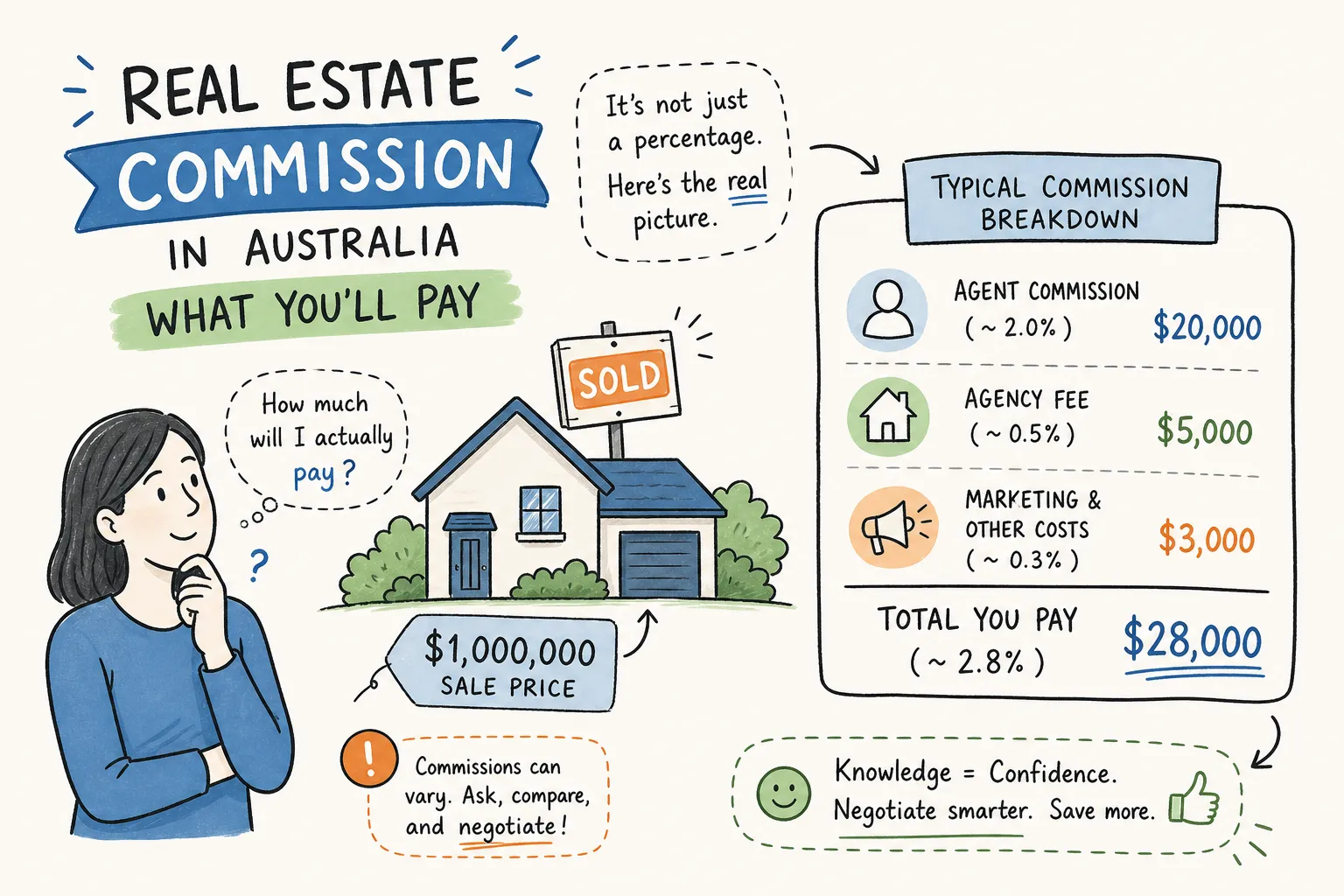
The agent takes a set share of the final sale price. Based on 2026 market data, national commission rates broadly range from 2.0% to 2.65%, with a practical midpoint around 2.3% to 2.5% for most residential sales, though outliers exist at either end. The advantage is straightforward: a higher sale price benefits both you and the agent, so their incentive is aligned with yours. The risk is that you are agreeing to a dollar figure you do not yet know. On a $900,000 sale at 2%, that is $18,000. At 2.5%, it is $22,500. The percentage sounds small; the dollar gap does not.
Flat fee real estate agents: when a fixed price makes sense
A flat fee locks in the agent’s cut regardless of what the property sells for. Typical ranges in metro areas run from around $15,000 to $25,000, though some providers list lower figures from approximately $8,000 depending on the service level. Sellers with high-value properties often save significantly with this model because the agent does not scale their earnings with the price. The trade-off is real: an agent on a flat fee has less financial motivation to push hard for top dollar, since they earn the same regardless of the outcome. Understand that dynamic before you commit.
Tiered commission: performance-based deals
Tiered or sliding-scale structures reward agents for outperforming a price target. A common example is 2.0% on the first $1 million and a higher rate on anything above that threshold. This model can align incentives well because the agent earns more only by delivering more. Read the numbers carefully before agreeing. A higher rate on the upper tier can add up quickly if the property sells well above expectations.
Agent commission real estate: what sellers are paying by state right now
Real estate agent commission rates in Australia vary significantly by state, and the differences are not trivial. A seller in Tasmania will typically pay a meaningfully higher rate than someone selling in the ACT. Knowing your state’s typical range gives you a legitimate opening position before you talk to anyone.
The lower-rate states: ACT, VIC and NSW
The ACT consistently records the lowest average commission rates nationally, currently sitting around 1.81% to 2.23% (based on 2026 data). Victoria and New South Wales follow, with metro averages typically ranging from 1.87% to 2.35%. High property values and competitive agent markets in Melbourne and Sydney tend to keep rates compressed. When your property is worth more, agents earn more in absolute dollar terms even at a lower percentage, which is exactly why you can push harder in these markets.
The higher-rate states: QLD, WA, TAS and NT
Queensland sits around 2.57% to 2.80%. Western Australia averages between 2.27% and 2.75%, though this varies considerably between Perth metro and regional markets. Tasmania is consistently at the higher end nationally, ranging from 2.45% to 3.25%. The Northern Territory runs between 2.80% and 3.00%. South Australia sits between 1.91% and 2.80%, with significant variation depending on location and property type. If you are selling in any of these states, the benchmark is higher, but it is still a starting point for negotiation, not a fixed fee.
Use a real estate commission calculator to sense-check your quote
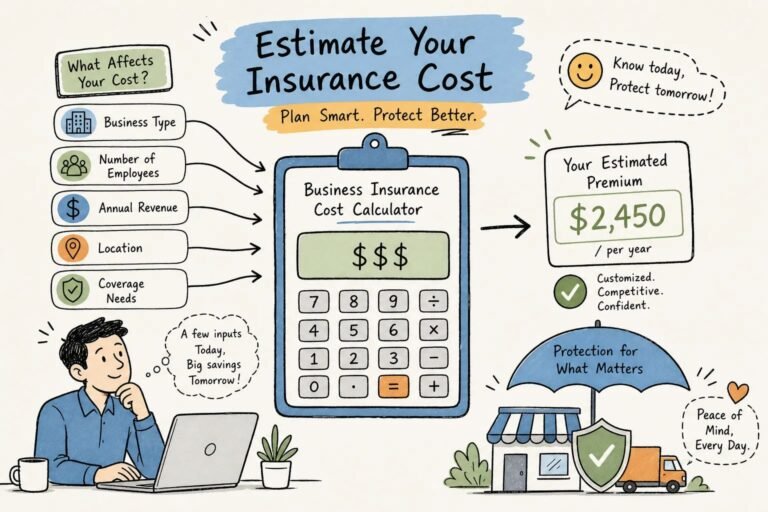
Before you meet any agent, run the numbers yourself. Take the expected sale price, apply your state’s typical commission range, and calculate the dollar figure at the low and high end. For example, on an $800,000 sale in Queensland at 2.57% to 2.80%, you are looking at roughly $20,560 to $22,400 in commission alone, before marketing. Add the likely VPA spend for your campaign type, and you have a realistic total cost to sell. That figure is what you bring to the negotiation, not just a percentage. NameTheCost.com’s cost guides are a practical starting point for building this estimate using real Australian pricing data.
The costs that land on top of commission
Commission is the headline number. The full cost of selling a property is usually higher once you factor in marketing, and sellers who do not read the agency agreement carefully often find themselves surprised by the total invoice.
Vendor paid advertising (VPA) and marketing packages
VPA covers the cost of promoting your property: portal listings, photography, floor plans, signage, social media, and sometimes print. These costs are charged to you, not the agent, and are usually non-refundable even if the property does not sell. Basic campaigns run from $1,500 to $3,000. A typical metro campaign sits between $3,000 and $8,000. Premium packages in competitive markets can reach $10,000 or more. Marketing costs are normally disclosed and itemised in the agency agreement; specific disclosure rules differ by jurisdiction, so check your state’s requirements. Review each line item rather than nodding at a total, and know what you are paying for before you sign.
Auction campaigns versus private treaty costs
Auction campaigns are generally more expensive than private treaty. They require a larger marketing budget upfront, and there is typically a separate auctioneer fee on top of the commission. Private treaty gives you more room to negotiate both the commission rate and the marketing spend, simply because the campaign is less intensive and less time-critical. Expression of interest sits somewhere between the two: it borrows features from both methods, and agents tend to price it closer to auction if the campaign requires significant buyer management. The more elaborate the campaign, the more likely the agent is to hold firm on fees.
What the law says agents must tell you
Agent commission in real estate is not purely a matter of negotiation. There are legal requirements around how fees must be disclosed, and knowing them protects you before you put pen to paper.
Written agency agreements: what must be in them
An agent cannot legally claim commission in Australia without a written agency agreement signed by both parties. In New South Wales, the agent must serve you a copy within 48 hours of signing. In Victoria, the agreement must state the commission and expenses in clear terms, and if commission is expressed as a percentage, it must also include a worked dollar example. Any rebates, discounts or referral benefits the agent receives from third-party suppliers must also be disclosed. That last point matters: if the agent is getting a kickback from a photographer or portal, you are entitled to know about it.
Cooling-off rights and disclosure obligations
In New South Wales, you have a statutory cooling-off period of one business day after signing a residential agency agreement. That window closes at 5 pm on the next business day or Saturday. Before you sign anything, ask the agent directly about cooling-off rights in your state. Not all jurisdictions provide them, which makes reading the agreement carefully before signing even more important. Your leverage is at its highest before the signature; it drops sharply the moment the ink is dry.
How to negotiate your agent’s commission
Agent commission rates are negotiable in Australia. Many sellers may not push back simply because they lack a local benchmark for what a fair rate looks like. That is a fixable problem, and fixing it before the meeting is the entire point.
What agents will typically flex on
Agents are more likely to lower their commission rate when you are selling in a strong market, when your property is high value, or when you are also buying through them. Marketing spend is often more flexible than the commission percentage itself, particularly in private treaty campaigns. Locking in a shorter exclusive agency period (say 30 days rather than 90) also gives you more leverage because the agent has less time to sit on the listing. If the agent will not move on the headline rate, negotiate on marketing inclusions, campaign scope, or the length of the agreement instead.
Framing the negotiation the right way
Do not ask if they will lower their rate. Tell them what rate you are prepared to pay, based on the benchmarks you have researched, and ask if they can match it. Reference comparable agent offers if you have received them. Interview at least three agents before you discuss commission with any of them. Let each one pitch their value first: results, days on market, negotiation approach. Then address fees after they have made their case. Agents expect negotiation. Most just do not expect a seller who arrives with actual numbers and competing quotes on the table.
Check the numbers before you commit
The single biggest mistake sellers make is walking into an agent meeting without an independent benchmark. You end up evaluating what the agent tells you against nothing, which means they set the terms and you have no way to know whether the rate is fair or inflated.
NameTheCost.com is an independent Australian pricing directory built on real pricing data, with no agent referrals and no financial incentive to steer you toward any particular commission rate. The cost guides give Australian consumers a genuine benchmark before they hire anyone. For a decision that involves tens of thousands of dollars in agent fees, an independent reference point is not optional. It is the starting point.
When you interview agents, ask each one to provide their commission rate, their full marketing itemisation, and their total expected cost to sell in writing. Then compare each proposal against both your state’s typical range and the independent data you have sourced. Three written proposals, one reliable benchmark. That combination is how you know whether you are being quoted fairly or being managed.
The bottom line on agent commission in real estate
Agent commission in real estate across Australia is not a fixed figure. It moves by state, by fee structure, by sale method, and by how prepared you are when you walk into the room. The national midpoint currently sits around 2.3% to 2.5%, but that number is meaningless on its own without knowing your state’s typical range, what is included in the marketing package, and how all of that compares to what you have actually been quoted.
Sellers who do that homework tend to negotiate better terms. The information gap is what costs people money, not the negotiation itself. Before you list your property, get at least three agent proposals in writing with all costs itemised. Check those numbers against an independent source. NameTheCost.com gives you Australian pricing data to benchmark agent commission rates before you commit to anything. You are already making one of the biggest financial decisions of your life. Do not price it blind.