Tree Removal Cost Australia: The Ultimate 2026 Pricing & Planning Guide
Across Australia, professional tree removal costs range from $300 to $800 for small trees (under 5m) to $1,500–$3,500 for medium-to-large trees (10–20m), while complex, hazardous, or crane-assisted removals on massive specimens (>20m) routinely range from $5,000 to $15,000+. Total pricing is governed by five primary factors: physical height and trunk girth, species wood density, site access constraints, proximity to structures/powerlines, and mandatory local council permit compliance.
Get Free Tree Removal QuotesHow Much Should Tree Removal Cost in Australia?
When property owners face an overgrown, leaning, diseased, or storm-damaged tree, the immediate question is: how much should tree removal cost? Because every tree grows in a unique micro-environment with distinct physical characteristics, there is no single flat fee for tree cutting.
In Australia, the national median tree removal price sits around $1,500 to $2,500 for a standard residential property. However, total quotes fluctuate from a minimal $300 for an accessible garden sapling to well over $10,000 for a heritage-sized Eucalypt nestled between suburban structures.
| TREE TYPE | AVERAGE RESIDENTIAL PRICE RANGES |
|---|---|
| Small Tree (< 5m) | $300 – $800 |
| Medium Tree (5m – 10m) | $800 – $2,000 |
| Large Tree (10m – 20m) | $2,000 – $5,000 |
| Extra-Large / Complex (20m+) | $5,000 – $15,000+ |
| Stump Grinding (Add-on) | $150 – $600 per stump |
| Arborist Report (Council) | $350 – $1,200 |
Understanding how much cost for tree removal requires looking beyond basic tree height. Professional arborists calculate their tree removal pricing based on labour-hours, specialized machinery requirements (such as wood chippers, cherry pickers, spider lifts, and heavy slewing cranes), crew size, risk liability, and disposal fees.
If you are trying to calculate how much do tree removal cost on your property, evaluating the difference between a simple direct tree felling cost and a complex, piece-by-piece sectional dismantling is essential. When a tree can be safely felled in one piece from ground level into an open paddock or large lawn, the tree cutting price drops dramatically.
Conversely, when a tree hangs directly over glass bi-fold doors, swimming pools, or active power mains, arborists must rig individual limbs with high-tensile ropes and lowering blocks, which increases time, crew requirements, and overall tree removal costs.
Tree Removal Cost Matrix Table: Size vs. Project Complexity
To help you calculate realistic expectations before contacting local contractors, the matrix below outlines average Australian tree removal price expectations based on tree height and environmental complexity.
| Tree Size Category | Height & Diameter | Basic Removal (Direct Ground Fell, Open Yard) | Standard Removal (Sectional Rigging, Side Gate Access) | Complex (Tight Access, Crane, Powerlines) |
|---|---|---|---|---|
| Small Tree (< 5m) | Under 5m tall Trunk < 20cm | $300 – $800 | $500 – $800 | $800 – $1,400 |
| Medium Tree (5m – 10m) | 5m – 10m tall Trunk 20–40cm | $800 – $1,200 | $1,200 – $2,000 | $2,000 – $3,500 |
| Large Tree (10m – 20m) | 10m – 20m tall Trunk 40–80cm | $2,000 – $3,200 | $3,200 – $5,000 | $5,000 – $8,500 |
| Extra-Large / Complex (20m+) | 20m+ tall Trunk > 80cm | $4,500 – $7,000 | $7,000 – $10,000 | $10,000 – $18,000+ |
Key Factors That Drive the Cost to Cut Down a Tree
When an arborist conducts an on-site inspection to determine how much does tree removal cost, they perform a quantitative risk assessment. The total cost to remove a tree is governed by five structural and environmental variables:
- Tree species and wood density (e.g. Hardwood)
- Accessibility and backyard friction
- Hazards and risks near structures or powerlines
Tree Size, Height, and Canopy Volume
Height is the most prominent visual metric, but total canopy spread and trunk girth dictate the actual workload. A 15-metre tall tree with a narrow, column-like growth habit (like a Cypress) contains far less timber volume than a broad 15-metre Oak or Fig tree with expansive lateral scaffolding branches. More timber and foliage mean extra chainsaw operational time, additional rigging setups, and multiple truckloads of wood chip haulage.
Tree Species and Wood Density (Including Gum Tree Removal Cost)
Species classification heavily dictates tool wear, manual labour exertion, and green waste dumping fees.
| Tree Species | Wood Type & Density | What to Know |
|---|---|---|
| Golden Cane Palm, Jacaranda, Silver Birch | Softwoods/Fibrous Trees | Fast cutting, light weight, low tool wear |
| Lemon-Scented Gum, Spotted Gum, Ironbark, Grey Box | Dense Native Hardwoods | Extreme density, heavy log rigging, rapid chain dulling |
When homeowners inquire specifically about gum tree removal cost, they are often surprised that removing a mature native Eucalyptus commands a 20% to 40% premium over softwoods of similar size. Native eucalypts feature dense timber that dulls chainsaw chains quickly, heavy limbs requiring substantial rigging setups, and large trunks that test heavy machinery.
Additionally, species like Liquidambars or Palms bring unique challenges: Palm fronds cannot be processed through standard wood chippers due to their fibrous structure and must be hauled separately to commercial waste facilities, driving up waste disposal fees.
Site Accessibility, Clearance, and Backyard Friction
Arborists refer to accessibility as the “drag distance”.
- Front Yard (Low Drag): If a tree is situated in a front yard adjacent to a driveway, wood chippers and heavy machinery can park within metres of the trunk. Cut branches can be fed directly into the chipper, keeping labor hours minimal.
- Backyard (High Drag): If the tree is located in a enclosed backyard accessible only through a narrow 80cm side passage or down a flight of steep outdoor stairs, every single branch must be manually dragged or wheelbarrowed out. This multiplies manual labor hours significantly, often adding $500 to $1,500 to the baseline tree removal price.
Proximity to Infrastructure, Buildings, and Powerlines
Trees positioned adjacent to glass pool fencing, retaining walls, roof overhangs, or underground utility services require friction brake rigging systems. Each branch must be bound, cut, and lowered gently to prevent damage. Furthermore, trees growing within 3 metres of mains powerlines require accredited utility-clearing crews or coordinated shutdown permits with electricity distributors (such as Ausgrid or Endeavour Energy in NSW, or CitiPower/Powercor in VIC), adding anywhere from $500 to $2,000+ in specialized compliance costs.
Structural Health and Tree Risk Assessment (Dead or Unstable Trees)
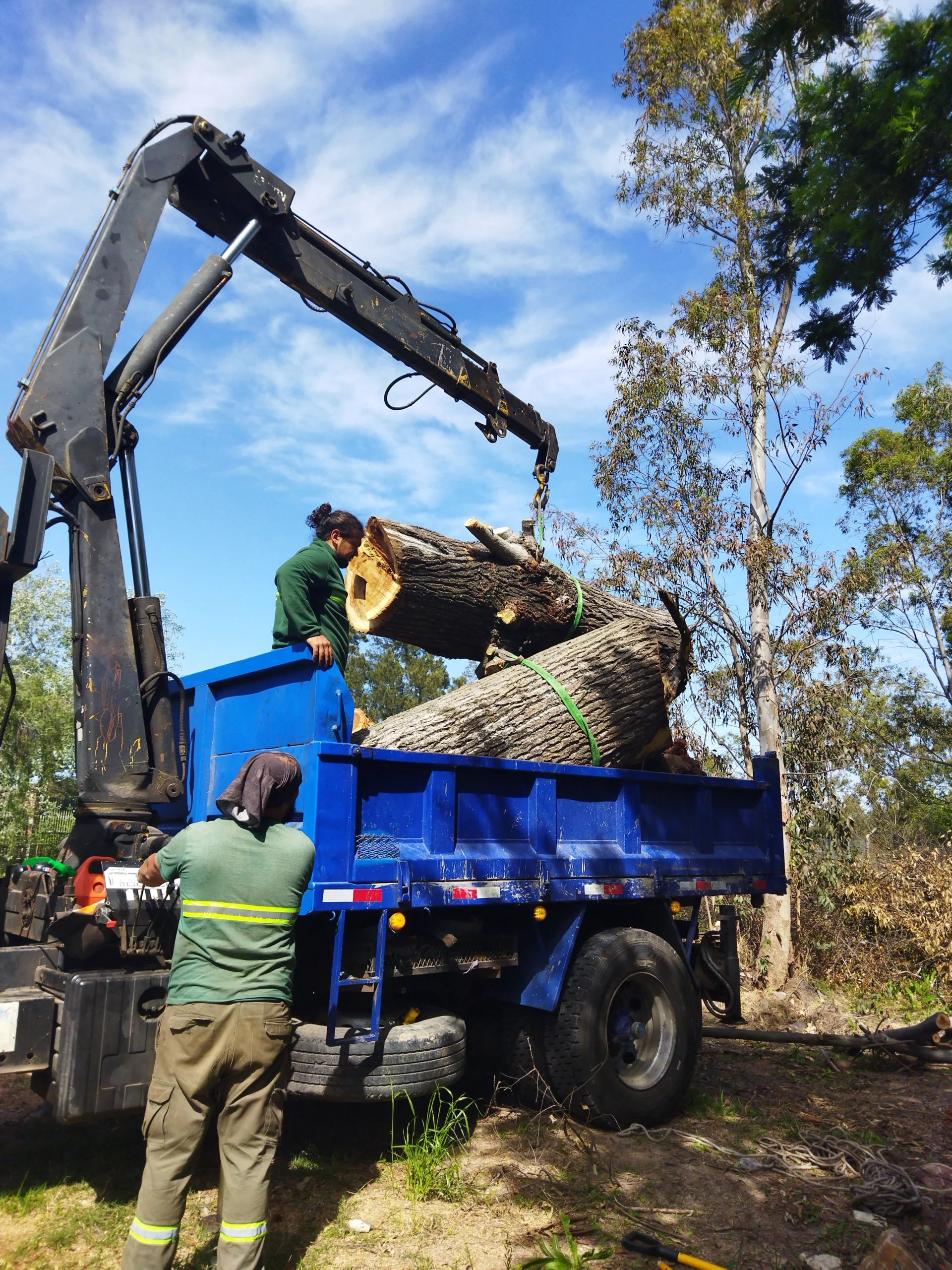
While it may seem intuitive that a dead or dying tree should cost less to remove, the opposite is frequently true. Dead timber becomes brittle, unpredictable, and unsafe for arborists to climb or attach load-bearing rigging lines to. In these scenarios, arborists cannot use traditional climbing techniques; they must utilize specialized Elevated Work Platforms (EWPs/cherry pickers) or heavy slewing cranes to suspend arborists above the canopy. This equipment requirement can increase the base cost to cut down a tree by 20% to 50%.
Regional Price Breakdown: Sydney Tree Removal Cost vs. Melbourne and Beyond
Operating a high-risk commercial tree service company in major Australian metropolitan hubs involves significant local operational costs. High commercial liability insurance premiums, strict council tree preservation orders, fuel pricing, commercial green waste tipping surcharges, and municipal parking logistics directly shape local price points.
| City | Average Cost |
|---|---|
| Sydney, NSW | $1,840 – $3,500 |
| Melbourne, VIC | $1,650 – $3,200 |
| Brisbane / Gold Coast, QLD | $1,450 – $2,800 |
| Perth, WA | $1,400 – $2,700 |
| Adelaide, SA | $1,350 – $2,600 |
Sydney Tree Removal Cost: Inner West, Eastern Suburbs & North Shore Logistics
For home and property owners researching tree removal in sydney, local urban topography creates unique logistical challenges. The average sydney tree removal cost sits between $1,840 and $3,500, making it approximately 10% to 15% higher than the national baseline.
| Inner West & Eastern Suburbs | Northern Beaches & North Shore |
|---|---|
| Narrow terrace lanes, zero driveway space, permit-restricted street parking Manual timber carrying, micro-machinery requirements, street closure costs | Heavy native canopy, dense Eucalyptus, steep terrain Complex rigging near heritage structures, TPO compliance |
If you are booking tree removal services sydney in tightly packed historic suburbs like Paddington, Balmain, Surry Hills, or Newtown, contractors encounter significant operational friction. A complete absence of driveway access forces crews to park truck-and-chipper combos blocks away, requiring municipal council parking occupancy permits and manual haulage of heavy timber through narrow side alleys.
Furthermore, conducting sydney tree cutting or utilizing sydney tree lopping services along busy arterial roads often requires formal Traffic Control Management plans, road occupancy licenses (ROLs), and dedicated traffic controllers, which add $800 to $1,800 per day to the overall sydney tree removal quote.
When looking into cost of tree removal sydney or tree removal sydney cost, remember that local municipal councils (such as the City of Sydney, Inner West Council, and Northern Beaches Council) enforce strict Tree Preservation Orders (TPOs). Engaging a professional tree cutting service sydney or tree cutting services sydney ensures that council compliance fees and site inspections are addressed prior to commencing work.
Cost of Tree Removal Melbourne: Inner South, Northern Suburbs & Heritage Overlays
Property owners assessing cost of tree removal in melbourne will find average project prices ranging from $1,650 to $3,200. Work across Melbourne’s inner-south (such as Prahran, St Kilda, and Toorak) and eastern suburbs (Boroondara, Stonnington, and Whitehorse) is strongly governed by Significant Landscape Overlays (SLO) and Heritage Overlays.
When evaluating tree removal melbourne cost or investigating a competitive tree removal melbourne price, property owners must factor in municipal permit requirements. Victorian councils require arboricultural assessments before issuing removal permits for trees with trunk circumferences exceeding specified dimensions (often 50cm to 100cm measured 1.4 metres above ground level). Furthermore, Melbourne’s unpredictable weather patterns mean storm damage emergency callouts during spring and winter carry after-hours premiums of 30% to 50% above standard operating rates.
Brisbane, Perth, and Regional Australia Cost Variations
- Brisbane & South East Queensland: Tropical growth rates mean larger canopy volumes, but lower average labor overheads keep typical removal costs between $1,450 and $2,800. Palm removals are common in SEQ, with dedicated palm clearing packages starting around $350 to $1,200.
- Perth & Western Australia: Sandy soils in Perth simplify stump extraction compared to heavy eastern state clays, leading to slightly lower overall costs ($1,400 to $2,700 on average).
- Regional & Rural Areas: Direct access and open space allow for traditional directional ground felling, which lowers pure labor hours. However, contractors may add travel surcharges (typically $1.50 to $3.00 per kilometer) if travelling over 50km from their operational base.
Hidden Costs and Additional Arborist Services
When reviewing a quote for how much does it cost to remove a tree, it is critical to verify precisely what line items are included. A quote that appears unusually cheap may omit essential post-removal requirements like stump extraction, site clean-up, or council documentation.
Potential Hidden Extra Costs:
- Stump Grinding (10cm – 80cm+) │ $150 – $600+ per stump
- Council Permit Application Fees │ $50 – $350 (non-refundable)
- Level 5 Arborist Assessment │ $350 – $1,200
- Crane Hire (Tight Access / Large) │ $1,000 – $3,500 per day
- Emergency Callout Surcharge │ 30% – 100% premium on labor rates
How Much Does It Cost to Remove Trees Stumps? (Stump Grinding Breakdown)
Standard tree removal quotes usually cover taking the tree down to a low stump (roughly 10cm to 20cm above ground level). Removing the remaining stump requires specialized hydraulic stump grinders.
- Small Stump (<30cm Diameter) │ $150 – $250
- Medium Stump (30cm – 60cm) │ $250 – $400
- Large / Hardwood (60cm – 100cm+) │ $400 – $800+
- Additional Stumps (Same Site) │ $50 – $100 per extra unit
Leaving a stump in place can lead to pest infestations—particularly subterranean termites in Australia or result in unwanted root regrowth. Most arborists offer discounted bundled pricing if stump grinding is booked alongside tree removal.
Council Permit Fees, Tree Preservation Orders (TPOs), and Fines
In most urban areas across Australia, trees exceeding specific height (typically 3 to 5 metres) or trunk girth thresholds are protected under local government Tree Preservation Orders.
- Application Fees: Lodging a tree removal application with your local council costs between $50 and $350, depending on your Local Government Area (LGA). This fee is non-refundable, regardless of whether the permit is granted.
- Illegal Removal Penalties: Cutting down a protected tree without council approval is an offense under Australian environmental planning acts. Local councils routinely issue fines ranging from $3,000 to over $100,000 for unauthorized tree destruction, along with mandatory court-ordered replacement planting obligations.
Level 5 Arborist Reports and Health Assessments
If a council rejects an initial application or requires formal proof that a tree is structurally hazardous, diseased, or damaging property foundations, you may need an independent assessment.
- Verbal Health Assessment: $150 – $250.
- Comprehensive Level 5 written Arborist Report: $350 – $1,200.
A certified AQF Level 5 Consulting Arborist uses non-invasive diagnostic tools—such as sonic tomographs and resistance micro-drills—to assess internal trunk decay and structural stability.
Emergency Tree Removal and Storm Damage Surcharges
Severe storms bring down heavy branches or uproot mature trees onto homes, vehicles, and boundary fences. Emergency response services require arborists to dispatch teams after-hours, often operating in adverse weather conditions. Emergency response rates typically attract a 50% to 100% surcharge over standard rates, with minimal emergency call-out fees ranging from $800 to $2,500.
Alternative Options: Tree Trimming Sydney vs. Full Removal
Full removal is not always necessary. If a tree is structurally sound but encroaching on building eaves, power lines, or blocking sunlight, targeted pruning or maintenance may be a more cost-effective option.
- Minor Canopy Trim / Deadwooding │ $250 – $600
- Major Structural Canopy Reduction │ $600 – $1,500
- Complete Tree Removal │ $1,500 – $5,000+
When considering services such as tree trimming sydney or specialized tree trimming services sydney, professional arborists follow strict pruning standards (AS 4373-2007 – Pruning of Amenity Trees). Standard practices involve:
- Deadwooding: Removing dead, dying, or diseased branches to eliminate safety hazards over living areas.
- Crown Thinning: Selectively removing 10% to 20% of secondary branches to reduce wind resistance and increase light penetration without disturbing the overall structure.
- Crown Lifting: Pruning lower foliage to establish vertical clearance for pedestrians, driveways, or roof structures.
⚠️ Industry Warning on “Tree Lopping”: Be cautious of cheap operators offering unqualified sydney tree lopping services. Flush-cutting or topping a tree’s main leader stems causes stress, leading to rapid epicormic regrowth. These weak shoots grow quickly and are prone to snapping off in high winds, creating long-term hazards and higher long-term maintenance costs.
Tree Removal Cost Estimator & Cost Calculator Guide
To estimate the cost to cut down a tree on your property, use this step-by-step framework before requesting formal quotes:
Step 1: Establish the Base Height Price
- Small (under 5m): $400
- Medium (5m–10m): $1,200
- Large (10m–20m): $3,000
- Extra-Large (20m+): $6,000
Step 2: Apply the Species Wood Density Multiplier
- Standard Softwood / Ornamental: x 1.0
- Dense Native Hardwood (Gum Tree, Ironbark, Box): x 1.25
- Fibrous Palm (Specialist disposal required): x 1.15
Step 3: Apply the Site Accessibility Factor
- Clear Front Yard / Driveway Access: x 1.0
- Backyard Access via standard side gate (Manual drag distance): x 1.20
- Extreme Tight Access / Stairs / Indoor-only passage: x 1.45
Step 4: Add Mandatory Add-Ons
- Stump Grinding: Add $250
- Council Permit Fee: Add $150
Example Calculation
Removing an 12m Gum Tree (Base $3,000) located in a tight backyard (Access x 1.20) with species multiplier (x 1.25), plus stump grinding ($250) and council permit ($150):
($3,000 x 1.25 x 1.20) + $250 + $150 = $4,900 Total Estimated Price
How to Choose a Qualified Arborist and Avoid Dangerous Shortcuts
Tree work is one of the highest-risk occupational trades in Australia. Employing uninsured or unqualified operators exposes property owners to severe financial and legal liabilities. If an uninsured contractor injures themselves or damages your or a neighbour’s home, the property owner’s home insurance policy may not cover the loss.
- Minimum AQF Level 3 Qualification in Arboriculture
- $10M to $20M Public Liability Insurance Certificate
- Workers Compensation Insurance Coverage
- Written Itemised Quote (Clear Breakdown of Waste & Stump Work)
- Strict Adherence to SafeWork Australia Codes of Practice
Essential Questions to Ask Before Signing a Quote:
- Are you qualified to at least AQF Level 3 in Arboriculture? (Do not hire operators who call themselves simple “handymen” or “loppers” for major removals).
- Can you provide a current Certificate of Currency for $10 Million to $20 Million in Public Liability Insurance? (Verify that the certificate is active and names the specific contracting entity).
- Does your quote include complete green waste removal, foliage chipping, and site rake-down?
- Who is responsible for lodging council permits and identifying underground service lines (Dial Before You Dig / Before You Dig Australia)?
Frequently Asked Questions: Cost to Cut Down a Tree
How much does it cost to remove a tree near powerlines?
Removing a tree near powerlines typically costs between $1,800 and $6,000+, depending on tree height and proximity. Work within 3 metres of live service drops requires accredited utility arborists and may require temporary line disconnections or insulated elevated work platforms.
How much does it cost to remove trees that have already fallen?
If a tree has fallen naturally onto open ground during a storm, the cost cutting down tree components are eliminated. Debris processing, trunk bucking, and green waste chipping for a fallen medium tree usually range from $500 to $1,500, provided the fallen tree is not resting dangerously on a structure.
How much to remove trees on a commercial or multi-tree residential lot?
When hiring contractors to clear multiple trees simultaneously (land or lot clearing), economies of scale apply. While a single large tree might cost $2,500, clearing 4 to 6 similar trees on the same property will usually reduce the per-tree price by 20% to 35%, as setup, machinery transport, and crew mobilization overheads are shared.
Can I cut down a tree on my own property to save money?
Homeowners may safely trim small branches or cut down saplings under 3 metres using basic hand tools from ground level. However, attempting DIY removal on trees exceeding 3 to 4 metres, or using chainsaws on ladders, presents extreme safety risks. Falling limbs can weigh hundreds of kilograms, bounce unpredictably, and cause fatal injuries or severe property damage. Always engage an insured AQF Level 3 arborist for tall trees or work involving heavy overhead limbs.
Conclusion: Making an Informed Decision on Your Tree Removal Pricing
Understanding how much should tree removal cost requires evaluating all site-specific variables, including tree height, wood density, accessibility, structures, and local council permits. While baseline prices for small trees start around $300 to $800, larger native specimens or complex backyard removals can range from $2,500 to over $8,000.
Whether you are comparing tree removal cost sydney against tree removal cost melbourne, seeking specialised gum tree removal cost breakdowns, or using a tree removal cost calculator to budget your project, prioritise safety, licensing, and insurance over rock-bottom prices.
Before committing to a contractor:
- Obtain at least three itemized quotes from certified AQF Level 3 arborists.
- Confirm council permit status under your local Tree Preservation Order.
- Verify public liability insurance coverage.
Taking these steps ensures your tree removal project is completed safely, legally, and at a fair price.