The True Cost of Owning a Dog in Australia (2026)
Australians love their dogs with a particular kind of devotion. But love doesn’t pay the vet bill, and for most new dog owners, the financial reality of bringing one home arrives as a genuine shock. The average cost of owning a dog in Australia during the first year sits around $4,000, and that’s before anything goes wrong. An after-hours emergency consult alone can run $150 to $500 before any treatment begins, a major surgery $3,000 to $8,000 or more, and a fortnight in boarding over the holidays another $560 to $860 depending on your city. Add those together and first-year spend can climb well past initial estimates.
The mistake most people make is pricing the dog and stopping there. The acquisition cost, whether that’s a rescue adoption or a registered breeder, is just the first line item. Below it sits an entire layer of setup costs, initial vet work, and ongoing expenses that hit before the puppy has finished its second round of vaccinations. First-year costs run higher than subsequent years precisely because you’re covering one-off setup fees and initial vet work all at once, on top of the regular running costs that continue indefinitely.
The smartest move you can make before visiting a breeder or shelter is to see the full picture first. Independent resources like NameTheCost.com exist for this reason: to give Australians a clear, unbiased cost benchmark before they commit. This article breaks down every major cost category, from the day you bring the dog home to every year after that.
What the First Year of Owning a Dog in Australia Actually Costs
The first year is always the most expensive. You’re paying for the dog itself and every piece of kit you need to get started, all at once. Pet Circle’s 2026 guide puts total first-year costs at $3,000 to $6,000 or more, with MoneySmart anchoring the average at around $4,000. For most Australians choosing a popular breed in a capital city, a conservative first-year estimate is closer to $4,500 to $7,000 once the full picture is accounted for.
Buying or adopting: the first line item
Adoption from a rescue shelter often includes desexing, microchipping, and initial vaccinations, which makes it genuinely good financial value alongside the obvious welfare benefits. Fees vary by organisation, but many shelters and councils list adoption costs in the $200 to $500 range, check directly with your local rescue or pound for current rates. Registered breeders charge a much wider range: $800 to $7,000 or more, depending entirely on breed, pedigree, and health testing.
Designer small breeds like Cavoodles regularly list at $1,500 to $6,000 from registered breeders. That puts them more expensive upfront than many large breeds, including Labradors and Border Collies. The acquisition cost sets the tone for the budget, but it tells you almost nothing about what the dog will cost to keep, ongoing annual costs of $2,500 to $4,500 mean the purchase price is often overtaken by running costs within the first few years.
One-off setup essentials
Before the puppy sleeps in your house, you need bedding, a crate, collar, lead, food and water bowls, and ideally a starter training course. Budget $500 to $2,000 for gear and training, depending on how thorough you want to be. On top of that, initial vet work covering the puppy vaccination series, microchipping, a first health check, and eventual desexing typically adds $300 to $1,000 or more. Desexing alone averages $370 to $420 for a medium-sized dog in Queensland and New South Wales respectively, based on 2026 private clinic benchmarks. Council registration fees also apply and vary by state: desexed dogs attract meaningfully lower annual fees everywhere, with Victorian councils charging as little as $37 to $63 per year for desexed dogs versus $106 to $227 for entire dogs.
The Annual Cost of Owning a Dog in Australia: What Ongoing Expenses Look Like
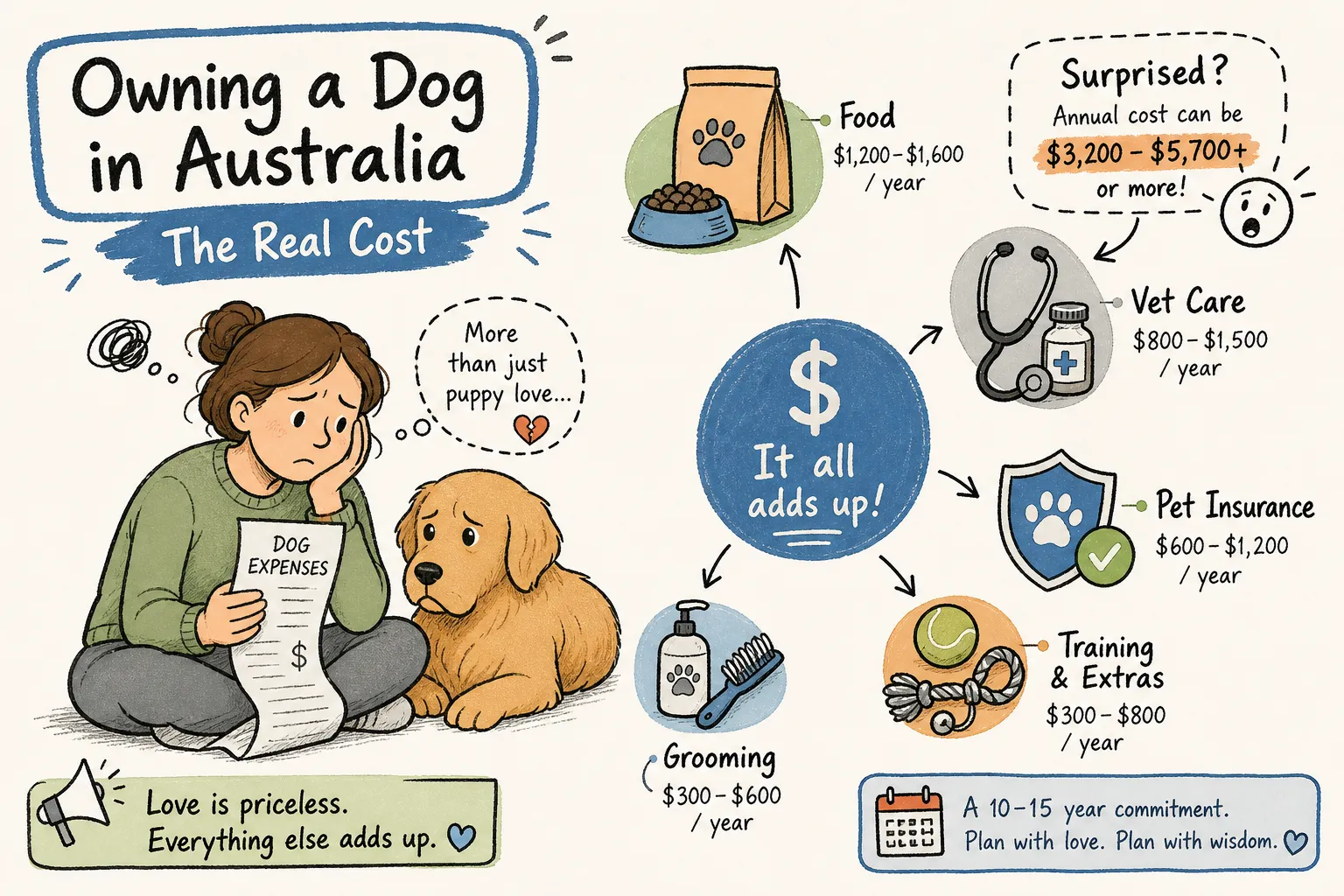
After the first year, the bill drops, but it doesn’t disappear. Most Australian dog owners spend $2,500 to $4,500 per year in ongoing costs, with a realistic mid-range landing closer to $3,200 to $4,250 once all categories are included. Build your own number based on your dog’s size, breed, and lifestyle rather than relying on a single average.
Food and nutrition
Food is the single biggest recurring line item, and the range is genuinely wide. Annual food costs run from $600 for a small dog on basic dry food to over $2,000 for a larger dog on a premium or prescription diet. A realistic mid-range budget for a medium-sized dog eating quality dry food sits around $1,200 to $1,500 per year. Raw and premium wet food diets push that number higher, and specialty or prescription diets for health conditions can exceed $2,000 annually without much effort.
Routine vet care, insurance and grooming
Annual vaccination boosters and a general health check typically cost $80 to $150 per appointment at a general practice vet, with low-cost clinics and council providers offering options from around $45 to $80. Pet insurance averages $1,359 per year for accident and illness cover, based on Canstar’s 2026 data, with premiums ranging from $1,358 for small dogs to $1,461 for large dogs. This is a significant annual commitment, but for breeds with known health risks it can easily save thousands in a single year. Grooming adds $196 to $720 annually depending on coat type, and training averages $166 to $353 per year if you’re working through puppy foundations or behavioural issues.
How Breed and Size Change the Dog Ownership Costs
Breed and size are the two variables that shift the cost equation most dramatically. A Cavoodle from a registered breeder and a rescued adult Staffy are both dogs, but their financial profiles look completely different across a 12-year lifetime. Choosing a breed without understanding its cost implications is one of the most common and expensive mistakes new dog owners make.
Small vs large dogs: food, grooming and purchase price
Small dogs generally cost less to feed and less per grooming session, but popular small breeds often carry higher purchase prices. A full groom for a small short-haired dog runs $55 to $85 in most markets; a large or heavily coated breed sits at $120 to $160 per session. For food, larger dogs can push annual costs to $1,200 to $1,920 on quality dry kibble alone. Purchase prices don’t follow a neat size pattern: a Labrador from a registered breeder might cost less than a Cavoodle, and a French Bulldog will often cost more than both.
Breed health risk and what it means for vet costs
Routine vet care runs around $200 to $400 per year for most dogs across annual check-ups, vaccinations, and basic preventatives. That number can shift dramatically with breed-specific health conditions. Brachycephalic breeds like French Bulldogs and Pugs carry higher risk of respiratory and orthopaedic problems, which translates directly into more frequent vet visits and potentially costly interventions. A single surgical procedure for a brachycephalic condition can cost $3,000 to $8,000 or more. Working breeds like Kelpies and Border Collies tend to be hardier physically, but their need for mental and physical stimulation can drive up training and activity costs over time. Know your breed’s health profile before you commit.
What You Pay Depends on Where You Live
Dog ownership costs in Australia are not uniform across states and regions. Sydney consistently sits at the top for professional pet services, while regional areas offer meaningful savings on grooming and boarding. The gap is real enough to factor into your annual budget, particularly if you rely on professional services regularly.
City benchmarks: Sydney, Melbourne and Brisbane
Dog boarding per night averages $61.61 in Sydney, $55.67 in Melbourne, and $39.78 in Brisbane. If you travel regularly and use kennels, that gap compounds quickly. Overnight pet sitting follows a similar pattern, with Sydney typically running $70 to $90 per night, Melbourne $60 to $85, and Brisbane $55 to $80. Grooming and routine vet consultation fees are also higher in metropolitan areas, particularly in inner-city suburbs of Sydney and Melbourne.
Regional areas: lower service costs, different trade-offs
Regional owners generally pay less for boarding, grooming, and routine vet consultations, often 15 to 25 per cent below Sydney metro rates for equivalent services. The trade-off is access. If your dog needs a veterinary specialist or an after-hours emergency clinic, the nearest option may be an hour or more away. That gap affects both cost and outcome in a genuine emergency. Factor travel time and specialist availability into your planning, not just the per-service price you’ll pay on a routine day.
The Budget Blow-outs Most Owners Don’t See Coming
Routine costs are manageable when you plan for them. The financial hits that derail dog owners are the ones they didn’t budget for: emergency vet bills that arrive without warning, boarding costs overlooked at the planning stage, and the quiet accumulation of smaller expenses across the year.
Emergency vet bills and the savings buffer you need
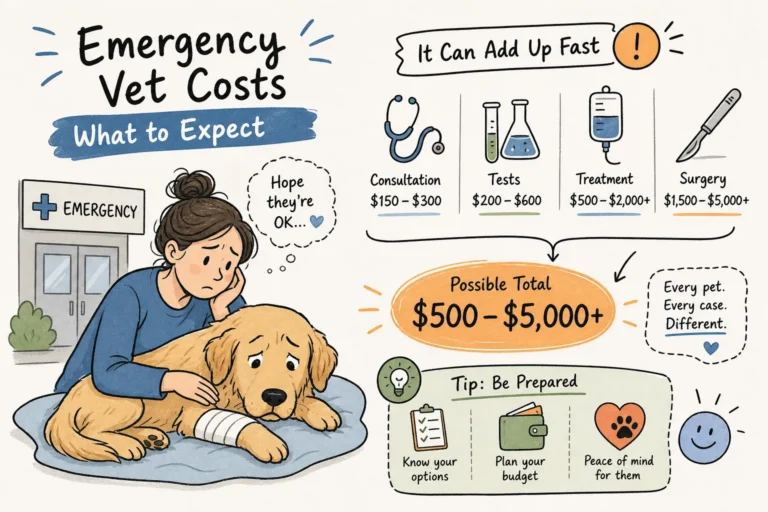
An after-hours emergency consult in Australia typically costs $150 to $500 before any treatment begins. A major surgery or hospitalisation pushes bills to $3,000 to $8,000 or beyond. Pet insurance covers some of this, but policies carry waiting periods, breed exclusions, and annual claim limits, so insurance alone isn’t a complete safety net. Build a dedicated dog emergency fund of at least $2,000 to $3,000 before you bring the dog home, and replenish it if you draw it down. According to Petbarn’s industry data, fewer than one in four Australian dogs is currently insured, which means the overwhelming majority of owners are self-funding any crisis that arrives.
Boarding, dog walking and the lifestyle costs people underestimate
If you travel for work or holidays, boarding or pet sitting is a fixed recurring cost that most pre-ownership budgets ignore entirely. At Sydney rates of around $62 per night, a two-week holiday generates over $860 in boarding costs, compared to roughly $556 in Brisbane at current rates. Dog walkers and daycare add up similarly if you work long hours or have an active breed. Add these to your annual estimate at the planning stage, not as an afterthought when the bill arrives.
Building Your Dog Budget Before You Commit
The single best thing you can do before visiting a breeder or shelter is put a real number on paper, an honest one, not an optimistic one. Most people underestimate first-year costs because they focus on the purchase price and overlook the entire setup layer sitting beneath it. The subsections below give you a working framework to build that number properly.
A simple framework for your first-year estimate
Start with three buckets: acquisition cost (purchase or adoption fee), setup costs (gear plus initial vet work), and first-year running costs (food, grooming, insurance, training). Add a minimum $2,000 to $3,000 emergency buffer on top of all three. For most Australians, a conservative but realistic first-year total lands between $4,500 and $7,000 depending on breed, location, and the level of care you plan to provide. After year one, ongoing annual costs of $2,500 to $4,500 are a fair estimate for a medium-sized dog with standard care needs.
Where to check current prices before you decide
Before you contact a single breeder or shelter, check your numbers against independent data. NameTheCost.com is an independent Australian resource that breaks down realistic pet ownership costs, including vet fees, grooming, insurance, and boarding, across state lines, so you can compare what the same service costs in Sydney versus Brisbane before committing to anything. Check the site’s methodology page to understand how the figures are compiled. Knowing the real numbers before you walk into any conversation with a breeder, insurer, or vet is the difference between being prepared and being surprised six months in.
The Bottom Line on the Cost of Owning a Dog in Australia
Dog ownership is genuinely rewarding. It is also a larger financial commitment than most people expect. The three numbers worth taking away from this article are straightforward: a first-year average of around $4,000, often more depending on breed and city; ongoing annual costs of $2,500 to $4,500; and a minimum emergency buffer of $2,000 to $3,000 that should be in place before the dog comes home.
The right dog for your life is also the right dog for your finances. Check your budget against independent Australian pricing data, resources like NameTheCost.com are a reasonable starting point, before you make the call. Going in with clear eyes is not pessimism. It is how you make a decision you will be comfortable with for the next 10 to 15 years, depending on the breed you choose.
Frequently Asked Questions About Dog Ownership Costs in Australia
How much does a dog cost per year in Australia?
After the first year, most Australian dog owners spend $2,500 to $4,500 annually on food, routine vet care, grooming, insurance, and other running costs. The exact figure depends on your dog’s size, breed, and where you live. A medium-sized dog in a capital city with pet insurance is likely to sit toward the upper end of that range.
What are the biggest first-year costs for a new dog owner?
The first year combines one-off setup costs with regular running costs, which is why it’s always the most expensive. The main categories are: acquisition cost ($200 to $7,000+ depending on source and breed), setup gear and initial vet work ($800 to $3,000), and first-year running costs including food, insurance, and grooming ($1,500 to $2,500 or more). A realistic total for most Australians is $4,500 to $7,000 for year one.
How much should I save for vet emergencies?
Build a dedicated emergency fund of at least $2,000 to $3,000 before bringing a dog home. After-hours emergency consults typically run $150 to $500 before treatment, and a major surgery or hospitalisation can reach $3,000 to $8,000 or beyond. Pet insurance helps but carries waiting periods and claim limits, a cash buffer covers the gaps.
Is pet insurance worth it for Australian dog owners?
That depends on your breed and your appetite for financial risk. Based on Canstar’s 2026 data, accident and illness cover averages around $1,359 per year. For breeds with known health vulnerabilities, particularly brachycephalic breeds like French Bulldogs and Pugs, a single procedure can cost more than several years of premiums. For hardier breeds with no significant hereditary conditions, the maths is less clear-cut. Compare policies carefully and factor in waiting periods, exclusions, and annual limits before deciding.