Cost of Living in Australia in 2026: A Complete Monthly Breakdown
Rents are still high. Energy bills haven’t softened. And most budget guides you’ll find online are running on numbers from 2023 or 2024. That’s a problem when you’re trying to make real financial decisions in 2026. Understanding the true cost to live in Australia right now, across housing, groceries, utilities, transport, and healthcare, is what this guide delivers. The team at NameTheCost.com has compiled the most current available data, drawn from ABS household expenditure surveys, state rental market indices, supermarket price tracking, and energy and transport datasets, to give you a working monthly snapshot, city by city, household by household.
Whether you’re planning a move to Sydney, working out what a family of four actually needs in Brisbane, or simply checking whether your current budget is realistic, this breakdown gives you a solid baseline. No padding, no sponsored estimates. Just the numbers.
Cost to Live in Australia: What Renting in Major Cities Actually Costs in 2026
Housing is the single biggest line item in any Australian budget, and the gap between cities is larger than most people realise. Sydney remains the most expensive rental market in the country by a clear margin. A one-bedroom apartment outside the city centre runs around $2,399 per month, and the same property in the CBD climbs to $3,539. Melbourne sits more comfortably at around $2,200 per month for a city-centre one-bedroom, and Brisbane comes in at roughly $2,000.
For families, the numbers shift significantly. Sydney’s outer suburbs average around $4,152 per month for a three-bedroom property, with inner-city options pushing past $6,940. Those aren’t typos. That’s what the Sydney rental market looks like in 2026, and it’s the primary reason household budgets in New South Wales are under so much pressure.
Sydney
Sydney’s rental costs are in a league of their own domestically. Even outer-suburban three-bedroom homes average over $4,000 per month, making dual incomes a near-necessity for families renting anywhere near the CBD.
Melbourne
Melbourne offers genuine relief compared to Sydney without sacrificing major-city amenity. A city-centre one-bedroom at around $2,200 per month gives renters more options and more margin than the equivalent Sydney property.
Brisbane
Brisbane remains the most affordable of the three major capitals for renters, with a city-centre one-bedroom coming in at roughly $2,000 per month. That gap is meaningful when compounded across a full year of household budgeting.
Regional centres do offer meaningful savings on rent, but the trade-off isn’t always as clean as it looks on paper. Lower rent can be partially offset by higher transport costs, longer commute times, and potentially reduced access to health services compared with capital cities. If you’re considering a regional move purely on cost grounds, model the full picture before you commit.
Utilities and Groceries: The Everyday Costs That Drain Your Budget
Once rent is accounted for, the next costs that catch people off guard are the ones paid on autopilot: power, water, internet, and food. They feel manageable individually, but combined they represent a substantial fixed monthly expense for most households.
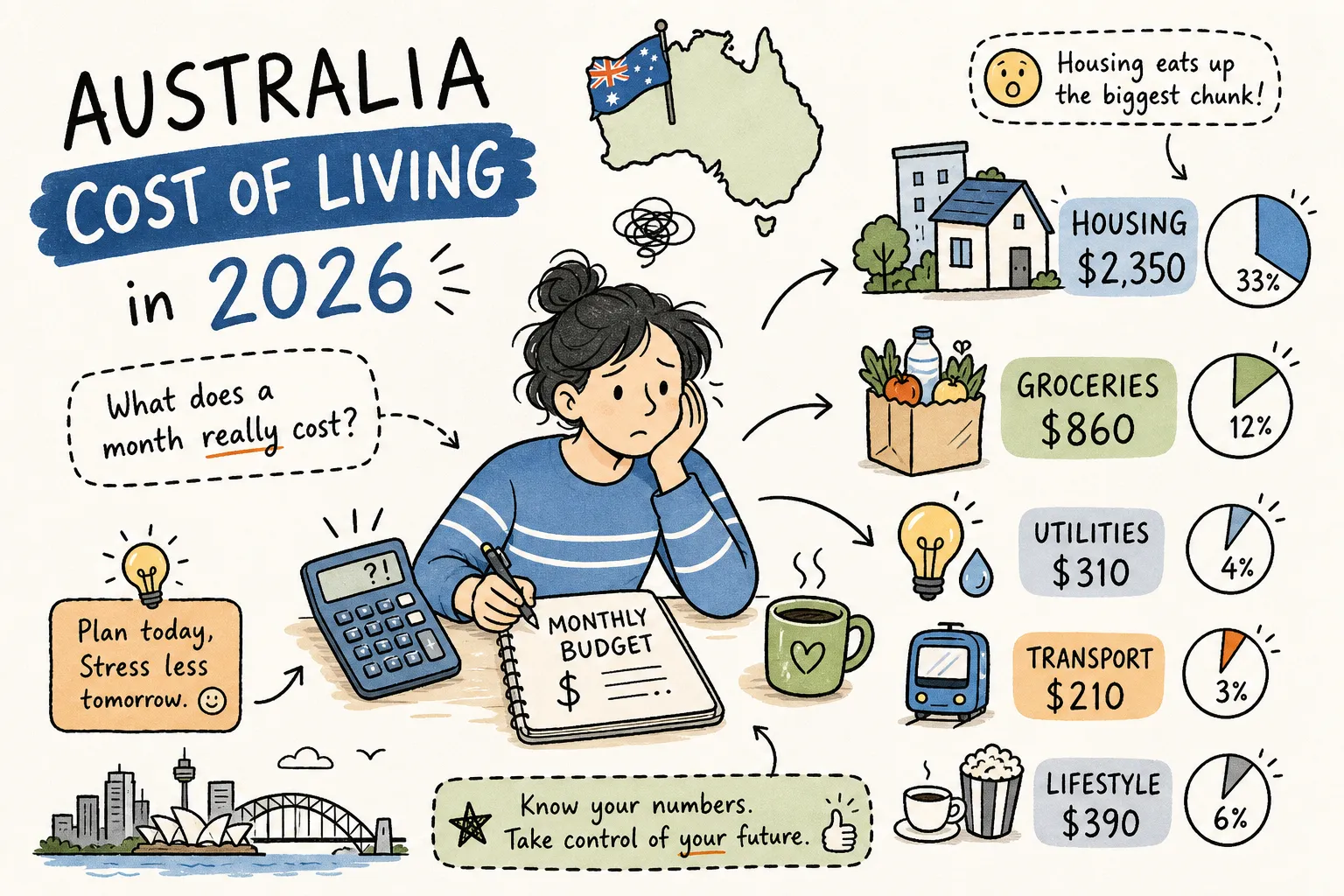
A typical one-to-three-bedroom household can expect to pay between $220 and $420 per month for utilities combined. Electricity is the biggest variable within that range. Sydney households average around $150 per month, Melbourne sits at $120 to $155, and Brisbane can run from $106 to $243 depending on household size and whether the home has air conditioning running through summer. Water adds roughly $30 to $95 per month depending on the city and your tenancy arrangement, and a reliable NBN internet plan sits between $59 and $80.
Groceries are the other significant cost in this category. At major Australian supermarkets in 2026, a single person spends around $152 per week on groceries, a couple roughly $200, and a family of four about $274. Switching to Aldi brings a family basket down to around $235 per week, a saving worth factoring in if you’re working with a tight monthly budget. Woolworths and Coles sit at the higher end, around $295 to $300 for a comparable family basket.
Getting Around: What Transport Actually Costs Per Month
Transport is typically the third-largest household expense, and how much you pay depends heavily on whether you’re catching trains or filling a tank. For public transport commuters, the monthly cost is reasonable by international standards, but it adds up across a full year.
Sydney commuters on public transport spend approximately $195 to $220 per month on fares under regular weekday commuting patterns. Melbourne comes in slightly lower at $185 to $195, and Brisbane is the most affordable of the three at $155 to $175 per month. These figures reflect standard fare structures, not tourist passes or off-peak-only travel.
For car owners, fuel prices in 2026 sit at 148.9 to 165 cents per litre in Sydney, 154.9 to 170 cents in Melbourne, and 141.9 to 157 cents in Brisbane. Fuel alone doesn’t tell the full story. Registration, compulsory third-party insurance, and comprehensive cover together add $250 to $320 per month for a standard vehicle, depending on age, location, and insurer. If you’re financing a car on top of that, factor in an additional $300 to $500 per month depending on the loan amount and term, the total monthly transport cost climbs fast.
Healthcare, Insurance, and the Line Items Most Budgets Underestimate
Medicare covers a significant portion of standard medical care in Australia, but it leaves real gaps. Out-of-pocket costs for prescriptions, dental, optical, and specialist visits accumulate faster than most people budget for, particularly for households with children or ongoing health conditions.
Private hospital cover varies considerably depending on the insurer and level of cover chosen. For a single adult, hospital-only premiums in 2026 typically range from around $88 to $306 per month; family hospital cover runs from approximately $180 to $606 per month. Extras cover, which includes dental, optical, and physiotherapy, adds roughly $58 per month for singles and $125 for families at mid-tier products. For context, population-wide out-of-pocket healthcare spending in Australia sits at roughly $136 per month per person after Medicare, based on ABS health expenditure data showing approximately $1,634 per person annually. That figure covers the whole population including people with private insurance, so the real cost for someone relying solely on Medicare with active health needs is likely higher.
Childcare is a strain on household budgets for families with young children. Before the Child Care Subsidy, full-time long day care averages around $700 per week per child nationally. After the subsidy, lower-to-middle-income families typically pay $40 to $90 per week per child, though this varies significantly based on household income, the service fee, and hours of subsidised care. Calculate your specific subsidy rate before building childcare into your budget, as the final figure depends heavily on your individual circumstances.
Lifestyle costs are the other category that expands without scrutiny. Gym memberships, streaming subscriptions, and regular dining out typically add $300 to $600 per month for a couple when factoring in regular meals out. A mid-range dinner for two in a major capital city runs $80 to $140 depending on the city, with Sydney at the high end and Adelaide toward the low end.
What a Realistic Monthly Budget Looks Like by City
With the major cost categories in view, it’s possible to build a working monthly budget for different household types. These figures are constructed from the component costs detailed above, rent, utilities, groceries, transport, healthcare, and lifestyle, and represent realistic spending ranges, not aspirational targets.
A single person living in Sydney can expect total monthly expenses of roughly $4,200 to $5,200, depending on suburb, lifestyle, and whether they own a car. The same person in Melbourne is looking at $3,600 to $4,600, and in Brisbane, around $3,200 to $4,200. For a couple sharing costs in Sydney, the combined monthly budget typically runs $6,000 to $8,000. A family of four in Brisbane, the most affordable of the three major capitals, can manage on $7,500 to $9,500 per month with disciplined grocery and transport choices.
Now stack those numbers against income. The median full-time after-tax income in Australia in 2026 sits at roughly $71,000 per year, or approximately $5,917 per month, based on ABS earnings data and standard tax calculations. In New South Wales, monthly take-home pay for a full-time median earner averages around $4,713. That leaves almost no margin in Sydney on a single income without careful cost management or a second earner in the household. Brisbane and Melbourne offer more breathing room, but not by as much as the interstate marketing would have you believe.
- Sydney single budget: $4,200 to $5,200 per month
- Melbourne single budget: $3,600 to $4,600 per month
- Brisbane single budget: $3,200 to $4,200 per month
- Sydney couple budget: $6,000 to $8,000 per month
- Brisbane family of four: $7,500 to $9,500 per month
How to Pressure-Test Your Budget Before You Spend a Dollar
The numbers in this guide give you a solid starting point. But every household’s situation is different. Suburb, lifestyle, family size, and spending habits all shift the final total significantly, and the cost to live in Australia continues to move. A budget that worked in early 2025 may already be out of date.
That’s where NameTheCost.com is useful. The platform is built specifically for Australians who want to go beyond averages and understand what things actually cost in their state or city. Whether you’re estimating trade costs for a renovation, working out pet ownership expenses, or comparing professional service fees before you hire someone, the site provides independently researched pricing data with no advertiser influence skewing the numbers. Every guide is built on real Australian market data, not sponsored content dressed up as advice.
Before you finalise any budget, assign a dollar figure to each of these categories:
- Rent or mortgage
- Electricity and water
- Internet
- Groceries
- Transport (fares or fuel, registration, and insurance)
- Health insurance and out-of-pocket medical
- Childcare or education
- Lifestyle spending
- Savings
That’s your complete picture. Revisit it quarterly, the ABS CPI releases, state rental reports, and energy price updates are worth checking each time, because costs in Australia are not staying still.
The Bottom Line on the Cost to Live in Australia in 2026
Rent, utilities, and food account for the bulk of monthly expenses for most Australian households. That’s not surprising, but the scale of those costs in Sydney especially is what catches people off guard. Sydney remains the most expensive city to live in, Brisbane the most affordable of the three major capitals, and Melbourne sits solidly in between.
The income reality is equally important to face directly. Median take-home pay leaves tight margins in Sydney and moderate breathing room in Brisbane and Melbourne. A single income in Sydney is a stretch. Two incomes give you options. One income and a family of four in Sydney requires very deliberate choices.
Use the numbers in this guide as your baseline, adjust for your specific circumstances, and don’t treat any budget as fixed. The full cost to live in Australia shifts with the market, and the best financial decisions are made with current, independent data behind them. For any specific cost you need to verify before signing a lease, booking a service, or making a major financial commitment, NameTheCost.com is the place to start.