Legal Aid Australia: What It Is, Who Qualifies, and What It Costs
Most Australians have heard of legal aid in Australia. Far fewer actually know whether they’d qualify for it, what it covers, or how much they’d save by using it instead of hiring a private solicitor. That gap in knowledge costs people real money, and sometimes it costs them their case entirely.
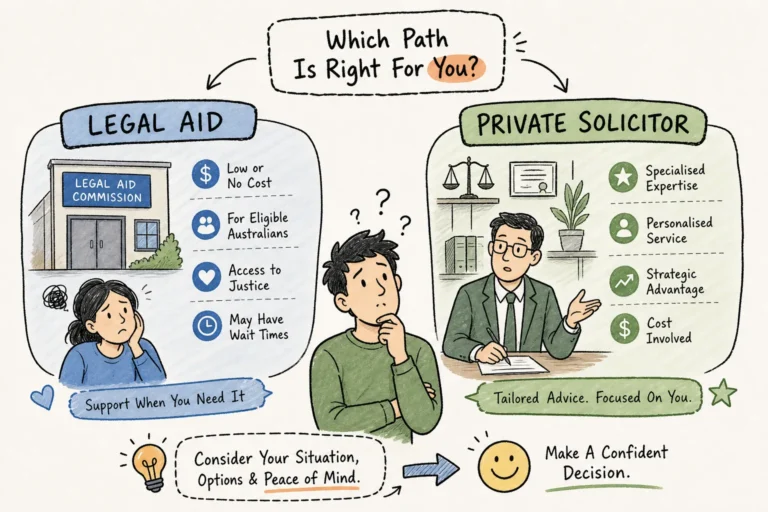
The financial difference between the two paths is significant. Private legal fees for a contested family law matter can run well into five or six figures. Legal aid, if you qualify, eliminates most of that cost. But the “if you qualify” part is where things get complicated, and most guides gloss over the specifics. This one doesn’t.
Understanding the true cost gap between your options is half the battle. For readers who want to benchmark what private legal services actually charge before making any decisions, NameTheCost.com publishes cost guides covering realistic professional and legal fee ranges across Australia. That’s useful context before you pick up the phone.
What legal aid in Australia actually is
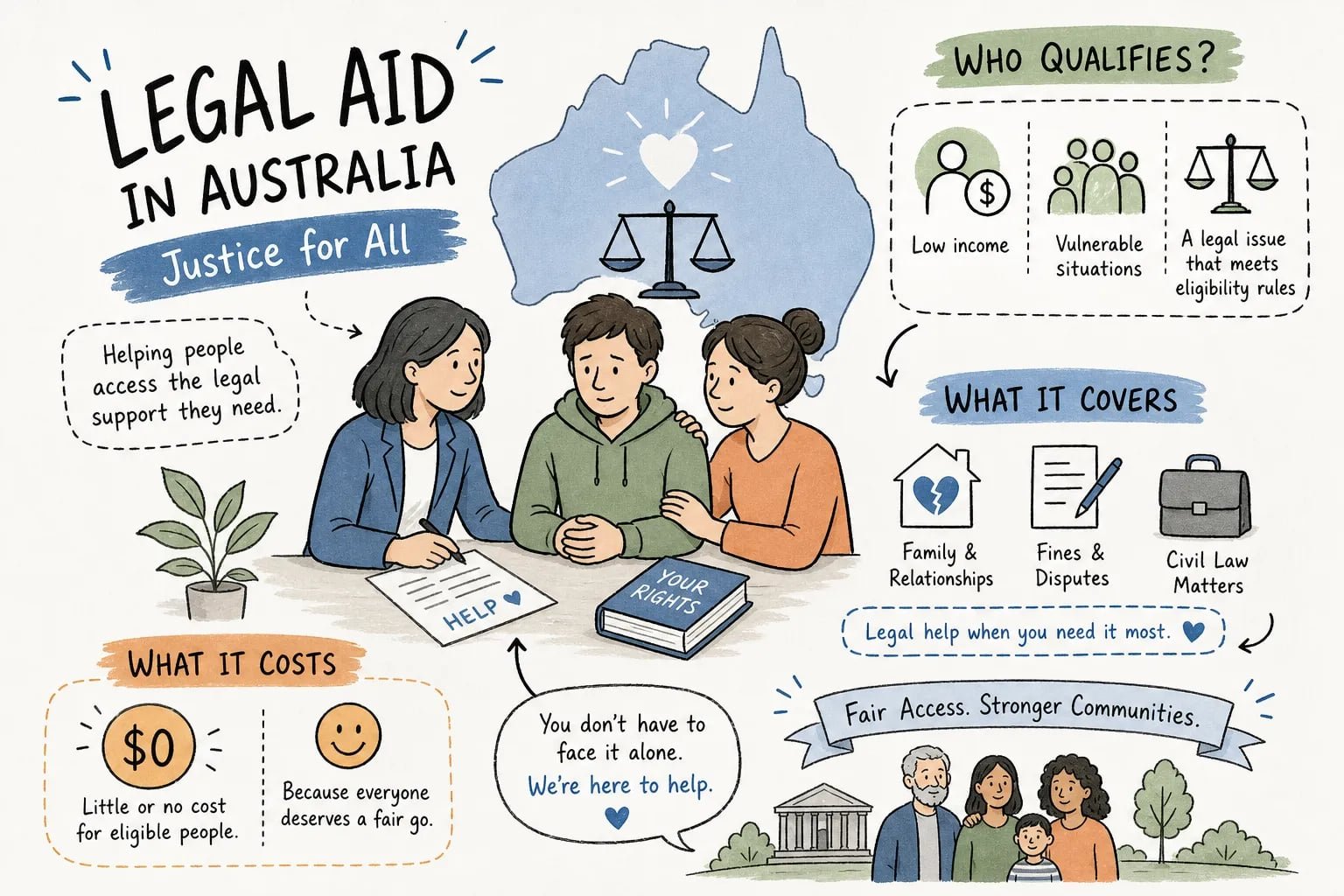
Legal aid is not a charity, and it’s not a pro bono initiative run by well-meaning law firms. Each state and territory operates its own Legal Aid Commission, publicly funded through a combination of Commonwealth and state or territory government appropriations. These are statutory bodies, which means they have formal processes, published eligibility rules, and defined service scopes. They operate like a government agency, not a community service.
The eight commissions operate independently but deliver broadly similar service types: legal information, telephone advice, face-to-face advice appointments, duty lawyer services at court, funded legal representation, and referrals to other services. The specific scope of what each commission funds varies, but the structural model is consistent across the country.
The commissions are: Legal Aid NSW, Victoria Legal Aid, Legal Aid Queensland, Legal Aid WA, Legal Services Commission SA, Legal Aid ACT, Tasmania Legal Aid, and Legal Aid NT. Each has its own eligibility thresholds, matter priorities, and application processes, which is why a person in Hobart and a person in Darwin can have quite different experiences of the same system.
What types of legal matters are covered
Family law is the largest single category across almost every commission in Australia. This includes parenting arrangements, separation, property settlement, child support, family dispute resolution, child protection, and family violence matters. Family violence cases often receive expedited assistance, and for good reason: delay in those matters carries real risk.
Criminal law is the other major priority area. Commissions consistently fund criminal charges, bail applications, and court appearances, particularly where the person faces the possibility of losing their liberty. Traffic offences that carry significant penalties, including licence disqualification, can also qualify. If the stakes are high and you have no money, the system is most likely to step in.
Civil law coverage is broader but harder to access at the representation level. Commissions can assist with credit and debt disputes, consumer issues, residential tenancy problems, employment law matters, social security appeals, discrimination claims, and guardianship. The catch is that civil matters are more likely to result in advice only, rather than full funded representation. If your problem is a Centrelink dispute rather than a criminal charge, you’re more likely to get a free consultation than a fully funded solicitor.
Legal aid Australia eligibility: the means test and the merits test
Every commission applies two core tests before granting funded assistance: a means test and a merits test. Both must be passed. Passing one but not the other is enough to be declined.
The means test looks at your income, assets, and financial liabilities. Each commission sets its own thresholds, and they are updated periodically. To give you a sense of the current figures: Legal Aid NSW uses a standard income benchmark of around $450 per week in net assessable income, while the NT benchmark sits at approximately $451 per week net, with deductions for housing, childcare, dependants, and maintenance payments. Queensland’s test is graduated by household size and work status, with contribution-free thresholds starting around $695 per week gross for a single person with no dependants.
Victoria’s test varies by the cost category of the matter. If you earn above the applicable threshold or hold significant assets, you won’t qualify for a grant of aid under the standard test. These figures are published on each commission’s eligibility guidance pages and are updated periodically, so always verify the current thresholds directly with your state’s commission before drawing any conclusions.
The merits test asks whether it’s reasonable to spend public money on your matter. This considers your prospects of success, the importance of the legal issue to you, what’s likely to happen if you’re unrepresented, and whether the cost of funding is proportionate to the benefit. A case with poor prospects doesn’t get funded. That is not a harsh judgement; it is how the system manages a finite budget against effectively unlimited demand.
Some matter types trigger additional tests on top of the standard two. Family property matters in NSW, for example, require a forum test (is this case in the right court?), an asset and dispute value threshold, and a social disadvantage criterion. Civil law matters across most commissions carry similar extra layers. The more complex your matter type, the more boxes you need to tick before a grant of aid is approved.
How to apply for legal aid in Australia: contacts by state
The fastest way to understand whether your matter and financial situation are likely to qualify is to call the helpline for your state directly. Most commissions can give you an initial indication over the phone before you complete any paperwork. Here are the main numbers (verify current hours on each commission’s official website):
- NSW: Legal Aid NSW, 1300 888 529
- VIC: Victoria Legal Aid, 1300 792 387
- QLD: Legal Aid Queensland, 1300 651 188 (Monday, Friday, 8:30am, 4:30pm AEST)
- WA: Legal Aid WA, 1300 650 579
- SA: Legal Services Commission SA, 1300 366 424
- ACT: Legal Aid ACT, 1300 654 314
- TAS: Tasmania Legal Aid, 1300 366 611
- NT: Legal Aid NT, 1800 019 343
When you apply formally, most commissions will ask for proof of income and assets, recent bank statements, any Centrelink payment details, copies of relevant court documents or correspondence, and a clear outline of the legal matter. Come prepared. The more organised you are, the faster the assessment moves.
Processing times vary by jurisdiction and urgency. The Legal Services Commission SA confirms standard applications within approximately 14 days, with urgent applications processed faster. Legal Aid NSW applications commonly take two to four weeks, though in practice this can stretch to six weeks for complex matters. Urgent criminal matters involving custody or imminent court dates are typically prioritised across all commissions. Many commissions also offer online enquiry forms on their websites, Queensland, for instance, includes a general question form for people who aren’t sure where to start.
The real cost gap between legal aid and going private
Private solicitors in Australia charge by the hour, and rates vary considerably by specialisation, firm size, and location. Family law solicitors in major cities currently charge between $300 and $650 per hour, with senior practitioners at larger firms reaching $800 or more. Criminal law rates follow a similar range, with junior criminal solicitors around $220 to $440 per hour and senior lawyers at $550 to $880 per hour or above. These are broad market ranges drawn from 2026 fee guides and will vary by city, firm size, and the seniority of the lawyer assigned to your matter.
Total fees across the life of a matter are where the numbers become confronting. A family law dispute resolved without court proceedings typically costs between $5,000 and $20,000 in private fees. Contested parenting or property matters that proceed to a hearing regularly reach $15,000 to $50,000 or more. Complex litigation can exceed $100,000 per party, and barrister fees for a defended criminal hearing can add $3,000 to $14,000 per day on top of solicitor costs.
Before you assume you can’t afford a private lawyer, or before you assume legal aid will cover you, it helps to understand what the market actually charges for your specific type of matter. NameTheCost.com publishes cost guides on professional and legal services across Australia, with realistic fee ranges for private legal representation. Knowing those real numbers before you make any decisions puts you in a much stronger position, regardless of which path you end up taking.
What to do if legal aid won’t cover you
Not qualifying for legal aid doesn’t mean you’re out of options. Around 160 to 200 community legal centres (CLCs) operate across Australia, according to CLC Australia, and they exist precisely for situations where people don’t meet legal aid’s means or merits criteria but still genuinely need help. CLCs are independent, not-for-profit services that provide free legal information, advice, and referrals to people experiencing disadvantage. They are a legitimate first step, not a fallback for people who couldn’t get the real thing.
Each state has a central directory or peak body to help you find the right service. In NSW, Community Legal Centres NSW and LawAccess NSW are the main entry points. Victoria has the Federation of Community Legal Centres. Queensland has Community Legal Centres Queensland. WA has Community Legal WA, SA has Community Legal Centres South Australia, and equivalent bodies operate in the ACT, Tasmania, and the NT. Most states also have specialist CLCs covering tenancy, employment, family violence, consumer law, and Aboriginal and Torres Strait Islander legal issues.
Bar associations and law societies in each state run pro bono schemes and free legal clinics where private lawyers donate their time. These are particularly useful for one-off advice sessions on matters that don’t need ongoing representation.
Specialist services such as Youth Law Australia, JobWatch for employment matters, Women’s Legal Services, and Aboriginal Legal Services fill significant gaps for specific groups of clients. If your matter falls outside both legal aid and CLC scope, a Law Society referral service in your state is usually the fastest route to finding appropriate help.
What you now know that most people don’t
Legal aid in Australia is a publicly funded statutory system with real eligibility hurdles, not a charity that helps anyone who asks. It covers family, criminal, and some civil matters, but a means test and a merits test stand between most applicants and a grant of funded representation. Qualify, and the savings compared to private legal fees are substantial, often tens of thousands of dollars.
If you don’t qualify, community legal centres and pro bono clinics are a genuine alternative, not a consolation prize. Call the helpline for your state first, know what documents to bring, and before you commit to any path, understand what the private market actually charges for your type of matter so you’re comparing real numbers, not assumptions. NameTheCost.com publishes independent cost guides built specifically for Australians navigating exactly these kinds of decisions.