Small Business Insurance Australia: Costs & Coverage Guide
Many small business owners buy insurance when someone tells them to, a landlord, a new client, or an accountant at the end of a financial year. They buy it reactively, without a clear picture of what they’re actually purchasing or whether the price is reasonable. That’s how businesses end up either underinsured or overcharged, sometimes both.
This guide covers what small business insurance in Australia legally requires, what cover genuinely matters beyond the legal minimum, realistic premium ranges by industry and business structure, and what to watch for in the policy wording before you sign. If insurance is one line in a broader business setup budget you’re working through, NameTheCost.com publishes independent Australian cost guides across business startup costs, professional services, and operational overhead so you can benchmark every expense, not just this one.
What Australian law actually requires you to insure
The legal list is shorter than most people assume. There are essentially two mandatory requirements for most businesses, with a third that applies to specific occupations.
Workers’ compensation: only relevant if you have employees
Workers’ compensation is required by law in every Australian state and territory the moment you employ staff. Sole traders with no employees are not required to hold it. The catch is that the scheme differs significantly by state: a NSW business deals with icare and SIRA, a Queensland business works through WorkCover Queensland, and a Western Australian business has more flexibility to arrange cover through approved insurers. Premiums are calculated on wages, industry risk category, and claims history, so the same business in different states can face meaningfully different costs. If you have staff working across state lines, the requirement is tied to where each employee works, not where the business is registered.
CTP for registered business vehicles
Compulsory third party insurance is built into vehicle registration, so if the business uses registered vehicles, CTP is already included. It covers personal injury claims from road accidents but not vehicle damage or property. Some business owners assume their personal CTP extends to work use automatically. Whether it does depends on the vehicle’s registered purpose, so it’s worth confirming rather than assuming.
Occupation-specific mandatory cover
Some professions face additional mandatory insurance requirements through their licensing body or regulator. Financial advisers, builders, and certain health practitioners fall into this category, often requiring professional indemnity or fidelity cover as a condition of their licence. This is occupation-specific, not a blanket rule. The practical step is to check your licence conditions directly rather than relying on general business insurance summaries, which rarely capture these nuances.
Small business insurance in Australia: cover you genuinely need beyond the legal minimum
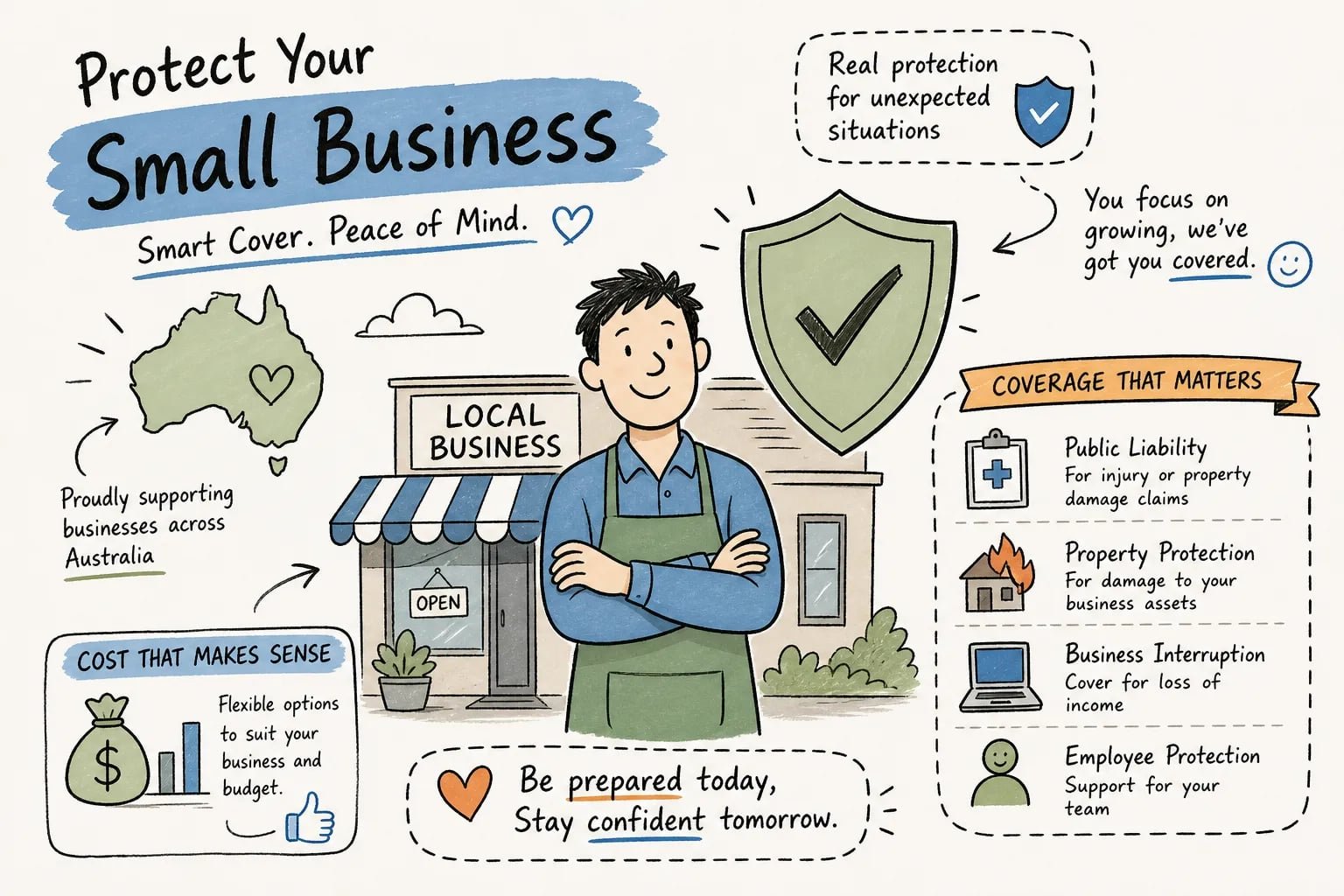
These policies are technically optional under the law. Skipping them creates real financial exposure that many businesses can’t absorb, particularly public liability, professional indemnity, and interruption cover, each of which is covered below.
Public liability: the non-negotiable for most businesses
Public liability covers third-party injury and property damage caused by your business activities. Most commercial landlords, councils, event venues, and larger clients require it as a contract condition before they’ll work with you. Standard limits in Australia range from $5 million to $20 million, with $10 million being the most common minimum requested in commercial leases and contractor agreements, and $20 million frequently required for construction work and government contracts. Sole traders running a home-based business still face liability if a client visits the premises. The risk doesn’t disappear because the business is small.
Professional indemnity for advice-based businesses
If the business provides advice, design, consulting, IT services, or any professional output, professional indemnity covers claims arising from errors, omissions, or negligent advice. This is a separate policy from public liability and often the largest single premium line for consultants, accountants, IT contractors, and health professionals. One critical detail: professional indemnity is almost always a claims-made policy, meaning the claim must be made during the policy period. That has practical implications when switching insurers or letting cover lapse between engagements.
Business interruption, tools, and stock cover
Business interruption replaces lost income and covers ongoing fixed costs when an insured event stops operations. Most policies include a waiting period of at least a few days, so very brief disruptions may not be covered. Tools and equipment cover is particularly relevant for tradies and mobile service businesses. It covers loss, theft, or accidental damage to the equipment you rely on to work. Stock cover applies to retail and wholesale businesses holding physical inventory. These features are often packaged together, but each carries its own limits and exclusions, and the definitions matter when a claim is on the table.
What small business insurance costs in Australia
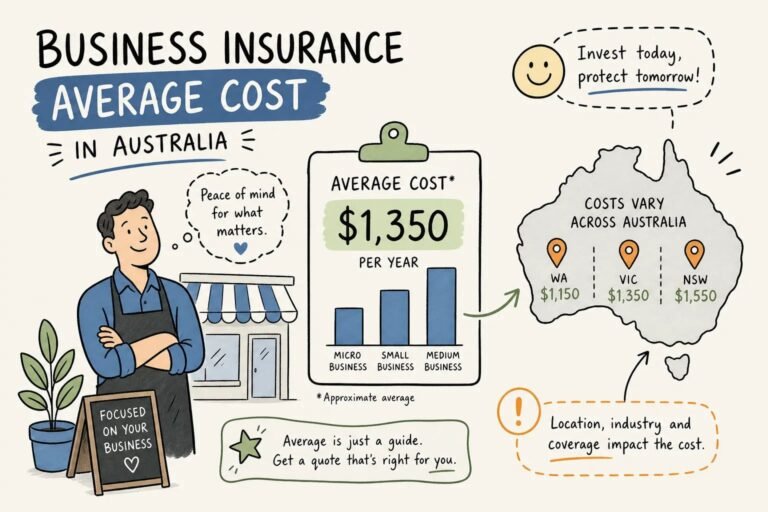
Premium ranges vary significantly by industry, cover type, and business size. These figures give you a realistic starting point before you request quotes.
Typical annual premiums by industry
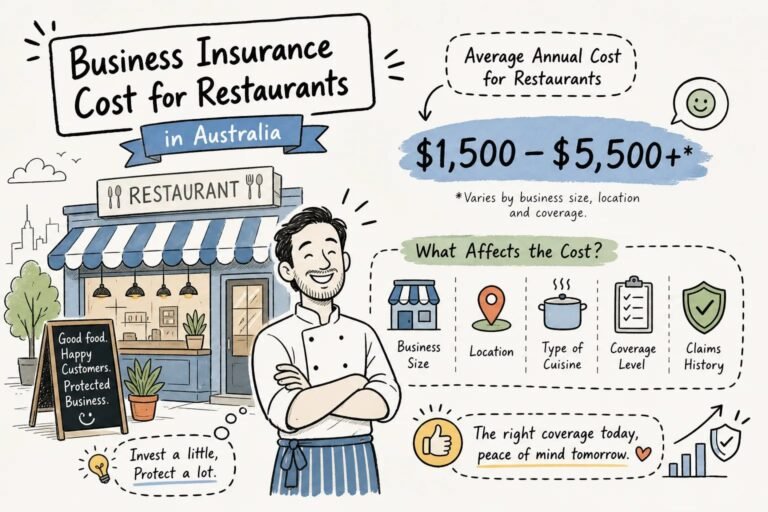
Retail businesses typically pay around $83 to $103 per month for a packaged business insurance policy (BizCover customer data, 2025), which puts annual cost somewhere between $1,000 and $1,240. Food businesses average around $145 per month through the same data set. Tradies face higher premiums because of on-site risk and equipment exposure: public liability alone typically runs $700 to $2,000 per year, and higher-risk trades with tools cover included can push above $300 per month for a combined policy. Office-based professional services businesses often pay $500 to $1,200 per year for public liability, but add professional indemnity and the total commonly lands between $1,300 and $3,700 per year depending on turnover and the nature of the services provided.
What drives premiums up or down
The main pricing factors are annual turnover, number of employees, claims history, industry risk category, geographic location, cover limits, and the excess the business is willing to carry. A tradie in Sydney doing commercial fitout work pays considerably more than a bookkeeper working from a Brisbane home office, even if both hold $10 million public liability. Insurers also weight postcode-level data for property and natural disaster exposure, which means location affects premiums in ways that aren’t always obvious from a standard quote form.
How your business structure affects what you pay for small business insurance in Australia
Sole traders: lower premiums, higher personal exposure
Sole traders without employees skip workers’ compensation entirely, which reduces costs significantly. Their primary insurance needs are public liability and, for professional services, indemnity cover. Premiums are generally lower because turnover and headcount are smaller. The trade-off is that there’s no corporate structure to limit personal liability, which makes adequate cover more important, not less. A gap in cover that a company might absorb through its legal structure can follow a sole trader personally.
Home-based businesses: not automatically covered under your home policy
A standard home and contents policy explicitly excludes business use in most cases. Equipment used for work, stock held at home, and liability arising from client visits are typically not covered. Allianz‘s current product disclosure statement, for example, limits business equipment cover under a home policy to $5,000 total, with business money excluded entirely. A separate business policy or an endorsed home business extension is the practical fix. The cost for a low-risk home-based business is typically $400 to $2,000 per year depending on the nature of the work and turnover.
Registered companies: broader exposure, more policy lines
Registered companies with employees, physical premises, and commercial clients generally need the full stack: workers’ compensation, public liability, professional indemnity where relevant, property and contents, business interruption, and potentially commercial motor and cyber cover. Premiums scale with turnover and headcount. Business interruption cover in particular requires documented financial records to support any future claim. Keeping clean books is not just an accounting requirement. It’s an insurance requirement too.
Exclusions and gaps that leave businesses exposed
The policy summary is not the policy. The wording is where the real differences live, and most business owners skip it entirely.
Common exclusions in standard policies
Standard business policies commonly exclude intentional or criminal acts, contractual liability assumed beyond normal legal exposure, professional advice errors (which require separate indemnity cover), employment claims, wear and tear or poor maintenance, and flood and earthquake damage. Cyber incidents are excluded from most general liability and property policies unless cyber cover is explicitly added. For any business that holds customer data, processes online payments, or relies on cloud systems, cyber liability insurance is increasingly a practical necessity rather than a niche add-on. Based on 2026 insurer and broker pricing guidance, a well-secured small business in Australia can expect to pay around $600 to $1,000 per year for cyber cover, rising to $3,500 or more for businesses with greater data exposure or weaker security controls.
The underinsurance trap and excess to watch
Insuring property or stock at below replacement value can result in the insurer reducing any claim payout proportionally under coinsurance provisions. It’s a common gap that surfaces only when a claim is lodged. High excess levels make a policy look cheaper at quote stage but costly when a real claim arises, particularly for small, frequent losses. The practical test is whether the excess makes financial sense against the claims you’re most likely to make, not the catastrophic events you hope will never happen.
How to compare business insurance quotes in Australia
Where to start collecting quotes
BizCover and Compare the Market are two widely used comparison platforms for SME insurance in Australia, offering side-by-side quotes across multiple insurers in a single session. Choosi is a third option worth checking. Going direct to Allianz, QBE, CGU, NRMA, and AAMI is a useful cross-check, particularly for less common cover types. A Forbes Advisor Australia comparison (2024) found NRMA quoting at $551.88 per year, CGU at $603.02, and Allianz at $665.58 for a comparable public liability scenario. That’s one data point, not a universal ranking, but it confirms that meaningful price differences exist across insurers for the same business profile. Always compare business insurance quotes across at least three providers before committing.
What to check before you sign
Compare policies on cover limits, excesses, exclusions, and the definition of “business activities” covered, not just price. Confirm the policy covers your actual work, including subcontracting arrangements or specialist services outside your core trade. Check whether professional indemnity is claims-made or occurrence-based and understand what that means for renewals and coverage gaps. The distinction matters most when you switch insurers or step back from client work temporarily. Read the natural disaster exclusions carefully if your premises or stock face flood or storm exposure. And confirm that the liability limits you’re holding match what your landlord, clients, or licensing body actually require, rather than defaulting to the cheapest available option.
The bottom line
Small business insurance in Australia is not complicated, but it rewards the business owner who buys deliberately rather than reactively. Know what you’re legally required to hold, identify the practical risks your specific business faces, and compare quotes with the actual policy wording in front of you, not just the summary sheet.
A sole trader with no employees and a laptop has fundamentally different insurance needs than a registered company with staff, a shopfront, and commercial clients. The premium ranges in this guide give you a realistic benchmark to pressure-test the quotes you receive. If insurance is one component of a larger business setup budget, NameTheCost.com covers independent Australian cost guides across professional services, startup costs, and operational overhead, so you can see the full picture before committing to anything.