How Much Does a Building and Pest Inspection Cost in Australia?
Budgeting for a building and pest inspection cost is one step many Australian buyers skip or underprice. Spending $600,000 or more on a property and then hesitating at a $600 inspection is backwards thinking. A combined building and pest inspection is among the most cost-effective risk-reduction tools available to any buyer. Some buyers who skip it altogether discover rotting subfloors and active termite colonies shortly after settlement, problems that could have been identified before they signed anything.
This article gives you real, current building and pest inspection cost figures for 2026 across Australia’s major cities, breaks down what’s actually included in a standard report, and tells you what to watch for when comparing quotes. Before you call a single inspector, it’s worth checking NameTheCost.com, an independent Australian pricing resource that benchmarks pre-purchase property costs so you know what’s reasonable before committing to anything.
What a standard combined building and pest report covers
Understanding the scope of a standard inspection upfront means you can compare quotes on equal terms and spot when a cheap inspector has quietly stripped out key components.
What’s included in the standard inspection
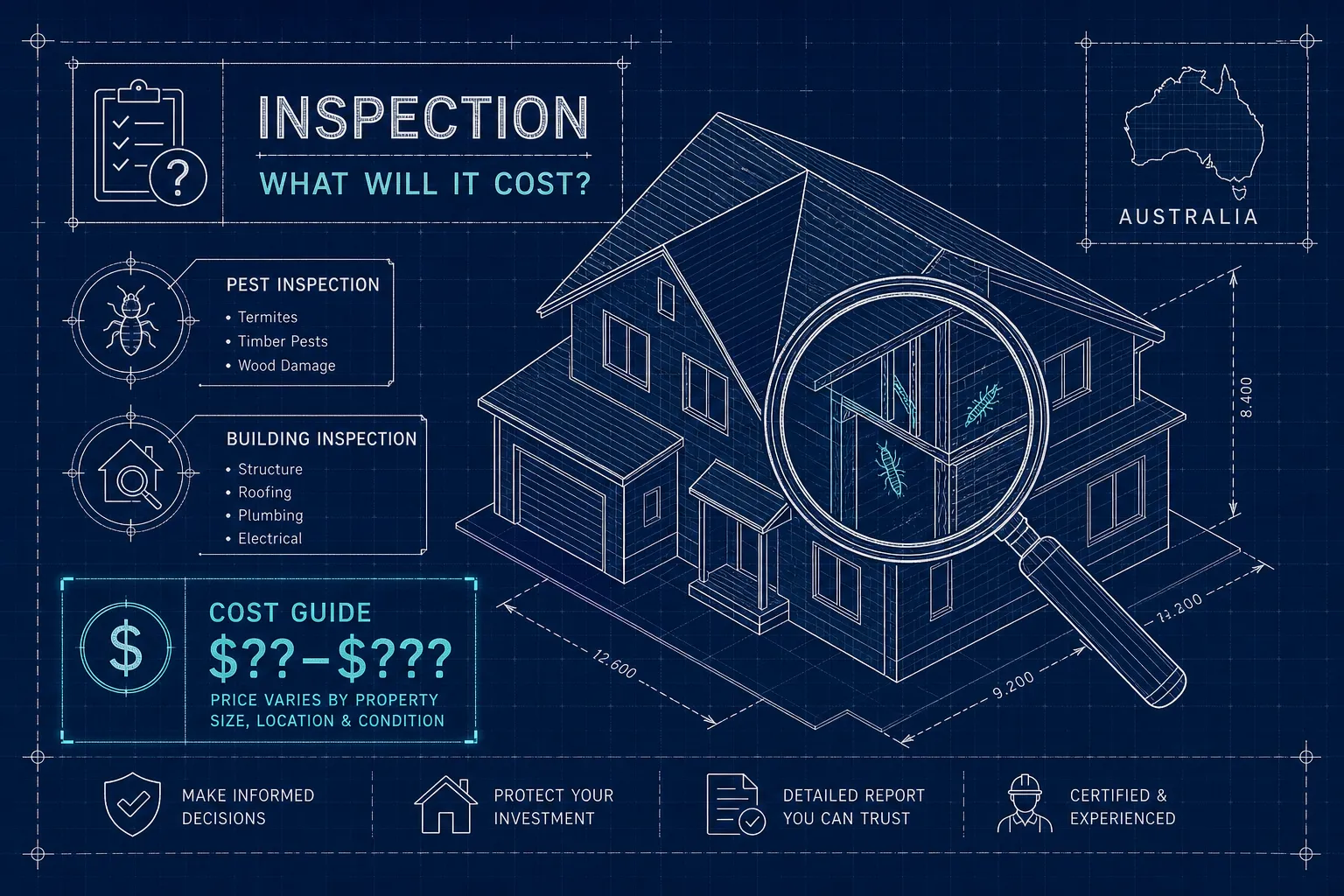
A standard combined report covers a visual, non-invasive assessment of the property’s accessible areas. The building component typically includes:
- Interior walls, ceilings, floors, doors, and windows
- Roof exterior and roof void, leaks, framing issues, and water staining
- Exterior cladding, eaves, gutters, and downpipes
- Subfloor structure, bearers, joists, and moisture issues
- Wet areas including bathrooms, kitchens, and laundries
- Site improvements such as decks, fences, retaining walls, and driveways
The pest component covers visible termite activity, borer damage, fungal decay, and conditions that could attract future infestations. The completed report includes photos, written findings, and recommendations for further specialist inspections where relevant.
Common extras that attract additional charges
The standard report is a visual defect and timber pest inspection. Anything beyond that is typically an add-on, and providers are not always upfront about what’s excluded. Plumbing, electrical, and gas inspections are almost always outside the scope. CCTV drain inspections, thermal imaging (unless bundled), asbestos sampling, mould testing, pool and spa compliance checks, and local authority records searches are all common paid extras, typically adding $200, $600 depending on the service. Before booking, ask specifically what is and isn’t included so you’re comparing like with like across quotes.
Building and pest inspection cost across Australia’s major cities in 2026
Prices vary more than most buyers expect. The typical building and pest inspection cost for a standard residential home sits broadly between $500 and $850 nationally, but where your property falls within that range depends heavily on which city you’re in, the age of the home, and its overall complexity.
City-by-city price breakdown
Based on current market pricing for 2026, here’s what combined building and pest inspections cost across Australia’s major cities:
| City | Approximate combined inspection price range (incl. GST) |
|---|---|
| Sydney | ~$595, $850 |
| Melbourne | ~$550, $750 |
| Brisbane | ~$550, $700 |
| Perth | ~$549, $700 |
| Adelaide | ~$638, $800 |
Sydney consistently sits at the higher end of the national range. Perth and Brisbane tend to come in at the lower end for metropolitan pricing. Adelaide runs slightly higher than Melbourne and Brisbane despite its smaller market, partly due to older housing stock that requires more thorough and time-intensive inspections.
Regional and rural pricing differences
Outside the major metros, prices can go either way. Smaller regional towns sometimes have lower base rates due to reduced overhead costs, but remote properties frequently attract travel surcharges that push the total well above metropolitan averages. If the property is more than an hour’s drive from the inspector’s base, ask upfront whether travel fees apply and how they’re calculated. Some inspectors charge a flat surcharge; others bill by kilometre.
How property type and size affect what you’ll pay
Property size is one of the most direct drivers of building inspection cost in Australia. A larger home takes longer to inspect, which means higher fees. Knowing how size and type affect pricing gives you a solid basis for evaluating any quote you receive.
Apartments and units vs standalone houses
Apartments generally attract lower inspection fees because they have less to inspect: no roof space to crawl through, no subfloor, and smaller overall footprints. A combined inspection on an apartment or unit typically runs from $350 to $600, with one-bedroom apartments often at the lower end of that range. Two-bedroom apartments and larger units tend to sit between $430 and $700. Standalone houses start higher and climb quickly with size.
Bedroom count, storeys, and overall complexity
A standard three-bedroom house is the benchmark most providers price against, typically ranging from $440 to $850 for a combined inspection depending on city and property condition. Four-bedroom homes push toward the upper end of that range, and five-bedroom or larger properties often require custom quotes. Double-storey homes cost more than single-storey properties of equivalent bedroom count because roof access, external wall coverage, and inspection time all increase with height and structural complexity.
What pushes inspection fees above the average
Some properties genuinely cost more to inspect. When a quote comes in above the benchmarks listed above, it usually has a legitimate reason. Understanding those reasons helps you distinguish a justified premium from a quote that simply doesn’t stack up.
Property age and condition
Older homes take more time and expertise to assess properly. Pre-1978 properties often carry additional hazards such as lead paint or asbestos-containing materials, and inspectors spend longer checking ageing structural components, outdated wiring configurations, and deteriorating plumbing systems. Pre-1940 homes can run 20, 35% above the standard price, and a home built before 1978 commonly attracts a surcharge of $50, $150 depending on the provider. The termite inspection cost component can also be higher in older homes where timber framing is more extensive and harder to access.
Accessibility, location, and structural complexity
Hard-to-access properties cost more for a simple reason: they take longer. Steep roof pitches, confined crawl spaces, dense landscaping blocking exterior walls, and properties on sloped blocks all add inspection time and risk. Rural and semi-rural properties often attract travel fees of $50, $150 or more. Complex layouts, multiple dwellings on one title, or properties with extensive outbuildings also justify higher fees because they represent more work and more liability for the inspector. If your property ticks several of these boxes, budget toward the upper end of the city range rather than the midpoint.
Red flags to watch for when comparing quotes
Price is not the only variable that matters when choosing an inspector. A quote that comes in well below the city benchmark is worth scrutinising, not celebrating.
Warning signs in low-cost quotes
Be cautious of any quote that raises the following concerns:
- Doesn’t specify exactly what is included in the inspection scope
- Provides no licence or certification details for the inspector
- Promises same-day report delivery as standard (thorough reports typically take 24, 48 hours)
- Excludes the roof void and subfloor without explanation
A combined building and pest inspection cost of $250, $350 for a full house often signals a limited-scope report, an inexperienced inspector, or one who carries no professional indemnity insurance. If the inspector won’t stand behind the report they’ve written, the document is nearly worthless when defects surface later.
What a credible inspector should provide upfront
A trustworthy inspector will tell you clearly what Australian Standard their report is written to: AS 4349.1 for the building component and AS 4349.3 for timber pests. They’ll confirm their qualifications and licence number, give you a written scope of works before the inspection, and commit to a clear report delivery timeframe. Before comparing quotes, use a resource like NameTheCost.com to benchmark what a fair pest inspection price or combined building and pest inspection cost looks like for your property type and city. Knowing the market rate before you call gives you the confidence to push back on quotes that simply don’t add up.
Frequently asked questions about building and pest inspection costs
How much does a building and pest inspection cost for an apartment?
For most apartments and units, expect to pay between $350 and $600 for a combined building and pest inspection. One-bedroom apartments typically sit at the lower end; larger units or those in older buildings will be closer to $600 or above.
What is the average building and pest inspection cost in Sydney?
In Sydney, building and pest inspections for a standard residential home generally range from approximately $595 to $850, making it the most expensive major city market in Australia for this service.
Is a separate termite inspection ever worth it?
If you’re buying in a high-risk termite area, particularly in Queensland, the Northern Territory, or coastal New South Wales, a standalone termite inspection cost of $200, $350 may be justified in addition to the combined report, or at minimum ensure the pest component of your combined inspection is thorough and clearly scoped.
How long does a building inspection take?
Most standard residential inspections take between one and three hours on site, depending on property size and condition. The written report typically follows within 24, 48 hours of the inspection.
Can I negotiate on building and pest inspection cost?
Some inspectors will negotiate on price, particularly if you’re a repeat client or refer others. That said, pushing a credible inspector’s fee too low risks incentivising shortcuts. Focus instead on understanding exactly what’s included before comparing prices.
The bottom line on building and pest inspection costs
A combined building and pest inspection is not a box-ticking exercise. It’s the clearest picture you’ll get of what you’re actually buying before settlement, and it can prevent costly repair bills, sometimes running into the tens of thousands of dollars or more. The typical building and pest inspection cost for a standard residential property in Australia in 2026 sits between $500 and $850, with city, size, age, and accessibility all shifting that figure up or down.
The real mistake isn’t paying too much for an inspection. It’s booking the cheapest one without checking what it actually includes. Use the benchmarks in this article, cross-reference with NameTheCost.com for independent pricing guidance across all your pre-purchase costs, and treat a credible inspection report as the last line of defence before you sign anything. The inspection costs a few hundred dollars. The defects it uncovers can save you far more.