How Much Is a Wedding Photographer in Australia?
How much is a wedding photographer in Australia? Most couples underbudget, and not by a little, by a lot. They’re working off vague estimates from friends or figures half-remembered from a venue brochure, and then they’re surprised when the quotes roll in. The reality is that wedding photography in Australia spans a wider price range than almost any other wedding expense: from under A$2,000 to well over A$12,000 for the same day, the same hours, and roughly the same output.
The problem isn’t the price. It’s walking into conversations without knowing what fair looks like. That’s what benchmarking resources like NameTheCost.com are for: independent, unbiased pricing data that gives you a realistic picture before you start collecting quotes. Once you know what the market actually charges, you stop guessing and start negotiating.
This guide covers the national averages, how prices break down by city, what’s included at each package tier, which extras inflate the final bill, what to check in the contract, and where to cut costs without sacrificing the one vendor you’ll still care about in 20 years.
How much is a wedding photographer in Australia: national averages for 2026
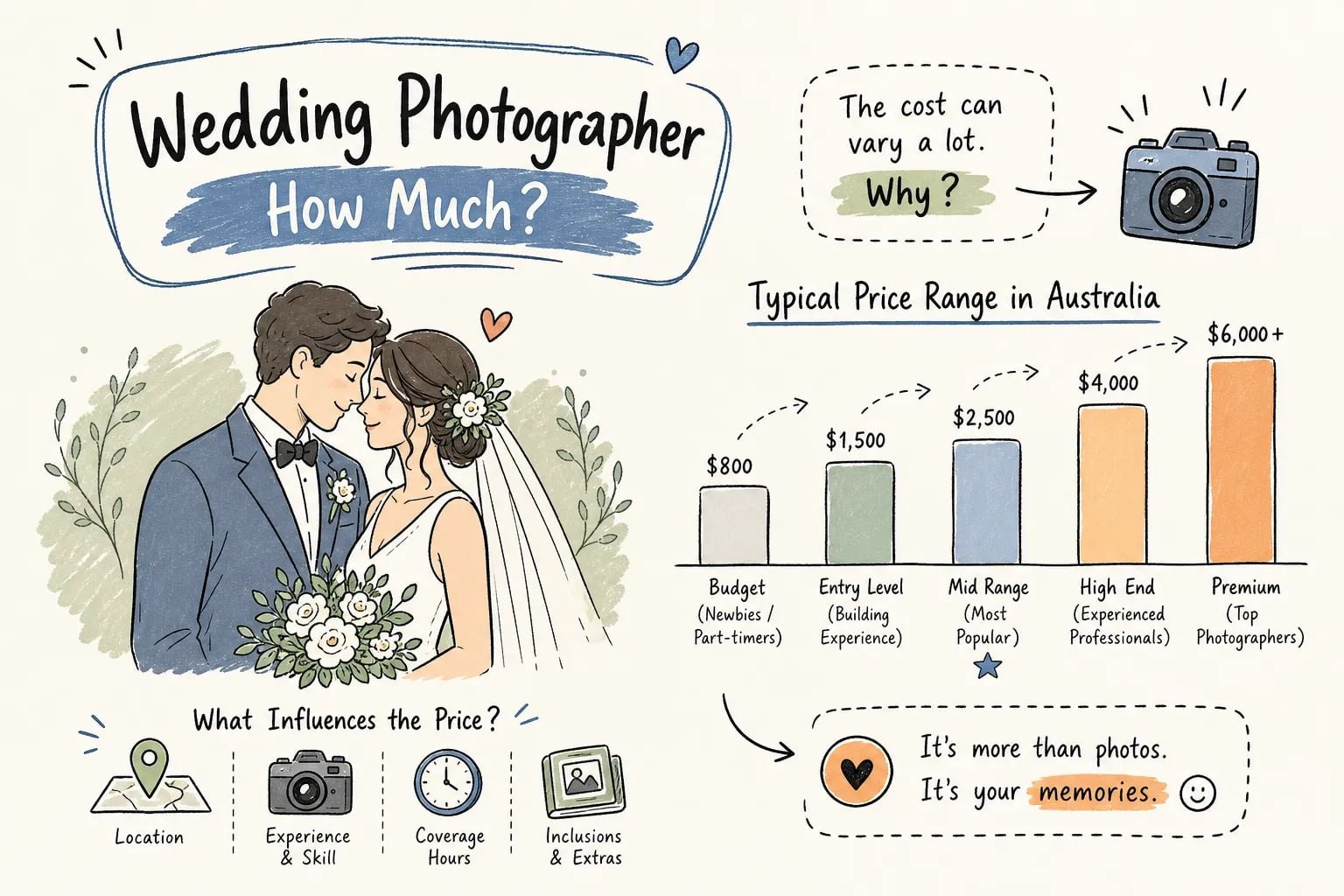
The most reliable national benchmark for a full-day wedding photography package in 2026 sits at around A$3,567 to A$3,657, up approximately 5% from the prior year based on aggregated market data. That average can mislead, though. Once you add the extras that most couples don’t initially account for, the real spend in a capital city lands closer to A$4,500 to A$7,500 for a solid mid-tier photographer.
The market breaks into three clear tiers. Knowing which one aligns with your priorities matters more than hunting for a single number, so it’s worth understanding what each delivers before you start requesting quotes.
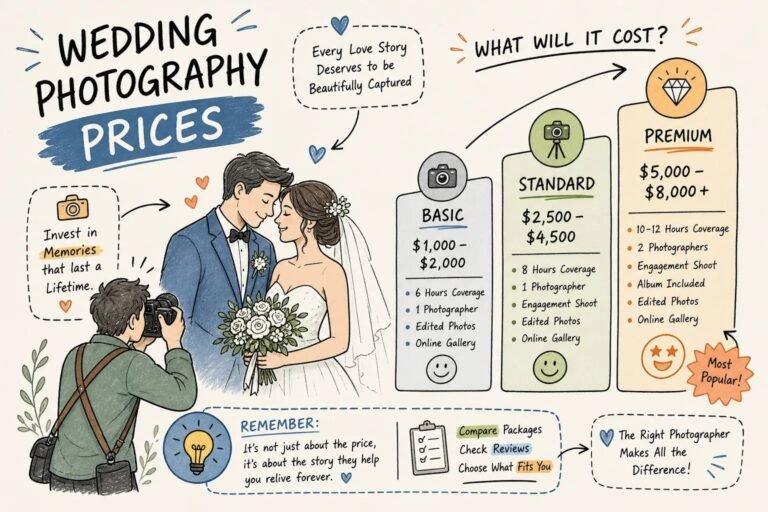
- Entry-level (A$2,800, A$3,800): Single shooter, shorter coverage windows, digital delivery only. Suitable for smaller, lower-key weddings where extensive coverage isn’t the priority.
- Mid-tier (A$4,500, A$7,500): Eight to ten hours of coverage, often includes a second shooter, edited digital gallery, and online delivery within a reasonable timeframe.
- Premium (A$8,500, A$12,000+): Full-day coverage, high-end albums, prints, experienced two-person team, and higher production value throughout.
The jump between tiers is almost always justified by experience and deliverables, not just photographic style. A photographer charging A$9,000 isn’t simply more artistic than one at A$4,000. They’re likely delivering more hours, more edited images, a printed album, and years of experience handling the unexpected.
How wedding photography prices vary across Australian cities
Sydney is one of the most expensive wedding photography markets in the country. Budget packages start around A$750 to A$1,500 for two to four hours of coverage, while mid-range packages, typically covering six to twelve hours with edited digital files, run A$1,500 to A$3,500. High-end packages in Sydney start around A$4,500 and climb significantly from there. Higher competition and operating costs in the city both push rates above the national average.
Melbourne sits similarly above the national mean. Couples in Melbourne are averaging around A$4,800 for full-day coverage in 2026, with mid-range packages typically spanning A$2,500 to A$4,500. Premium options start at A$5,000 and up. Brisbane and Perth track closer to the national average, with mid-range packages generally sitting between A$2,500 and A$4,500 and premium starting around A$5,000.
Adelaide trends slightly lower on the top end, with high-end packages typically starting around A$4,500. Regional areas within any state can appear cheaper, but travel surcharges from city-based photographers often close that gap. If you’re booking a photographer from the nearest capital for a regional venue, factor in travel fees before assuming you’re saving money.
What’s actually included in each package tier
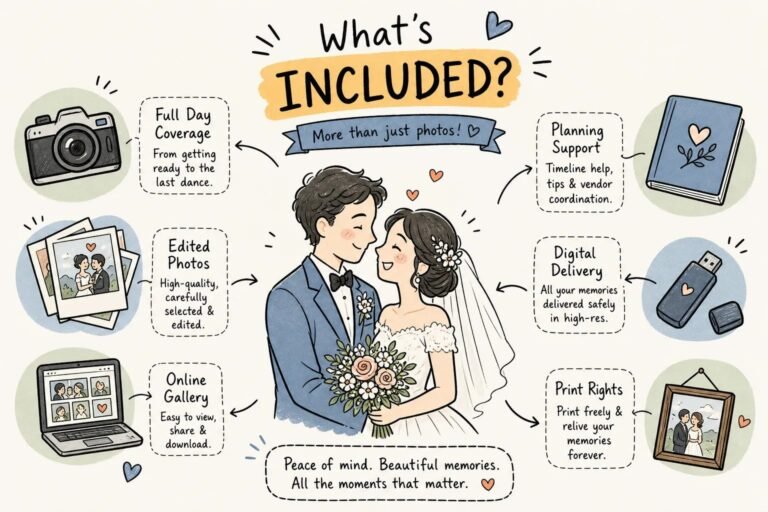
Entry-level packages typically cover two to four hours, deliver 100 to 300 edited images, and turn around the final gallery within four to six weeks. That’s suitable for a ceremony-only wedding or a very small celebration. Mid-range packages extend to six to ten hours, deliver 300 to 600+ edited images, and often include a second shooter. Delivery timeframes in this tier usually sit at four to eight weeks, though peak season can push that to ten or twelve weeks.
Premium packages cover the full day, typically eight to twelve hours, and deliver 600 to 1,000+ edited images alongside physical albums and sometimes priority editing or sneak-peek previews within 48 hours. Turnaround time is something most couples forget to ask about upfront. Finding out your photos will arrive twelve weeks after the wedding, when you’re already sharing iPhone shots with everyone, is not ideal. Confirm the expected delivery timeframe in writing before you sign.
Image licensing deserves more attention than it gets. Most packages at the entry and mid-range tiers include a personal-use licence, which means you can print and share photos freely for personal purposes. The photographer retains copyright. What you receive is a usage licence, not ownership of the files. Premium packages sometimes include extended licensing covering commercial use, personal branding, or social media advertising. Never assume your licence terms from a verbal conversation. Get it in the contract, in plain language, and read it before you sign.
The extras that quietly inflate your final bill
Travel fees are one of the most common surprises couples encounter. Most photographers include travel within a defined radius, typically 50 to 100 kilometres from their base. Beyond that, fees range from A$200 to A$600 for nearby regional venues, and A$500 to A$1,100 or more for locations requiring longer drives or overnight stays. Interstate or destination weddings can add A$800 to A$2,500 once flights and accommodation are included. If your venue is outside the metropolitan area, ask about travel costs before the quote becomes a contract.
A second shooter adds A$500 to A$1,200 to most packages, but it’s often worth it for larger weddings or venues with multiple simultaneous locations. The broader coverage, especially during the getting-ready phase when the couple is in separate rooms, is something a single photographer simply can’t replicate.
Albums are where many couples experience genuine sticker shock. A quality custom album can add A$800 to A$2,500 to the total cost. Parent albums are priced separately on top of that. Peak-season Saturday weddings, particularly between October and April in most states, also attract premium rates from in-demand photographers. If a photographer’s base price is already at the top of your budget, a peak-date booking with album add-ons can push the final invoice well beyond what you expected. Ask specifically what “included” means in any quote, and what sits outside the package price.
Contract red flags to check before you book
Every wedding photography contract should clearly spell out: the exact hours and locations covered, the number of edited images to be delivered, the delivery timeframe, the photographer’s plan if they’re ill or unavailable on the day, and what happens in the event of equipment failure. Any contract that handles disputes “case by case” or leaves backup arrangements vague is a problem. That’s not a strict policy, it’s an invitation for a dispute you don’t want the week before your wedding.
Cancellation terms are non-negotiable territory. Most photographers require a non-refundable booking fee of 20 to 30% of the package price. Know exactly what you forfeit if you cancel and whether your deposit transfers to a rescheduled date. Rescheduling fees are increasingly common, particularly for short-notice changes. The contract should also clarify what happens if the photographer cancels: is a substitute offered at no extra cost? Is the full payment refunded if no suitable alternative is available? These scenarios happen more often than couples expect, and a good contract handles them clearly rather than leaving you to negotiate in a stressful moment.
File backup and storage provisions matter too. Ask the photographer how files are backed up immediately after the wedding, how long they store originals, and what their process is if images are corrupted or lost. These aren’t paranoid questions, equipment fails. A thorough photographer has a documented answer ready.
How to get the best photographer for your budget
Photography is the one wedding expense where cutting costs typically backfires. Flowers wilt, catering gets eaten, and centrepieces go into a box. Photos are what remains. That said, there are legitimate ways to reduce costs without compromising the quality of the images you end up with.
Three strategies consistently work without affecting image quality. Choosing a weekday or off-peak date removes the premium Saturday surcharge that most in-demand photographers build into their pricing. Limiting coverage to the ceremony and portraits rather than a full-day package can save A$1,000 to A$2,000 without affecting the images that matter most. And skipping the printed album from the package and ordering prints independently later is a common saving that doesn’t touch the quality of your photos at all.
Before accepting any quote, know what fair market looks like for your city, date, and package tier. This is exactly what NameTheCost.com is built for: independent Australian pricing data, no advertiser influence, and realistic cost benchmarks that reflect what couples are actually paying right now. Check the numbers before you start conversations, not after you’ve already fallen in love with a portfolio. Walk in knowing the market and the conversation becomes straightforward.
The bottom line: how much is a wedding photographer really going to cost?
If you’re asking how much is a wedding photographer in Australia, the honest answer is: it depends on the city, the package, and the extras. The national average of around A$3,567 is a starting point, but city premiums, package inclusions, hidden extras, and seasonal surcharges all move that number significantly. A$3,500 and A$8,000 can both be fair, depending on what’s actually on the table.
Before you collect quotes, benchmark the market. When you receive contracts, read every clause on cancellation, backup plans, delivery, and licensing. Don’t let a slick portfolio substitute for clear terms. Wedding photography is one of the few vendor categories where doing the homework before you book pays off in both dollars and peace of mind on the day itself.