Retail Business Insurance Average Cost in Australia: 2026 Guide
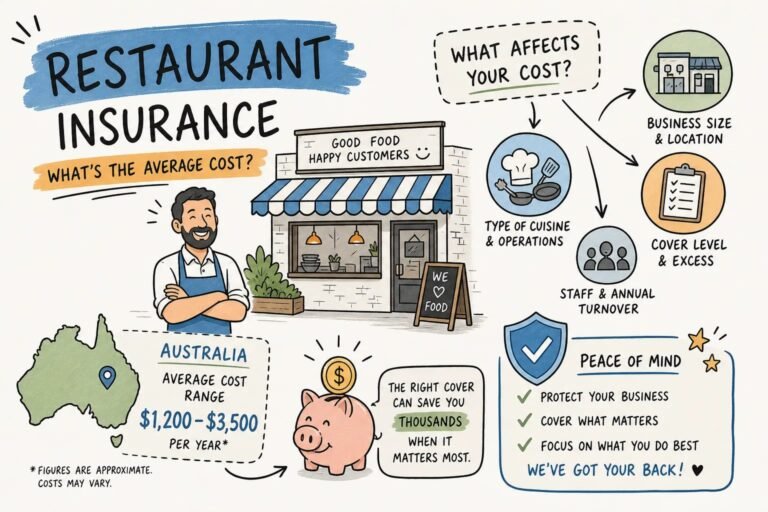
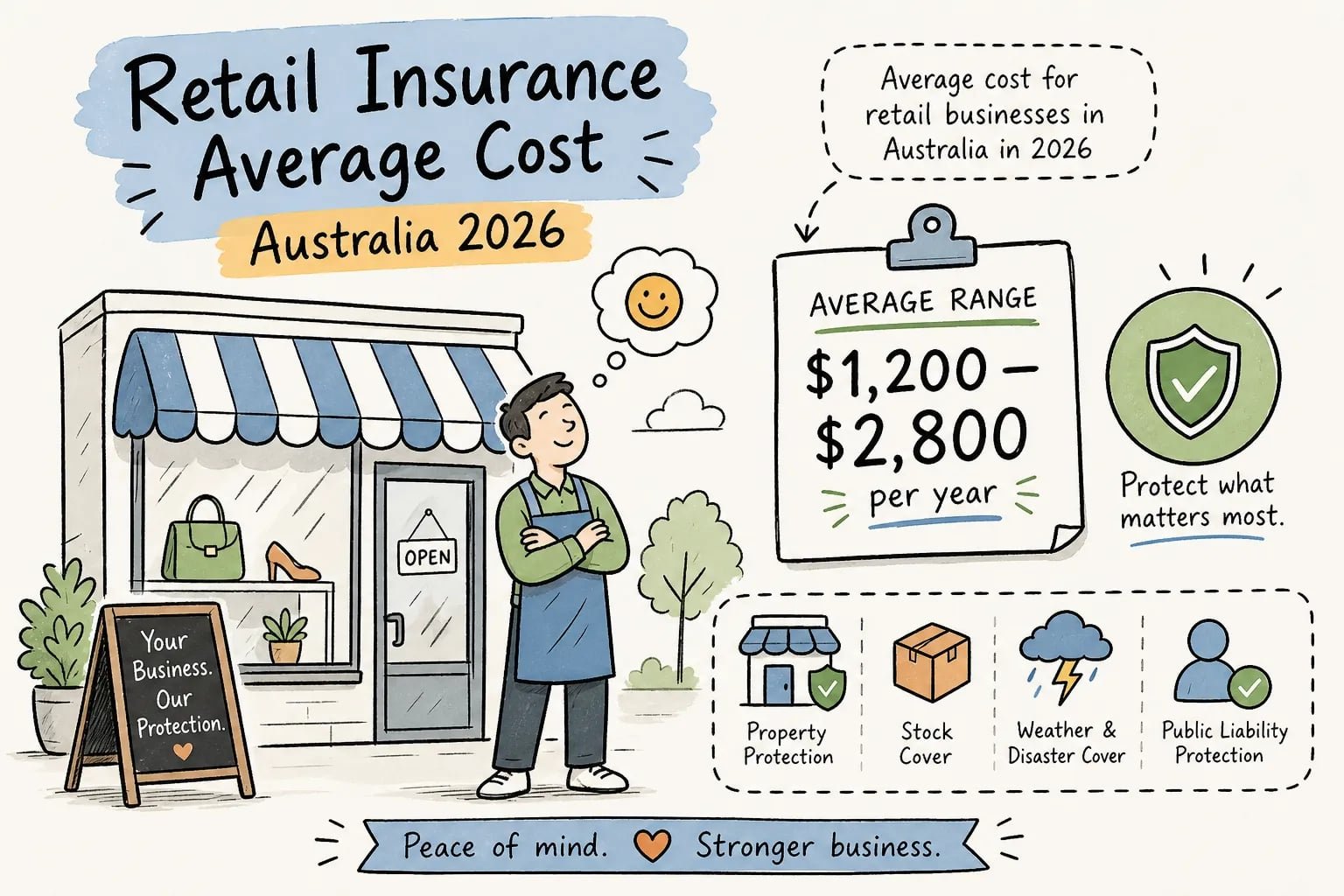
The retail business insurance average cost for small Australian retailers typically falls between $83 and $130 per month for a bundled business insurance package, working out to roughly $996 to $1,560 per year. That average hides a wide spread, though. A sole-trader selling handmade goods at a weekend market pays nowhere near what a mid-sized clothing boutique in a busy shopping strip pays. This guide breaks down where those numbers come from, what cover they include, and what you can do to keep your own premium closer to the lower end.
For Australians benchmarking the full cost of setting up a retail business, including rent, fit-out, licensing, and insurance, NameTheCost.com publishes independent cost guides that give you a realistic picture before you commit to anything. This article focuses specifically on the insurance piece: what it costs, what drives the price, and how to compare quotes with confidence.
Retail business insurance average cost in Australia: monthly and annual benchmarks
Monthly and annual benchmarks for small retailers
The 2026 figures from major brokers and comparison platforms cluster tightly. BizCover reports an average of $83 per month for a retail-specific policy, and $103 per month for a full retail business package. MoneyGeek’s standardised retail profile, which includes five common cover types, lands at $129 per month or $1,549 annually. The lower figure typically reflects a leaner cover bundle, while the higher end adds business interruption and product liability on top of the basics.
For initial budgeting, $100 per month or $1,200 per year is a reliable planning number for a small shop. Compare the Market’s data, which draws on BizCover’s quote engine, puts the business insurance package average at $89 per month. Priority IB cites $96 per month for a retail business, and upcover puts retail business insurance packages at around $103 per month. These figures are consistent enough to anchor your expectations before you approach a broker.
How retail business insurance average cost changes by shop size
There are three rough pricing tiers for Australian retailers. Micro retail operations (think a single-person shop with low foot traffic and modest stock) typically land between $600 and $1,000 per year. Small retail businesses sit in the $1,000 to $1,800 range, which aligns with the broker averages above. Medium retail operations, with more staff, higher turnover, and significant stock and fit-out investment, are usually looking at $1,800 to $3,000 or more annually.
Insurers don’t price on floor area alone. They price on annual turnover, staff headcount, and insured stock value. A 20-square-metre boutique with $400,000 in annual turnover is priced very differently to a market stall with $30,000 in annual sales. Understanding that distinction helps you anticipate where you’ll land on the spectrum before you request a single quote.
The core covers every retailer needs (and what each one costs separately)
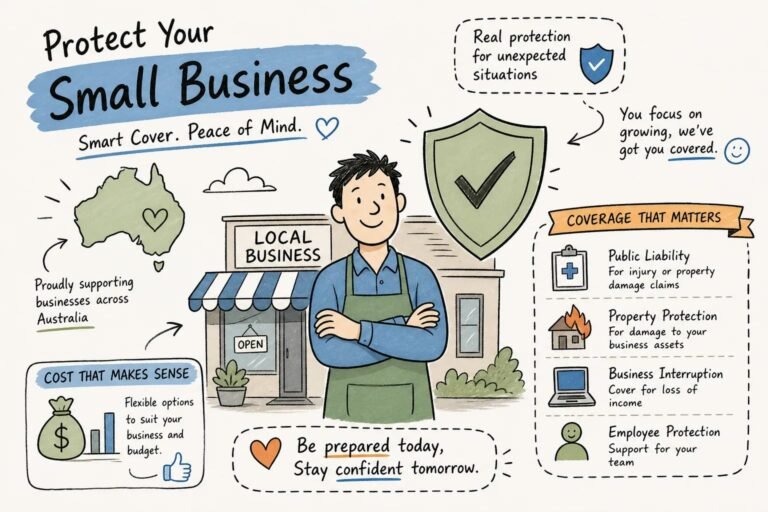
Most retailers buy a bundled policy, and that’s usually the right call for cost efficiency. But understanding what each cover costs individually helps you spot gaps and avoid paying for coverage you don’t need.
Public liability: the non-negotiable baseline
Public liability covers customer injury, property damage, and related claims on your premises. For small Australian retailers, expect $350 to $1,200 per year, with most shops clustering around $500 to $900 annually. BizCover’s retail data puts this cover at roughly $60 to $71 per month as a standalone product. The $10 million cover limit is the most common standard for retail shops and is commonly requested by commercial leases and council permits.
Higher foot traffic, slippery flooring, or products with injury potential, such as tools, kitchen equipment, or sporting goods, push this number toward the top of the range. A low-risk homewares shop in a quiet suburban strip will sit at the lower end. A food retailer or electrical goods store in a high-traffic location will not.
Contents, stock, and property cover
This cover pays out when your stock is stolen, your fit-out is damaged in a flood, or equipment is destroyed in a fire. Premiums vary significantly with insured value. A rough industry rule of thumb puts the cost at around $1 to $1.50 per $1,000 of insured value, which means $250,000 of contents cover costs approximately $250 to $375 per year. Retailers carrying high-value inventory, imported goods, or bespoke fixtures will pay more because the insurer’s replacement cost exposure is larger.
One of the most common mistakes in retail insurance is underinsuring stock and fit-out. If your insured contents value hasn’t kept pace with actual replacement costs, a claim will be paid out at a proportion of actual loss, not the full amount. Review your insured values annually, particularly after a major stock refresh or fit-out upgrade.
Business interruption and employers’ liability
Business interruption cover compensates for lost revenue when an insured event forces you to close temporarily. It’s almost always bundled into a business package rather than sold as a standalone product for small retailers, and its cost depends on your insured annual turnover and the length of the indemnity period. Market guides for Australian SMEs commonly cite 0.5% to 2% of the insured sum as a typical annual cost, which means insuring $200,000 in gross profit exposure is likely to cost $1,000 to $4,000 per year, depending on your risk profile.
Workers’ compensation covers employee injury costs and is compulsory if you have staff in Australia. It’s priced as a percentage of payroll and calculated separately from your general business package. The national retail average sits around 1.49% of payroll, but state rates vary: Queensland retailers pay around 1.24%, while ACT retailers pay closer to 2.61% (figures drawn from Safe Work Australia scheme data; check your state’s current scheme rates, as these are updated periodically). Your state’s scheme sets the rate, so it’s worth checking your specific jurisdiction before building your payroll budget.
The key factors that move your retail insurance premium up or down
Location, foot traffic, and local risk profile
Where your shop sits matters more than most retailers expect. According to one market guide estimate, a store in a high-crime suburb can attract premiums 20 to 35% higher than a comparable shop in a low-risk area, though the exact uplift varies by insurer and local risk assessment. Flood zones, areas with a history of storm damage, and locations with heavy pedestrian traffic all increase an insurer’s exposure. A boutique in a suburban strip mall is priced differently to one in a high-foot-traffic CBD arcade, even if everything else about the business is identical.
Stock value, product type, and business turnover
Higher-value stock raises your contents premium because the insurer’s replacement cost exposure grows with it. Selling products with a higher injury or liability risk, electrical goods, children’s toys, or food items, for example, also pushes public liability premiums up. Insurers treat annual turnover as a core pricing input because higher revenue signals broader exposure across most policy lines. There’s no published formula for how much each dollar of turnover adds to your premium, but the direction is consistent: higher turnover means higher premiums.
Claims history and security measures
A history of claims is one of the strongest upward price drivers in retail insurance. A single significant claim can substantially increase your renewal premium for several years; insurers typically review claims over the last three to five years when pricing renewals, and the exact uplift depends on claim severity and the insurer’s underwriting policies. Multiple claims in a short period are treated more negatively than a single isolated incident. Active risk management is not just good practice. It directly protects your premium at renewal.
On the positive side, strong security measures, including monitored alarms, CCTV, deadlocks, and sprinkler systems, can attract discounts of 10 to 20% with some insurers. Demonstrating active risk management tells underwriters your shop is a lower-risk proposition, and that’s reflected in the price you’re offered.
Quote scenarios: three real shop types compared
Sole-trader market stall
Public liability is the primary concern for market stall operators, and it’s surprisingly affordable. Annual policies for $10 million cover run from around $135 to $229 per year from specialist providers. Day-cover options start around $35 to $65 for single-day events, making occasional stallholders very low-cost to insure. Food stalls and operators selling products with allergy or injury risk sit at the higher end of that range, closer to $800 to $1,500 annually for a $10 million limit.
Small boutique with modest stock
A small clothing or homewares boutique with $200,000 to $300,000 in annual turnover, two employees, and $150,000 in stock and fit-out can reasonably expect to pay $1,200 to $1,800 per year for a bundled business package. That typically includes public liability at $10 million cover, contents and stock cover, and basic business interruption. Adding cyber liability or product liability for imported goods will push that figure higher, so factor those in if they’re relevant to your product range.
Medium retail store with higher turnover
As an illustrative example, a retail store with $1 million to $2 million in annual turnover, five or more employees, and significant stock and fit-out investment is likely looking at $2,500 to $4,000 per year or more, depending on location, cover inclusions, and claims history. At this scale, business interruption becomes a meaningful component because the revenue impact of a forced closure is far larger than it is for a micro operation. If your store was closed for three months due to a fire or flood, the revenue loss would dwarf the difference in annual premium between a lean policy and a comprehensive one.
How to lower your retail insurance bill before you request a single quote
Reduce your risk profile before you approach insurers
Investing in security upgrades, professional electrical inspections, and staff safety training before you request quotes can signal to underwriters that you’re a lower-risk operator. Insurers price on the information you provide at the time of quoting, so it pays to put your best foot forward. Document your security measures, training records, and maintenance history so you can reference them when completing your proposal. That documentation can be the difference between a standard rate and a meaningful discount.
Compare bundled packages and review your cover limits annually
A bundled business owners policy is almost always cheaper than purchasing each cover separately, and it reduces the risk of gaps between policies. Review the cover limits every year, particularly for stock and fit-out, because underinsurance is a common and costly problem in retail. Shopping your policy with at least two or three providers at renewal, rather than auto-renewing with the same insurer, consistently delivers savings for most retailers. The market moves, your risk profile changes, and loyalty rarely pays in insurance.
FAQ: retail business insurance average cost, common questions
What is the average cost of retail business insurance in Australia?
For most small retailers, the average cost of retail business insurance falls between $83 and $130 per month (roughly $996 to $1,560 per year) for a bundled package. Micro operations can pay as little as $600 annually, while medium-sized stores with significant turnover and staff may pay $3,000 or more.
What does a standard retail business insurance package include?
A typical bundled policy covers public liability, contents and stock, and business interruption. Larger or higher-risk retailers often add product liability, cyber liability, and management liability. Workers’ compensation is compulsory for businesses with employees and is purchased separately through your state’s scheme.
Can I use a retail insurance premium calculator to estimate my costs?
Yes. Comparison platforms such as BizCover and Compare the Market offer online quote tools that function as a retail insurance premium calculator. Enter your turnover, staff count, stock value, and location to get an indicative figure. Treat any online estimate as a starting point rather than a firm quote, your actual premium is set at underwriting.
How can I reduce my retail insurance premium?
The most reliable ways to lower your premium are improving physical security (monitored alarms, CCTV, deadlocks), maintaining a clean claims history, and comparing at least two or three insurers at renewal. Bundling your covers into a single business owners policy rather than buying them separately also typically reduces the total cost.
What this all means for your insurance budget
Retail insurance premiums for small Australian retailers sit between $83 and $130 per month for most operations, but your actual premium depends on your shop type, location, stock value, and cover bundle. Use the retail business insurance average cost benchmarks in this guide as a planning reference rather than a firm quote: they give you a realistic range to work with before you sit down with a broker or comparison platform.
If you’re in the early stages of setting up a retail business and want to understand the full cost picture, including fit-out, licensing, staffing, and compliance costs alongside insurance, NameTheCost.com provides independent, no-spin cost guides built specifically for Australians. The goal is the same as this article: know what things cost before you spend a dollar, not after.