Side Hustle Startup Costs: What Australians Need to Budget
Most people assume starting a side hustle costs almost nothing. That assumption is what catches people off guard two months in, when the subscriptions have stacked up, the website needs renewing, and the ABN question finally surfaces. The reality is that side hustle startup costs in Australia are low compared to a traditional business, but they are not zero. Knowing the real numbers before you spend is how you protect yourself from a slow financial leak.
This article breaks down the most common start-up expenses for side gigs, from registration through to software and marketing, with honest AUD ranges for common hustle types. By the end, you will have enough to build a simple pre-launch budget and know exactly which costs to cut before committing a single dollar.
What it actually costs to register your side hustle in Australia
The legal and administrative baseline is simpler than most people expect. Some of it is genuinely free. Some of it is not. Knowing the difference saves you from either overpaying or assuming you are covered when you are not.
ABN registration: the one cost that is actually free
Applying for an Australian Business Number (ABN) through the Australian Business Register (ABR) costs nothing. The process is completed online, and most applicants receive their ABN immediately upon approval. In practice, you will need an ABN before you can issue a proper tax invoice or before most clients will engage you as a contractor. Without one, the payer may be required to withhold tax from your payment under ATO withholding rules, which complicates things for everyone. This is your starting point, and the price tag is zero.
Business name registration: when you need it and what it costs
A registered business name is only required if you trade under something other than your own legal name. If your name is Sarah Chen and you operate as Sarah Chen, you can skip this cost entirely. If you want to trade as “Bright Copy Co” or “Sparkling Homes Sydney,” you will need to register with ASIC. From 1 July 2026, the fee is $47 for one year or $108 for three years. If you are serious about your chosen hustle, the three-year option is better value and signals a longer commitment to yourself.
Public liability insurance: variable but often unavoidable
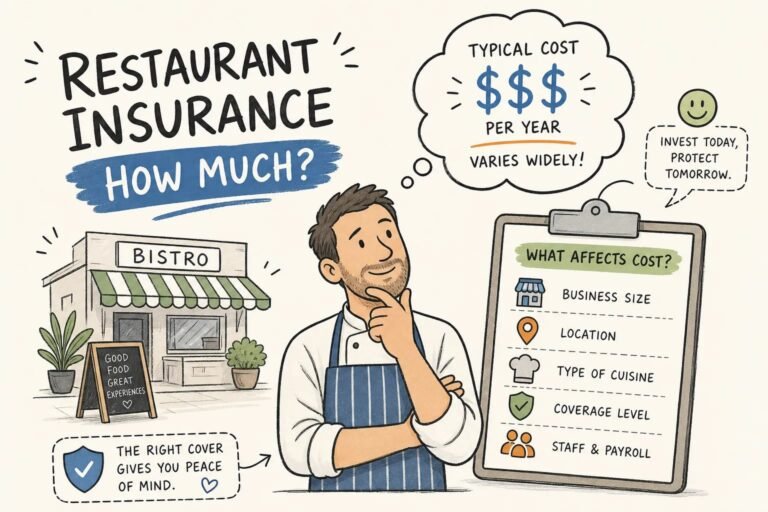
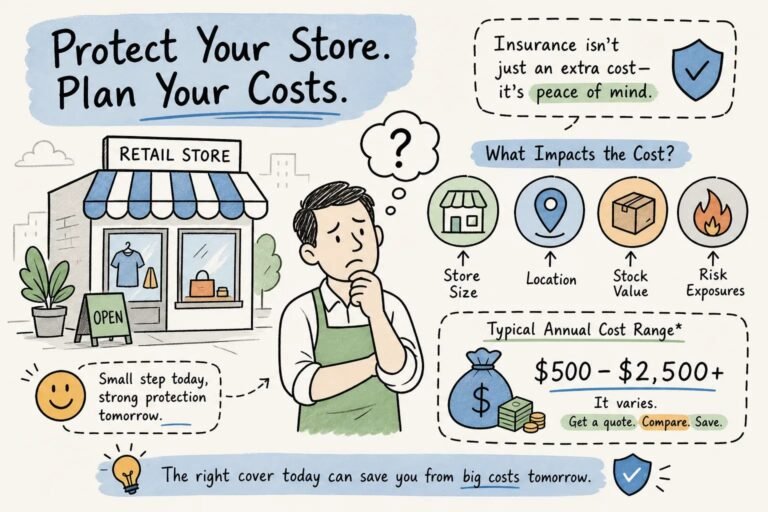
Public liability insurance is not legally mandatory for most sole traders, but clients, industry platforms, and certain service categories often require it before you can work. Pricing varies by trade and cover level, so a single average figure will not serve you here. Low-risk freelancers and tutors can find cover starting around $35 to $45 per month, while cleaning and handyman work often sits closer to $39 to $55 per month or higher. Request quotes specific to your industry rather than relying on a national average.
Side hustle startup costs: getting your online presence right without overspending
Most side hustles need at least a minimal web presence. The key is distinguishing between what you need from day one and what can wait until clients are actually paying you. Start lean, then build out as your income justifies each addition.
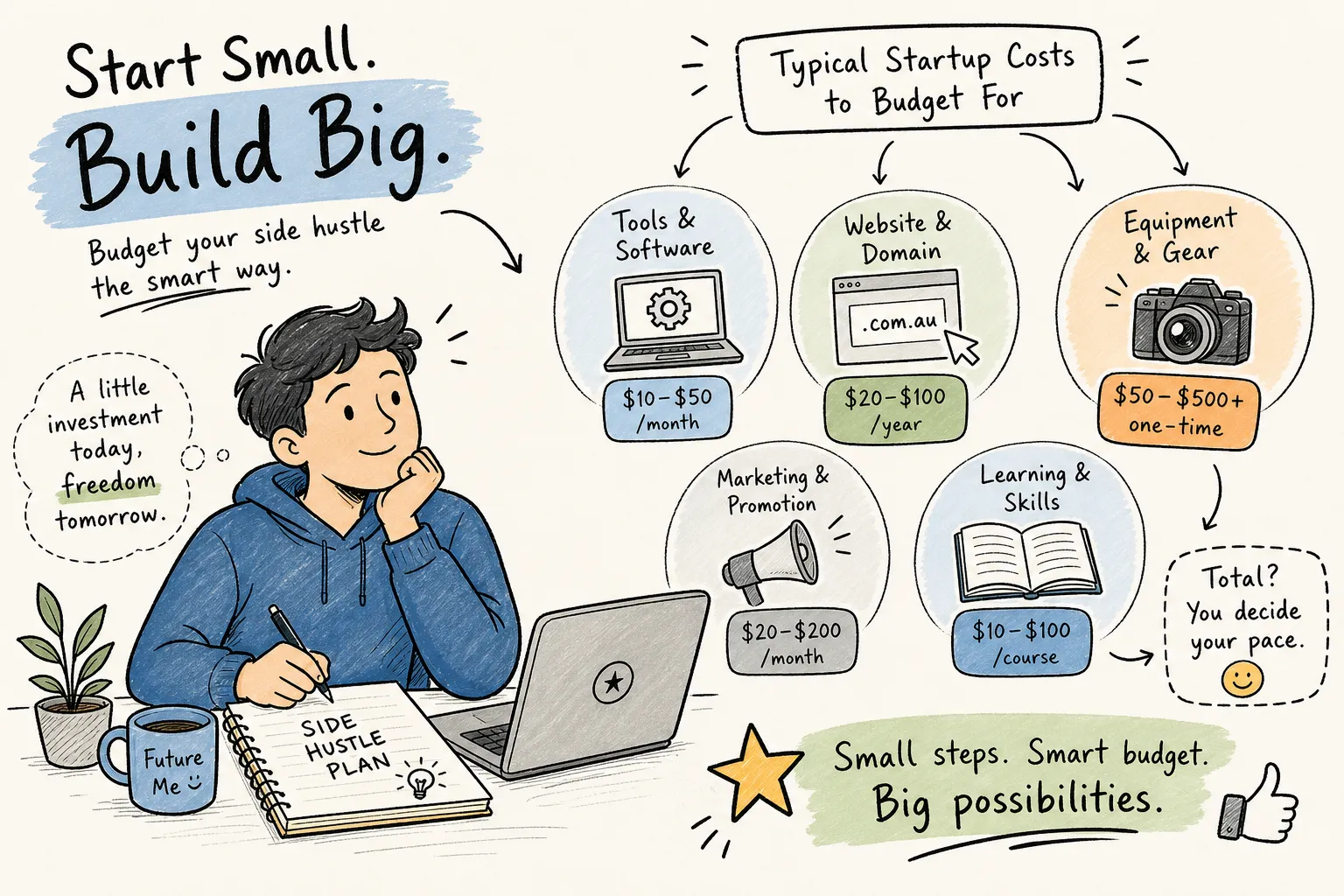
A domain name costs roughly $10 to $20 per year through most Australian registrars. Basic web hosting runs $10 to $15 per month, with some providers offering bundled domains in their first year to reduce the initial outlay. For Australian-based audiences, providers with local servers such as VentraIP offer solid load speeds for local visitors, though budget options like Hostinger are perfectly functional for a starter site.
Your website options range widely by budget:
- Free plan (Wix, Carrd, Google Sites): sufficient for most service-based hustles at launch, with no monthly cost
- Self-hosted WordPress: adds hosting and a domain, but themes and plugins can stay minimal; roughly $120 to $200 per year
- Paid site builders with ecommerce (Shopify, Squarespace): better suited to product-based hustles, with monthly costs pushing the annual total above $300
Professional email, premium themes, and advanced booking tools can wait. SEO and analytics tools are lower priority until you have measurable traffic, focus first on conversion basics. Resist buying tools before you have a reason to use them. That discipline will save you hundreds of dollars in the first six months.
Software subscriptions: where your budget quietly disappears
Subscription creep is one of the most common financial mistakes new side hustlers make. You sign up for five tools in a week of excitement, use three of them once, and six months later you are wondering why the hustle barely breaks even.
A minimal but functional software stack for an online side hustle looks like this:
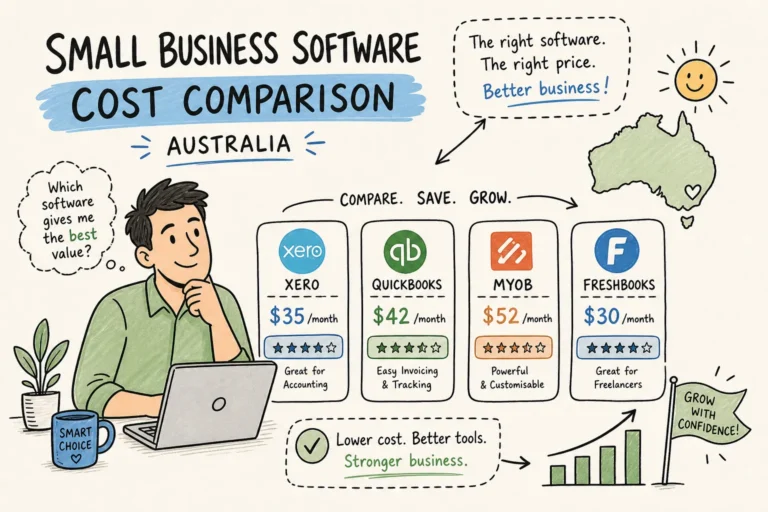
- Canva Pro: approximately $18 per month (design work, social content)
- A basic email marketing tool: $5 to $15 per month
- Cloud storage: $5 to $20 per month
- Accounting or invoicing software: from $13 to $20 per month
Total monthly software cost for a lean but functional setup sits between $10 and $60. The free tiers of most tools are often sufficient for the first 90 days. Use them first. Upgrade only when the free version becomes a genuine constraint on your ability to earn.
The test for any paid subscription is simple: does it directly enable you to earn money, or does it save time worth more than its cost? If yes, it earns its place. If it is aspirational or speculative, it can wait. Audit your subscriptions quarterly and cancel anything unused for more than 30 days, building that habit early is one of the most valuable financial disciplines a new side hustler can develop.
Realistic side hustle startup costs by hustle type
The category of side hustle you choose has more impact on your start-up budget for freelancers and solo operators than almost any other factor. Here is an honest breakdown across the most common types, including a rough guide to what lean, typical, and comprehensive setups cost.
Service-based side hustles: the lowest-cost entry point
Freelance writing, virtual assistance, tutoring, and social media management are among the best low-cost side hustle ideas for Australians, and for good reason. They can all be started for $0 to $1,500 upfront. Ongoing costs range from $50 to $400 per month depending on software and any marketing spend. These hustles require almost no capital if you already own a working device and have a skill to offer. They also reach profitability fastest, often within two to eight weeks of landing the first client.
| Hustle Type | Lean Setup | Typical Setup | Comprehensive Setup |
|---|---|---|---|
| Freelance / VA / Tutoring | $0, $200 | $300, $700 | $800, $1,500 |
| Print-on-Demand | $200, $500 | $500, $1,200 | $1,200, $2,000 |
| Dropshipping / Ecommerce | $500, $1,000 | $1,000, $3,000 | $3,000, $5,000+ |
| Local Services (cleaning, handyman) | $300, $1,000 | $1,500, $5,000 | $5,000, $10,000+ |
| Content / Blogging / Affiliate | $50, $200 | $200, $600 | $600, $1,500 |
Note: ranges are indicative and reflect common costs for Australian sole traders at the time of writing. Local services costs vary by state and service type, see below.
Product-based and ecommerce side hustles: higher upfront, slower payback
The cost to start a side business in ecommerce is meaningfully higher than a service-based hustle. Dropshipping typically requires $500 to $5,000 or more upfront to cover store setup, apps, samples, and initial ad spend. Print-on-demand is lighter at $200 to $2,000 to start, but carries similar ongoing costs in platform fees and advertising. These models take three to six months to become profitable in most cases, and they carry more financial risk in the early months. Go in with a clear budget ceiling and a plan for ad spend before you build the store.
Local service gigs: the most variable category
Cleaning, handyman work, and similar local services can start for a few hundred dollars if you already own the tools, or cost $10,000 or more if you need equipment, a vehicle, consumables, uniforms, and public liability cover. Location matters too: costs often vary by state, and metro areas such as Sydney and Melbourne can be more expensive than regional areas for both insurance and certain licensing requirements. Do not budget for this category using a national average: get quotes specific to your state and your service type before you commit.
Run a cost audit before you spend a single dollar
Most new side hustlers buy tools in a burst of excitement, then realise half of them were unnecessary. A structured pre-launch audit forces you to categorise every potential expense as one-off or recurring, essential or optional. Working through this before you open your wallet changes the entire financial profile of your launch.
NameTheCost.com offers a free side hustle cost audit built specifically for Australians planning their first or next gig. It covers the mandatory start-up expenses most people overlook, ABN status, business name, insurance, software, and web setup, all in one structured pre-launch checklist. For anyone about to commit money to a new hustle, it is a practical first step before a single subscription gets purchased.
When can you realistically expect a return on what you spent?
Profitability timelines vary significantly by hustle type, and being honest with yourself about the timeline before you start is part of building a sustainable plan rather than a stressful one.
Service-based hustles, freelancing, tutoring, and virtual assistance, can often generate first income within two to eight weeks. Because startup costs are low, breaking even happens quickly. Realistic monthly revenue in the first three to six months sits around $100 to $500 for most beginners, with faster growth for those who already have a network or an existing portfolio to show prospective clients.
Product and content-based hustles require a longer runway. Dropshipping and print-on-demand businesses often take three to six months to become profitable, while content-based side hustles like blogging, affiliate marketing, or YouTube can take six to twelve months or more before meaningful income arrives. That is not a reason to avoid them; it is a reason to plan your cash flow honestly before spending on tools and ads, and to keep your day-job income stable while the content compounds.
Know what you are spending before you start spending
Side hustle startup costs in Australia are manageable when you plan for them rather than stumble into them. The mandatory costs are lower than most people fear: the ABN is free, a business name is optional in many cases, and a working website does not need to cost much in the first year.
The real risk is not the big costs. It is the slow accumulation of subscriptions and tools that no one audits until the damage is done. A freelancer paying $60 per month for software they rarely use has quietly spent $720 over a year before their side hustle has covered its own costs.
Before you register a business name, pay for hosting, or sign up for a single subscription, map your actual spend with a structured pre-launch checklist. NameTheCost.com offers a free cost audit built for exactly this moment, know what your chosen hustle actually costs to start, and you are already ahead of most people who launch on impulse and reassess far too late.
Frequently asked questions about side hustle startup costs
How much do side hustle startup costs usually run in Australia?
It depends heavily on the type of hustle. Service-based hustles such as freelancing or tutoring can be launched for as little as $0 to $200 in a lean setup, while ecommerce or local service businesses can require $1,000 to $5,000 or more upfront. The table above gives a breakdown by hustle type and setup level.
Is an ABN free to get in Australia?
Yes. Applying for an ABN through the Australian Business Register costs nothing. You can apply online, and most applicants receive their ABN immediately. You do not need to pay a third party to apply on your behalf, any service charging a fee for ABN registration is not required.
What is the side gig initial investment for a beginner freelancer?
A beginner freelancer with an existing device and a marketable skill can start for close to nothing. The core expenses are an ABN (free), a basic website or portfolio page ($0 to $20 per year on a free plan), and optional invoicing software (free tiers are available). A realistic lean setup costs $0 to $300 in the first three months.
Do I need to register a business name to start a side hustle?
Only if you trade under a name other than your own legal name. If you operate under your full name, business name registration with ASIC is not required. If you use a trading name, registration costs $47 for one year or $108 for three years from 1 July 2026.
Which side hustles have the lowest start-up expenses?
Service-based hustles consistently have the lowest start-up expenses for side gigs. Freelance writing, virtual assistance, tutoring, and social media management all require minimal upfront investment, often just a device, an ABN, and a way to invoice clients. These are also the fastest to reach profitability, sometimes within a few weeks of landing the first client.