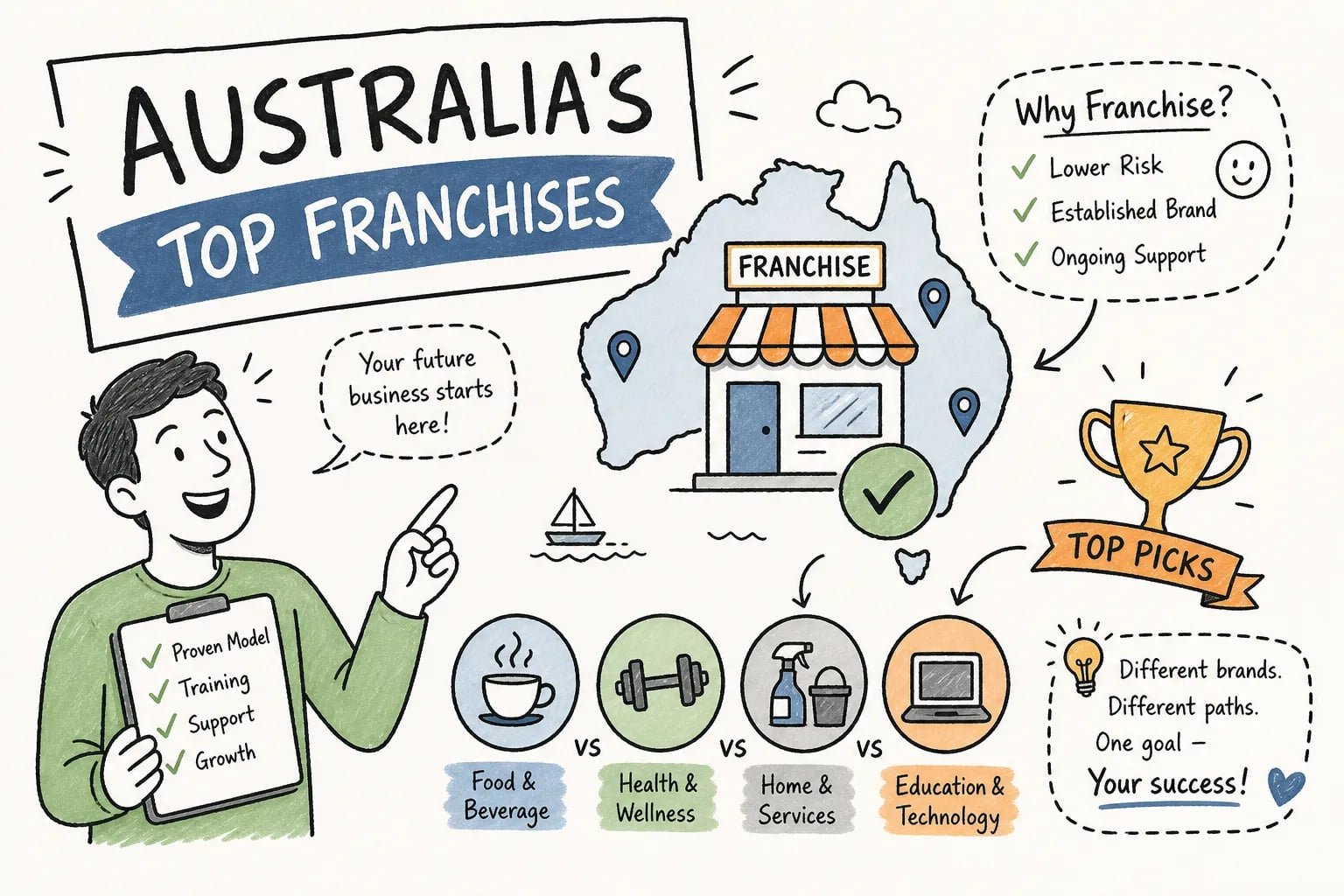
Best Franchises in Australia 2026: Top Picks Compared
If you’re researching the best franchises in Australia, you’re already ahead of most buyers, because most people make a six-figure decision based on a glossy discovery day presentation rather than hard numbers, then spend the first two years working out what they actually signed up for. Franchising is one of the most popular paths to business ownership in this country, and one of the most misunderstood.
This article cuts through that. It compares leading franchise opportunities across categories by real investment ranges, honest income benchmarks, and the fee structures that affect your take-home every single month. Before you attend a single information session, check a resource like NameTheCost.com, an independent Australian cost directory with no referral incentives and no advertiser influence. Then read this.
By the end, you’ll have a clear basis for shortlisting franchises that fit your budget, a realistic picture of what you’ll pay beyond the headline fee, and a solid understanding of what due diligence actually involves before you put pen to paper.
Why franchising still makes sense in Australia’s 2026 economy
The scale of the sector and what that signals to buyers
Australia’s franchise sector is large, well-established, and consistently ranked among the most developed in the Asia-Pacific region. The volume of operating systems signals sustained consumer demand across a wide range of categories, and that’s meaningful to any prospective buyer weighing up franchise investment in Australia. The biggest networks by outlet count include Jim’s Group at over 5,700 units, Subway at 1,249 locations, McDonald’s at 1,073, Aussie Home Loans at approximately 1,100, and Mortgage Choice at around 1,078. Those numbers represent market validation at scale, not just impressive marketing copy.
A large network that has sustained thousands of active franchisees across Australia has demonstrated at least some capacity to support operators, maintain brand relevance, and generate enough revenue to keep the system growing. That’s a meaningful starting point, but it’s a starting point only. Network size tells you a system is viable; it doesn’t tell you whether it’s viable for you at your budget and in your market.
Where the real franchise growth is happening in 2026
Growth in franchise opportunities in Australia has been particularly strong in home services, financial services, and health and wellness, categories where demand has held firm as consumers prioritise convenience and wellbeing. Food and QSR still dominate by brand recognition, but they carry the highest capital requirements and not always the most proportional returns. The category you choose matters as much as the brand you choose. Buyers who start with brand name before category often end up overcommitted on capital without fully understanding why.
Best franchises in Australia by category (2026)
Home services: the lowest-barrier entry for most buyers
Jim’s Group is the benchmark for home services franchise investment in Australia. Entry costs vary by division, with some divisions quoting ranges in the vicinity of AUD $30,000 to $80,000, making it one of the most accessible entry points in the market, though buyers should confirm current pricing directly with Jim’s Group disclosure materials. Home services franchises carry lower overhead than retail concepts, require no fitout, and generate strong recurring revenue across categories like cleaning, lawn care, and pest control. Dream Doors Kitchens, with over 2,000 outlets, is a useful mid-range example, a home renovation franchise that has built genuine national brand recall without the capital demands of a QSR or fitness studio.
Food, café, and QSR: high revenue, high capital commitment
McDonald’s and Subway are the obvious reference points. A McDonald’s franchise requires a total investment of AUD $400,000 to $1.5 million; Subway sits lower but still demands substantial working capital. The revenue ceilings in food and QSR are higher than most other categories, but so are the cost floors. Food and beverage franchise owners who have been operating for at least two years average around AUD $130,000 in annual income, a figure that needs to be weighed against the capital required to reach it, and against the complexity of managing staff, supplier relationships, and brand compliance in a tightly controlled system.
Fitness and financial services: two sectors worth a closer look
Anytime Fitness and F45 represent the fitness category, with total investment typically ranging from AUD $300,000 to $800,000 for a standalone studio. Anytime Fitness charges a flat monthly royalty of around $699 rather than a percentage of sales, which makes ongoing costs more predictable. F45 uses a royalty of 7% of gross sales or $2,500 per month, whichever is higher. For buyers with larger reserves, the fitness sector offers strong brand recognition and recurring membership revenue.
Financial services franchises are frequently overlooked when evaluating the best franchise opportunities in 2026. Aussie Home Loans and Mortgage Choice together account for over 2,100 outlets nationally. These models carry significantly lower setup costs than fitness or food, require no fitout, and generate recurring income tied to loan books rather than foot traffic. For buyers who want a professional services business without the capital exposure of a physical premises, this category deserves serious consideration.
How the best franchises in Australia compare on cost and fees
Initial franchise fees vs. total investment: why the gap matters
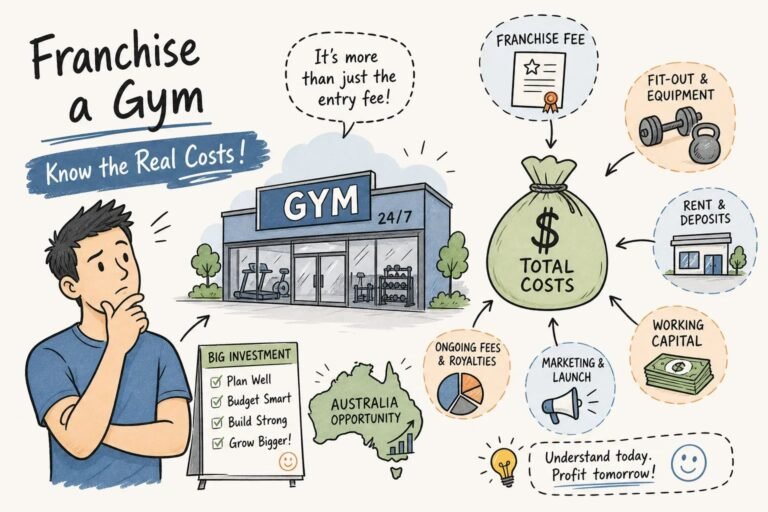
Initial franchise fees in Australia commonly range from AUD $20,000 to $100,000 or more, depending on brand strength and category, though some premium brands exceed that upper figure. That number appears in the brochure. The total investment, which includes fitout, equipment, working capital, training, and launch marketing, is a completely different figure. For home-based service franchises, total investment sits between AUD $30,000 and $100,000. For food and QSR concepts, it climbs to AUD $250,000 to $1.5 million. Budget for the total number, not the fee.
Ongoing fees: what royalties and ad funds cost you every month
Most franchisors charge a royalty of 5% to 10% of gross sales, plus a separate marketing or advertising fund contribution of 2% to 5%. That means a combined ongoing fee burden of up to 15% of revenue before you pay wages, rent, or supplier invoices. Some systems use flat fee structures instead, Anytime Fitness and Jim’s Group are examples, which makes break-even modelling more predictable. Understand your ongoing fee structure before you sign. It directly determines your break-even point and your realistic take-home income.
What franchisees actually take home
The honest average for a single-unit owner
According to Franchise Business Review survey data, the average annual income for a single-unit Australian franchisee sits at around AUD $102,000. Food and beverage operators average closer to AUD $130,000 after the two-year mark. Fitness studios and mobile franchises typically sit between AUD $40,000 and $120,000. These are income figures after royalties, lease costs, and payroll but before personal tax. They’re useful benchmarks, not guarantees, and they vary significantly depending on location, franchisee execution, and local market conditions.
Why multi-unit ownership changes the calculation entirely
Franchisees operating two to four locations average more than AUD $142,000 annually. The real earning leverage in franchising comes from scaling within the system rather than maximising returns from a single unit. For buyers with larger capital reserves and genuine operational capacity, building a multi-unit plan from day one is worth far more than treating additional sites as a future option. If the numbers only work on one unit, that’s important information to have before you commit.
The hidden costs most new franchisees never budget for
Working capital: the cash buffer that disappears faster than expected
Most buyers budget for setup costs and forget about the cash needed to fund the first six to twelve months of operations while revenue ramps up. Working capital shortfalls are the leading reason new franchisees struggle in their first year. Hold three to six months of operating expenses in reserve beyond your initial investment, that’s the guidance from franchise lawyers and industry advisers consistently. Many buyers arrive at settlement with barely enough to cover their first month’s payroll. That’s a recoverable mistake in a slow month; it’s a business-ending one in a bad quarter.
Fitout, equipment, and lease costs that don’t appear in the headline number
For any franchise requiring a physical premises, fitout and equipment costs are usually quoted as a range in disclosure documents. In practice, fitouts frequently come in at the top of that range or above it, particularly for food and fitness concepts where brand standards are tightly controlled. For food franchises, fitout costs typically run AUD $120,000 to $700,000 or more. For fitness studios, expect AUD $100,000 to $600,000.
Equipment leases, POS systems, and mandatory supplier agreements add further recurring costs that aren’t visible in the initial investment figure. Technology fees, approved supplier markups, insurance requirements, and periodic refurbishment obligations are among the costs franchisees most commonly report being blindsided by after signing, and they’re worth line-itemising before you get anywhere near a contract.
Where independent cost research can save you from a costly surprise
Before signing a franchise agreement, cross-check the franchisor’s cost estimates against independent data. NameTheCost.com is a free Australian resource that breaks down real operational costs across business categories without advertiser influence or referral incentives. Running those figures alongside a franchise disclosure document gives you an honest picture of what you’re walking into, rather than what’s been projected for you.
How to evaluate a franchise before you sign
What strong franchisor support actually looks like
The best-run franchise systems offer structured initial training, ongoing field support with regular performance reviews, national and local marketing programmes, technology tools including CRM and POS systems, and dedicated business coaching. What separates a strong system from a weak one isn’t the list of support offerings, it’s whether existing franchisees confirm those offerings are actually delivered. The disclosure document lists the support. Existing franchisees tell you whether it shows up.
Reading the disclosure document and asking the right questions
Australia’s Franchising Code of Conduct requires franchisors to provide a disclosure document at least 14 days before signing. That document contains financial performance data, franchisee contact details, agreement term lengths, renewal rights, and exit conditions. Call at least five current franchisees from the provided list and ask directly about actual income, hidden costs, and whether they’d buy in again. Also have a franchise-experienced solicitor review the agreement before you sign anything. The agreement term, transfer restrictions, and termination triggers can lock you into a situation that’s very difficult and expensive to exit, a pattern reflected in disputes documented by the ACCC and Franchising Code enforcement proceedings over many years.
The bottom line on choosing the right franchise
The best franchises in Australia in 2026 are the ones that match your budget, your lifestyle, and your honest assessment of risk, not the ones with the biggest marketing budgets or the most impressive outlet counts. Home services offer the lowest barrier to entry and the most straightforward cost structure. Food and QSR offer the highest revenue ceilings paired with the heaviest capital exposure. Fitness and financial services each carry distinct fee structures and income profiles that reward careful analysis before commitment.
The real work happens before you sign: reading the disclosure document thoroughly, speaking to existing franchisees, and getting an independent view of what operational costs actually look like day-to-day. Start that cost research at NameTheCost.com, where Australian pricing data is presented without advertiser bias.
Most franchisees who struggle in year one made the same mistake, they attended the discovery day before they read the numbers. Read the numbers first.