Average Cost of Business Insurance for a Restaurant in Australia
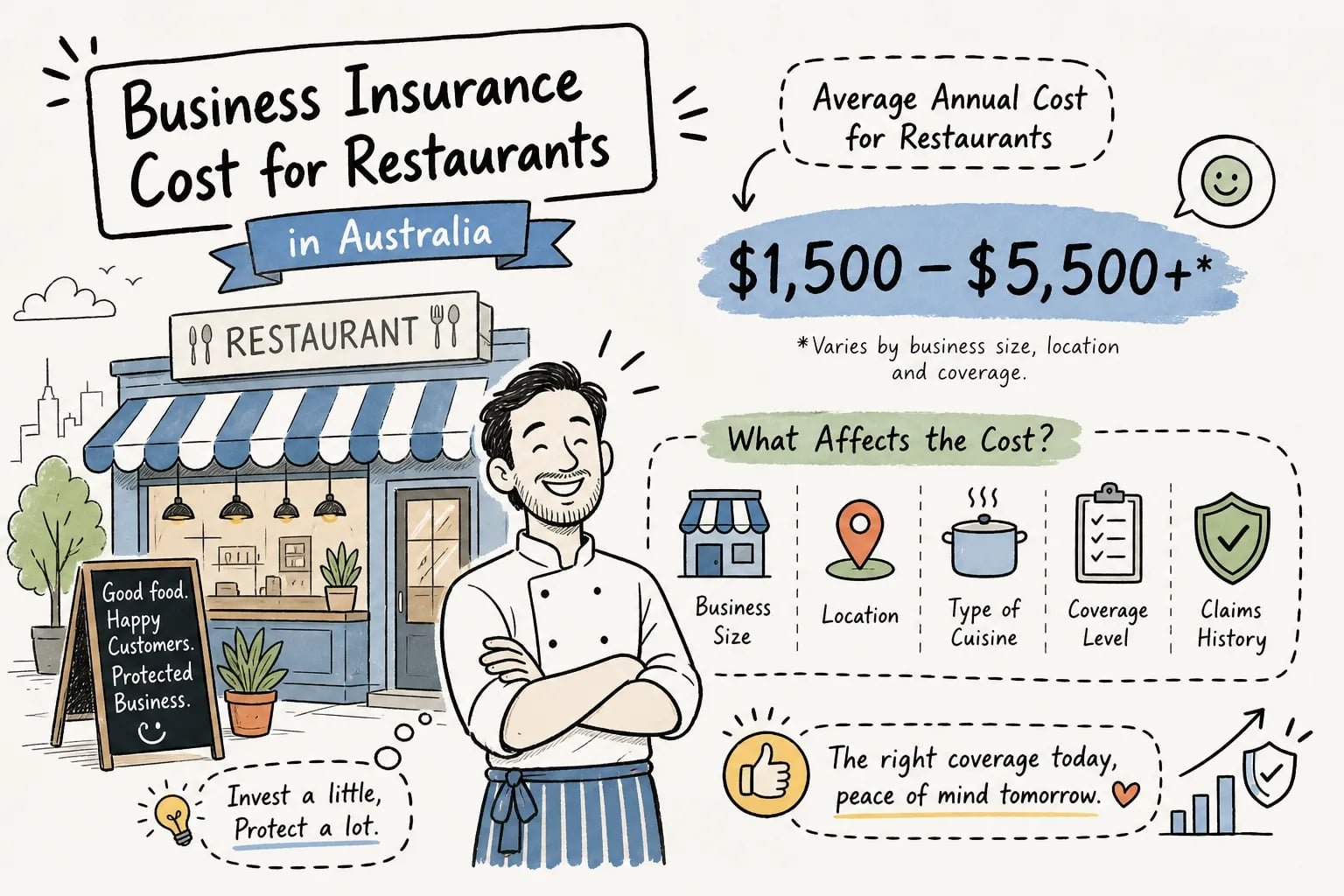
The average cost of business insurance for a restaurant in Australia sits broadly between A$2,000 and A$15,000 per year, depending on venue size, cover type, and risk profile. According to BizCover’s 2023, 24 customer payment data, the average restaurant or café pays around A$198 per month. That number alone tells you very little if you don’t know what’s inside the policy or what’s driving the price up.
Most restaurant owners get their first insurance quote after they’ve already signed a lease. That’s a weak negotiating position, and it usually means they either overpay or underinsure. Before you call a single broker, you need two things: a clear picture of which covers your venue actually needs, and a realistic sense of where insurance sits inside your total operating cost stack. That’s where a resource like NameTheCost.com earns its keep, an independent Australian cost directory built to help hospitality entrepreneurs audit their full startup and running expenses before opening day, with no insurer or advertiser influence colouring the numbers.
This guide gives you the real cost ranges, the main premium drivers, and concrete ways to pay less.
Insurance covers every restaurant in Australia actually needs
The insurance industry loves acronyms and jargon. What hospitality operators actually need is straightforward once you cut through it. There are three cover categories that matter most for a restaurant or café, and one of them is mandated by law.
Public liability and product liability: the two you cannot skip
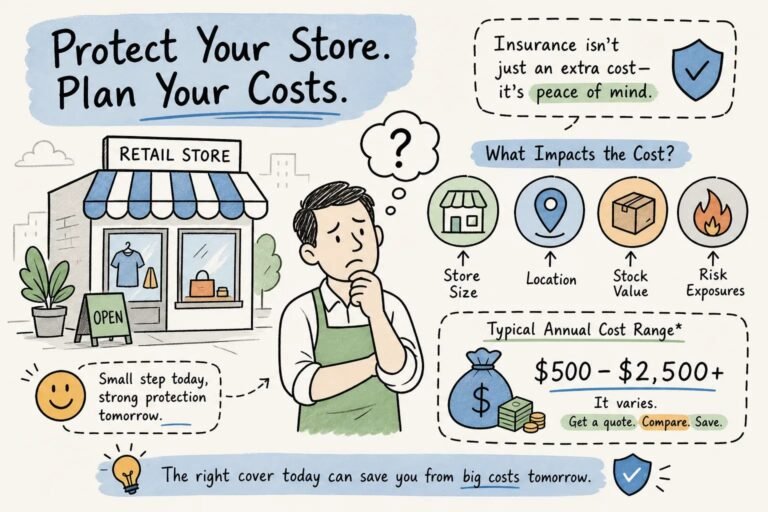
Public liability covers bodily injury and property damage to third parties on your premises: a customer slips on a wet floor, a diner’s coat gets ruined, a guest trips over a step. Product liability covers harm caused by the food or drink you serve, whether that’s an allergic reaction, food poisoning, or a foreign object in a dish. Both are considered essential in the hospitality industry because restaurants open themselves up to these claims during every single service. While public liability is not mandated by national legislation, landlords, councils, and liquor licensing conditions effectively make it non-negotiable in practice. The public liability cost for restaurants typically starts at A$500 to A$1,000 annually for A$5 million cover, making it the logical foundation of any policy package.
Contents, equipment, and commercial kitchen cover
Commercial ovens, refrigeration units, espresso machines, and custom fit-outs are expensive to replace. Contents and equipment cover protects against fire, theft, and mechanical breakdown, and it’s one area where hospitality operators are frequently underinsured. If you lease your premises, you’re generally responsible for the fit-out and internal equipment but not the building shell. If you own the property, building cover becomes essential too. Get the replacement values right before you agree to any sum insured, because settling for a lower figure to cut the premium is a false economy when something actually goes wrong.
Business interruption and workers’ compensation
Business interruption cover replaces lost revenue when your venue can’t trade, whether that’s caused by a fire, flood, or equipment failure that shuts down the kitchen. For hospitality businesses operating on thin margins, even two weeks without trading can be catastrophic. Workers’ compensation is legally mandated across all Australian states and territories for any business with employees. Unlike other covers, it’s not rated on a flat annual fee; it’s calculated as a percentage of your payroll, so the more staff you have, the higher the premium.
Average cost of business insurance for a restaurant by venue size
The numbers below are synthesised from 2026 Australian market data and publicly available insurer data and aggregator benchmarks. They represent total package premiums across the core covers, not individual policy lines. Use them as planning benchmarks, not exact quotes.
Small café: what the numbers actually look like
The average cost of business insurance for a small café typically falls between A$2,000 and A$4,500 per year, which works out to roughly A$167 to A$375 per month. Public liability alone for a small café generally sits between A$500 and A$1,000 annually for A$5 million cover. The cost to insure a café at the lower end of that range usually reflects a public-liability-only policy; the higher end reflects a comprehensive package that includes contents, equipment, and business interruption. Operators who purchase public liability only and leave everything else uninsured are carrying more risk than most margins can absorb.
Mid-size bistro and casual diner
A mid-size operation typically falls in the range of A$3,500 to A$7,500 per year. Once alcohol service enters the picture, premiums climb noticeably even at this tier. BizCover‘s publicly available cover-level data gives a useful benchmark for public liability specifically: monthly averages of A$45.90 for A$5 million cover, A$57.10 for A$10 million, and A$91.10 for A$20 million. For a bistro with a wine list and cocktail menu, expect to sit closer to the top of that range for liability alone, before contents, equipment, and business interruption are added.
Full-service or large restaurant
Larger, higher-risk venues with commercial kitchens and liquor licences typically pay A$6,000 to A$15,000 or more per year. This contextualises BizCover’s A$198 per month customer average: full-service restaurants skew well above that midpoint, while a basic café package can bring it down. Venues in this category are also more likely to be asked for detailed underwriting information, and their claims history carries more weight in how the premium is structured.
The five things that move your premium the most
Insurers don’t just look at what type of business you run. They build a risk profile from multiple data points, and some of those points carry far more weight than others.
Turnover and alcohol licence: the two biggest levers
Annual revenue is one of the primary rating factors across all insurers. Higher sales volume typically signals greater exposure, more transactions, more foot traffic, and more opportunities for something to go wrong. The alcohol licence factor compounds this directly: restaurants deriving significant revenue from alcohol are treated as materially higher risk, and some insurers narrow their appetite considerably as the alcohol revenue percentage rises. Standard public liability policies often exclude alcohol-related claims entirely, so a restaurant with a liquor licence needs to ensure the insurer knows about it upfront and that the policy explicitly covers it.
Claims history also matters significantly. A single major slip-and-fall incident can move premiums 20 to 30 per cent at renewal. Operators with a clean record have real negotiating leverage at renewal time; those with multiple claims do not.
Kitchen type, postcode, and occupancy risk
Commercial kitchen risk is a genuine premium driver: open-flame cooking, deep fryers, woks, charbroilers, and ageing extraction systems all raise fire and grease exposure in the insurer’s model. CBD locations attract higher premiums than suburban venues because of greater foot traffic, higher property values, and elevated theft exposure. Seating capacity functions as a proxy for scale: more seats typically means more revenue, more staff, more liability exposure. No single factor acts in isolation; underwriters look at the whole profile together, which is why two venues with identical seating can end up with very different premiums.
Practical ways to lower what you pay without underinsuring
There are concrete, reliable measures that reduce premiums without stripping cover.
Bundling policies and adjusting your excess
A business owner’s policy style package bundles public liability, contents, and business interruption into one product, typically delivering a 10 to 20 per cent saving compared with buying each cover separately. Increasing your excess (the amount you agree to pay out of pocket on each claim) can cut premiums by up to 25 per cent on some lines. This works best for venues that have the cash reserves to absorb a higher out-of-pocket cost on a smaller claim without it becoming a cash flow crisis. If your margin is already razor thin, a high excess can create a different kind of risk.
Risk controls that insurers actually reward
Documented risk management measures translate directly into premium savings when you can show them to an underwriter. Monitored alarm systems and surveillance cameras reduce theft and vandalism exposure. Annual kitchen hood and duct cleaning records reduce fire risk. Staff training documentation covering food safety, spill response, and fire extinguisher use demonstrates active loss prevention.
Loss-prevention improvements typically return 5 to 15 per cent on premium, and accurate documentation of those controls can add around another 10 per cent. Combining multiple controls can push total savings above 30 per cent. The key word is documented: verbal assurances don’t move premiums, paper trails do.
How to get a restaurant insurance quote that’s worth comparing
A quote is only as useful as the information it’s built on. Vague or incomplete details at the quoting stage mean conservative assumptions from the insurer, which usually means a higher price.
What to have ready before you approach anyone
Gather the following before you contact any broker or aggregator:
- Annual turnover and projected payroll
- Liquor licence status and estimated percentage of revenue from alcohol
- Property details: leased or owned, rebuild value if owned, fit-out and equipment replacement cost
- Cooking equipment type and kitchen extraction system age
- Existing security measures: alarm type, camera coverage, cash handling procedures
- Claims history for the past three to five years
Having this information ready shortens the quoting process and reduces the risk of being rated on conservative assumptions. Insurers fill information gaps in their favour, not yours.
Using aggregators and direct insurers effectively
BizCover is a widely used aggregator for Australian hospitality businesses, with access to insurers including QBE, Vero, Allianz, and Chubb. Aggregators give you speed and side-by-side comparison, which is genuinely useful for a first pass. Going direct to a specialist hospitality insurer or working with a commercial broker can yield better-structured cover for complex venues, particularly those with significant alcohol revenue, multiple trading locations, or high-value fit-outs. The critical rule when comparing is to ensure you’re comparing like for like: same limits, same excesses, same inclusions. A cheaper quote that excludes product liability or caps the business interruption indemnity period at three months is not a cheaper quote; it’s a different product.
Know the number before you sign anything
The average cost of business insurance for a restaurant in Australia runs from around A$2,000 for a basic café package to A$15,000 or more for a full-service venue with a liquor licence and commercial kitchen. Public liability is the non-negotiable starting point; turnover, alcohol exposure, and kitchen risk are the primary forces that move the final number in either direction.
Insurance is one line item in a much longer list of operating costs. The operators who get it right treat it as part of a full financial audit done before opening day, not as an afterthought once the lease is signed and the fit-out is half-finished. If you want to map out the complete cost picture for a hospitality business, NameTheCost.com is the independent Australian resource built for exactly that, fit-out, equipment, insurance, licensing, and ongoing overheads all in one place, with no advertiser bias.