How Much Does a Wedding Photographer Cost in Australia
Understanding wedding photographer cost before you start requesting quotes puts you in a far stronger position than most couples, who typically have no clear idea what fair pricing actually looks like. Wedding photography represents a significant portion of any wedding budget, commonly around 10% of total spend, and the range is enormous: a half-day package with a newcomer can run under $1,500, while an established editorial photographer in Sydney can charge north of $10,000. Neither number is wrong. They just represent completely different things, and most suppliers make it surprisingly difficult to compare them on a like-for-like basis.
The national average for an Australian wedding photographer sits around $3,567, but that figure alone tells you very little. It doesn’t tell you what’s included, how many hours you’re getting, or whether you’re paying a Sydney rate for a Brisbane-level service. What you actually need is a breakdown by experience tier, by city, and by what each package genuinely covers versus what gets added to the invoice later.
Independent pricing resources like NameTheCost.com exist for exactly this reason: to give Australians a clear, unbiased benchmark before they commit to any wedding vendor quote. Before you sign anything, it’s worth knowing what everyone else in your city is actually paying.
How wedding photographer cost is calculated in Australia
Most couples arrive thinking there’s a set hourly rate for wedding photography. There isn’t. At least not in the way most people expect. The overwhelming majority of Australian wedding photographers sell flat packages structured around hours of coverage and specific inclusions, not a simple clock-in, clock-out arrangement.
A standard full-day package runs eight to ten hours, with pricing determined by what’s bundled in: whether there’s a second shooter, an album, an engagement session, or extended editing. Hourly rates do exist, but they’re primarily used for short bookings, intimate elopements, or overtime coverage when the day runs long. For a one to two hour booking, expect a minimum spend of around $800 to $1,500. For specialist work from experienced photographers in competitive markets, hourly rates can reach $400 to $800.
Beyond the base package, most photographers price extras separately. A second shooter, drone footage, a physical album, an engagement session, or RAW file delivery are all common add-ons that don’t appear in the headline price. This is where couples get surprised, and where two quotes that look similar on the surface can be thousands of dollars apart in real terms.
Wedding photographer prices by experience level
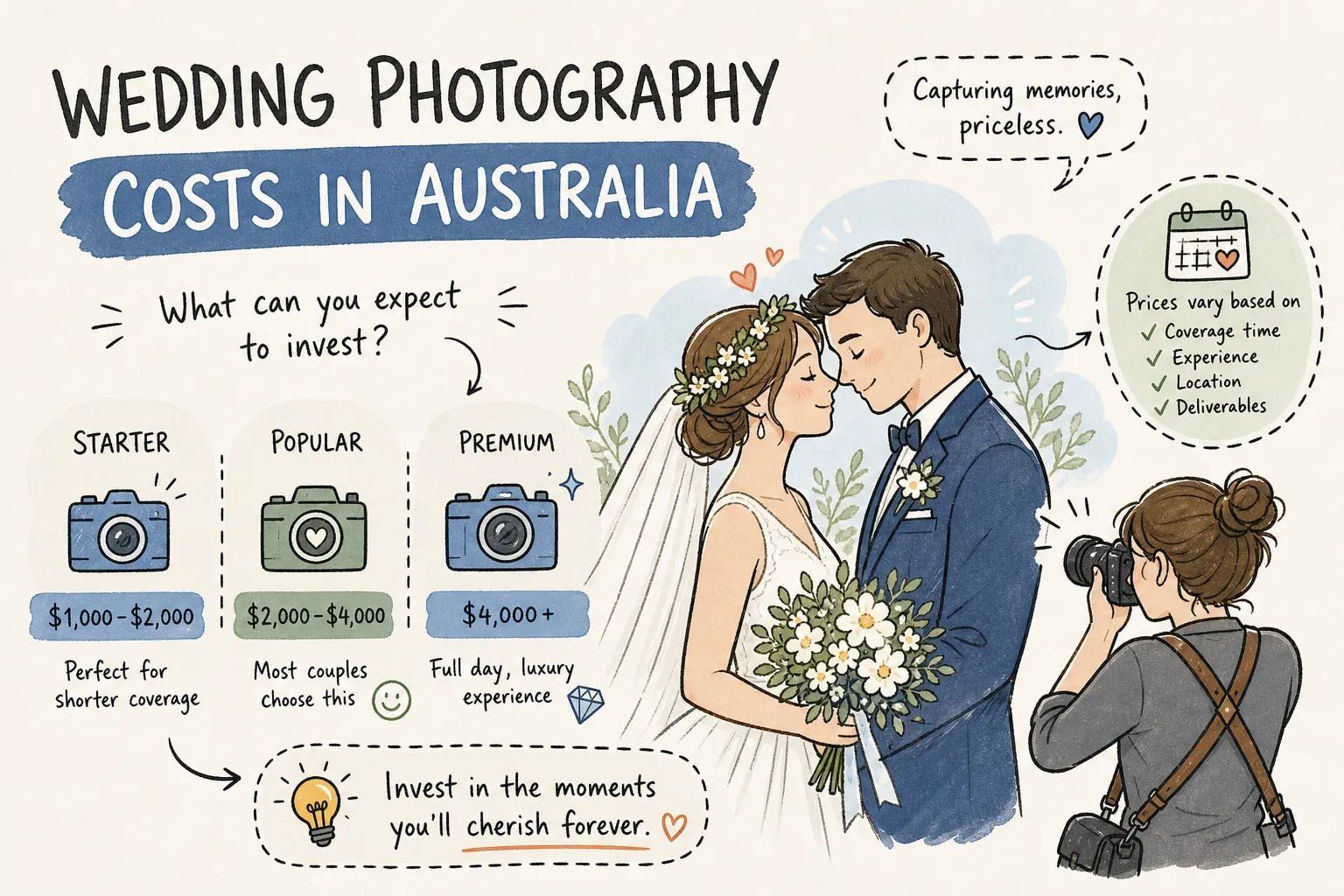
The most useful way to frame your budget is by tier. There are three broad levels in the Australian market, and they reflect real differences in experience, creative reputation, and what’s included in the package.
Budget tier: $1,000 to $2,500
At this level, you’re typically getting three to six hours of coverage, high-resolution digital files delivered via an online gallery, and standard colour correction and exposure editing. There’s usually no second shooter, no physical album, and minimal post-processing beyond the basics. This tier suits intimate ceremonies, elopements, or couples who are prioritising other parts of the wedding budget over photography.
Mid-range tier: $3,000 to $5,500
This is where most Australian couples land. A standard mid-range package covers eight hours of full-day coverage, between 300 and 600 edited images, and a digital gallery with download rights. A second shooter is often available at this level, sometimes included in higher-end packages within the tier, though physical albums are more commonly sold as a paid add-on. Editing quality and turnaround times tend to be more consistent here than at the budget end.
Premium tier: $5,000 to $10,000+
Premium packages typically cover ten to twelve hours of coverage with both a lead and second photographer included, a luxury album, extended editing, and full digital delivery of a larger image set. Premium pricing reflects experience, reputation, and creative style, not just more hours on the clock. Photographers at this level are often booked well in advance, many have lead times of a year or more, and their distinctive style is usually a major factor in the couple’s decision.
Wedding photographer cost by city: Sydney to Adelaide
Geography matters significantly in Australian wedding photography pricing. Where you’re getting married, and where your photographer is based, will move the number considerably from the national average.
Sydney and Melbourne sit at the top
Sydney averages $5,200 to $5,500 or more for a full-day package, making it the most expensive market in the country. Melbourne sits close behind at $4,800 to $5,000. Higher demand, higher cost of living for suppliers, and a more saturated high-end market all push prices up in both cities. If you’re booking a Sydney or Melbourne photographer for a regional venue, expect travel fees on top of those figures.
Brisbane, Perth and Adelaide offer more competitive rates
Brisbane typically averages $4,200 to $4,500, Perth comes in around $4,000, and Adelaide sits closer to $3,600, near or just below the national median. Regional areas within any state tend to offer even more affordable pricing from local photographers, though travel fees can offset those savings if your venue is remote. The core takeaway: your city sets a baseline, and any quote significantly above it deserves a closer look.
What a photography package actually includes
Many couples assume all packages are broadly similar and compare quotes on price alone. That’s how you end up with a cheaper quote that delivers half the images, no second shooter, and no print rights. The details matter.
What’s almost always included
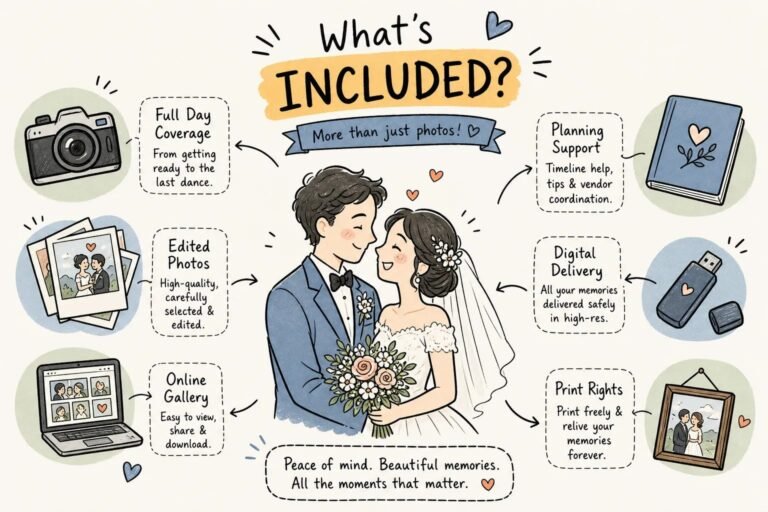
High-resolution digital files, an online gallery for downloading and sharing, and a set number of edited images (typically 300 to 600 for a full day) are near-universal inclusions. Basic colour correction and exposure editing are commonly included across most packages at every tier, though practices can vary by photographer. Most packages also include a pre-wedding consultation, whether in person or via video call.
What’s often sold as an add-on
Second shooters are one of the most common extras, ranging from $170 to $990 depending on how the photographer structures their pricing. Physical albums, fine-art prints, and engagement sessions (commonly around $890) are usually excluded from the base package unless you’re in the premium tier. Drone photography adds roughly $590, RAW file delivery often costs an extra $500 or more, and rush delivery can attract a surcharge of around 20%. Understanding these add-ons before you compare quotes is the difference between an accurate budget and a false economy.
Hidden costs that inflate your final bill
A quote can look perfectly reasonable until you read the contract. These are the costs that regularly catch couples off guard after they’ve already started negotiations.
Travel, accommodation and overtime fees
Most photographers include travel within a limited local radius, typically specified in the contract, and charge per kilometre, a flat fee, or full accommodation costs for anything beyond that. For regional or destination weddings, budgeting for one or two nights of accommodation and meals is realistic. Overtime is typically billed at an hourly rate if the day runs past the contracted end time, and they almost always do.
GST, usage rights and delivery extras
Not every quote is GST-inclusive. Always confirm whether the figure you’re looking at includes GST or has 10% to add on top. That distinction matters on a $4,500 package. Usage rights and licence conditions also vary: most packages include full personal-use rights for the images, but commercial usage or extended print rights may attract a separate charge. Ask specifically about retouching beyond standard edits, rush turnaround fees, and what happens if you want more images edited beyond the contracted set. These questions take five minutes to ask and can save you hundreds of dollars in surprises later.
How to check if a quote is fair before you sign
Getting a quote is the start of the process, not the end. Most couples receive one or two quotes and accept the lowest one without any real benchmark to compare against. That’s not a strategy.
The 10% rule as a starting benchmark
Most Australian planning guides suggest allocating 10 to 15% of your total wedding budget to photography. On a $30,000 wedding, that’s $3,000 to $4,500. Use this as a sanity check against quotes you receive, not as a ceiling. If a photographer you genuinely love quotes $5,500 and you’re planning a $30,000 wedding, that’s not unreasonable. If a quote comes in at $8,000 with no clear explanation of what’s included, that’s worth questioning.
Use independent pricing data to benchmark every quote
Before signing any photography contract, check what other couples in your city are actually paying for equivalent coverage. NameTheCost.com publishes independent Australian cost guides focused on giving consumers a reliable benchmark rather than figures shaped by advertiser relationships. Run every major wedding vendor quote through an independent source before you commit. The time spent doing that is far less painful than discovering a $1,500 travel surcharge in the fine print the week before your wedding.
Get at least three quotes and compare inclusions line by line, not just the total price. Two packages priced at $4,200 can be completely different products once you look at hours, image count, second shooter, and what rights you actually receive.
The bottom line on wedding photography costs
Wedding photographer cost in Australia ranges from under $2,000 to over $10,000, with the national average sitting around $3,567. Your city, the photographer’s experience tier, and exactly what’s in the package drive the most variation. Hidden extras, particularly travel, overtime, and GST, can meaningfully inflate that base price if you don’t ask the right questions upfront.
The practical approach: set your budget using the 10% rule as a guide, get at least three quotes from photographers whose style you actually like, and compare inclusions line by line rather than total price. Use independent resources to benchmark what fair market pricing looks like in your city before you commit to anything. Wedding photography is one of the few things from your wedding day you’ll still be looking at in thirty years, spending half an hour benchmarking the cost before you book is worth it.