Business Owners Policy Average Cost: What Australians Pay
When researching the business owners policy average cost in Australia, most small business owners get a single quote, accept the number, and move on, without questioning whether the cover fits their operation or whether the premium is competitive for their industry. That tendency works in insurers’ favour. This guide exists to give you a more informed starting point.
A Business Owner’s Policy (BOP) is a bundled package that combines public liability, property cover, and business interruption into a single premium. It’s designed for small to medium businesses that want broad protection without managing three separate policies. The catch is that “broad” doesn’t always mean “right for you,” and the price range across different business types is far wider than most people expect before they get their first quote.
This guide breaks down what Australian businesses are actually paying for BOP-style cover in 2026, which factors drive premiums up or down, and whether it makes sense for a home-based side hustle. It’s the same kind of pre-commitment cost audit that NameTheCost.com is built around: understand what things actually cost before you agree to anything.
Business owners policy average cost, quick figures for 2026
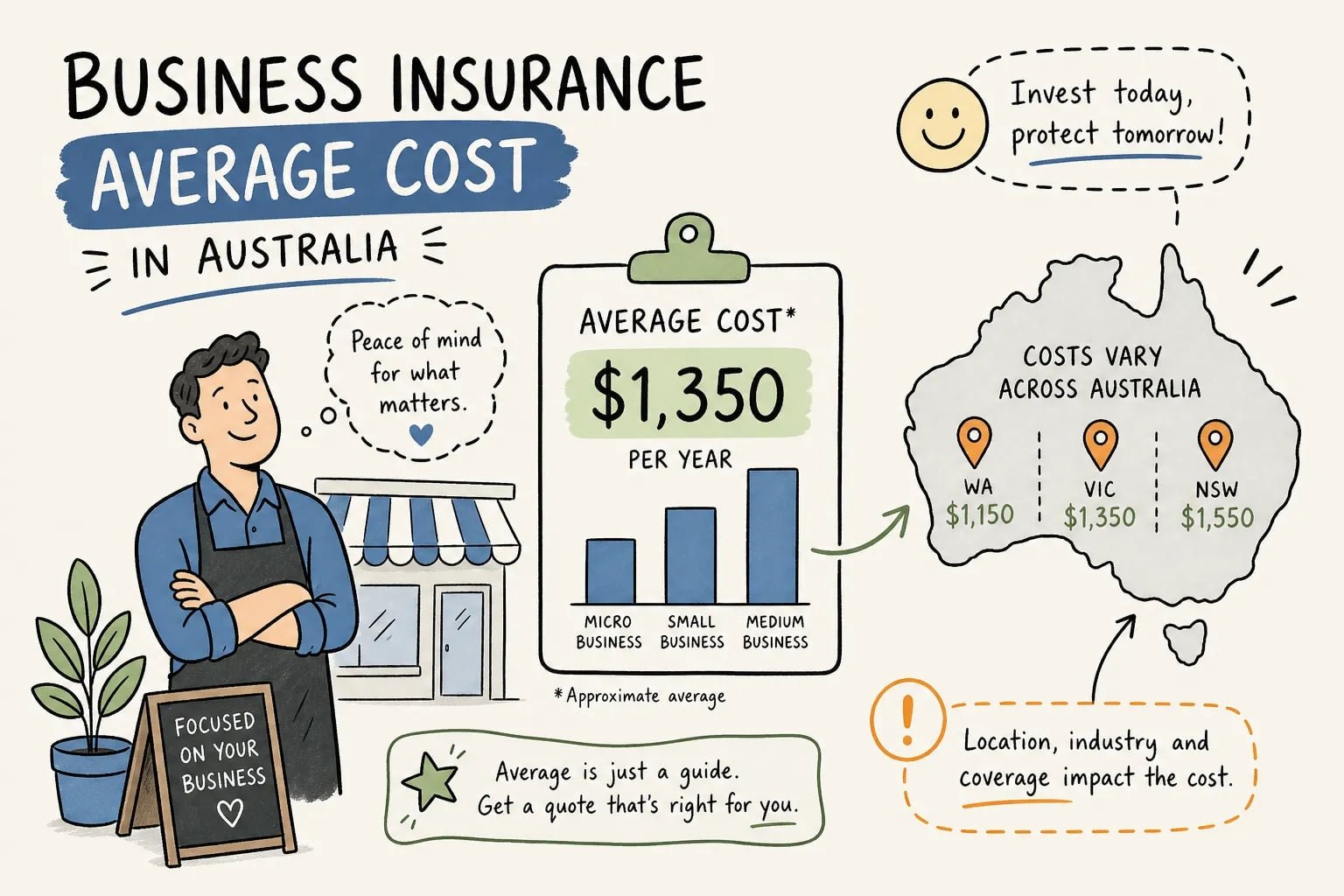
The clearest market benchmark available in Australia for 2026 is roughly $89 per month for a business insurance package, based on BizCover data cited by Compare the Market as of April 2026. That figure applies to a general business insurance package, it is not labelled BOP-specific, so treat it as a directional anchor rather than a precise BOP price. That’s approximately $1,068 per year. It’s a useful starting point, not a ceiling, and not a guarantee for your specific situation.
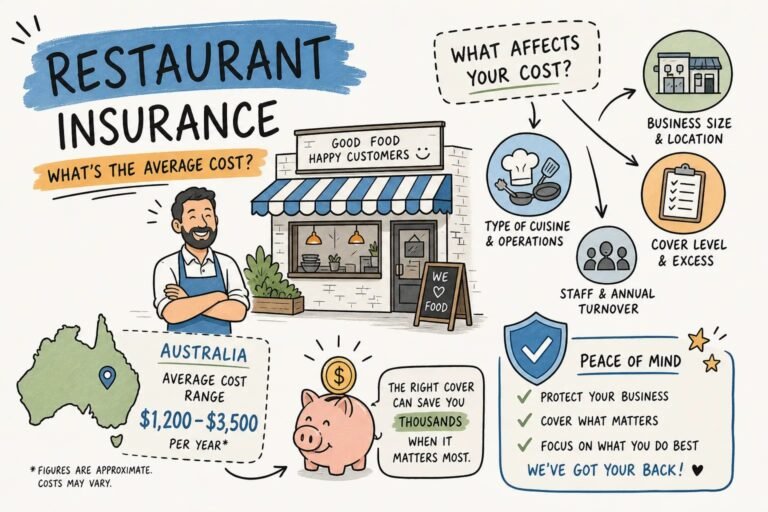
Industry type is the single biggest variable in how that average gets distributed. Consultants and professional services businesses operating from a home office typically sit at the lower end of the range, with some public liability-only quotes starting around $37 per month and BOP-style packages around $86 per month (sourced from insurer and aggregator guides as of April 2026). Retail businesses with foot traffic and stock exposure typically land in the mid-range, often $60 to $152 per month for comparable cover. Hospitality is where premiums climb sharply: restaurants and cafés with high customer volume, food handling, and liquor exposure can pay upwards of $413 per month for an equivalent bundled package. Cover limits, excesses, and product scope vary across these figures, so use them as a business owner’s policy price guide rather than a quote.
Turnover matters almost as much as industry. Insurers treat higher revenue as a proxy for higher exposure: more customers, more transactions, more opportunities for something to go wrong. A consulting business turning over $80,000 per year and one turning over $500,000 will receive meaningfully different quotes even within the same occupational category. The two most powerful levers in your premium are what your business does and how much of it you do.
What a business owner’s policy actually covers in Australia
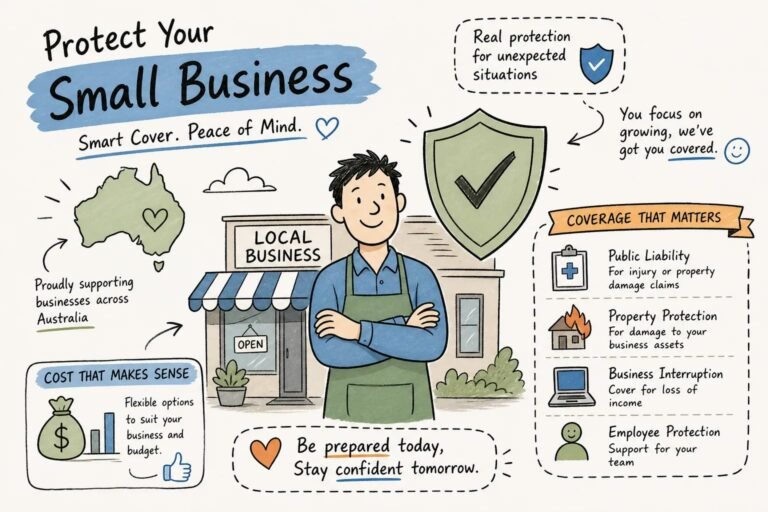
A BOP bundles three core components. Understanding each one helps you work out whether you’re paying for cover you need or cover that looks comprehensive on paper but doesn’t match your actual risk profile.
Public liability is the foundation. It covers your business if you cause injury to a third party or damage their property. If a customer slips on your premises, or a product you sell causes harm, the policy responds. It also covers accidental damage to a client’s property while working on-site. Without public liability, a single claim can cost far more than years of premiums combined.
Property cover and business interruption are what separate a BOP from a standalone public liability policy. Property cover insures your business assets: contents, stock, equipment, and in some cases the building itself. Business interruption cover replaces lost income and covers fixed costs when insured damage shuts down your operations. Bundling these components is often cheaper than purchasing them separately, though the saving depends on the insurer and your specific cover limits, so it’s worth comparing both options when you get quotes.
A standard BOP won’t cover everything, though. Professional indemnity, workers’ compensation, and cyber liability are typically excluded unless you add them as extras. Wear and tear, gradual deterioration, and deliberate acts are also off the table. Knowing those exclusions upfront prevents the specific disappointment of assuming you’re covered when a claim gets rejected.
What pushes your premium higher (and what pulls it down)
Claims history is a direct driver. Insurers treat your claims history as a direct predictor of future risk, and that logic is built into every renewal. One significant claim in the past three to five years will push your renewal quote up, sometimes by an amount that outweighs the original payout.
Location plays a role that most business owners underestimate. Businesses in postcodes with higher crime rates, known flood exposure, or elevated natural hazard risk attract higher property premiums. Australian insurers and aggregators routinely flag postcode-level hazard data as a rating factor, and the impact can be material depending on your location. The sum insured compounds this: the more coverage you want, the more you pay. Opting for a low excess also increases your premium, because you’re asking the insurer to absorb more of each claim.
The levers that reduce your premium are specific and controllable. A higher excess is the most straightforward: take on more of each small claim yourself and the insurer’s exposure drops, which usually translates directly to a lower premium. Installing monitored security systems, fire alarms, and documented safety procedures signals lower risk to underwriters. Reviewing your sums insured annually removes assets you no longer own and prevents you from paying for cover that’s drifted above your actual exposure.
Business owners policy average cost by industry: what the figures show
The $89 per month figure cited above gives a useful midpoint, but the spread by industry is significant enough that relying on a single average can mislead. A retail business and a hospitality business with similar turnovers can face premiums that differ by a factor of four or more. If you’re researching what a fair business insurance premium calculator result might look like for your sector, the industry-specific ranges above are a more relevant benchmark than the overall average.
What the numbers consistently show is that the cost of a business insurance policy tracks closely with customer-facing risk, physical asset value, and the volume of daily transactions, regardless of whether the cover is packaged as a BOP or assembled from separate components.
Is a BOP worth it for a home-based side hustle?
The honest answer depends on what your side hustle actually does. If clients visit your home, if you sell physical products that could cause harm, or if you store business stock and equipment worth more than a few thousand dollars, a BOP is worth serious consideration. Your home contents policy almost certainly won’t cover business assets or liability arising from commercial activity. That gap only becomes obvious after a claim gets rejected, which is the worst possible moment to discover it.
If you’re a freelance writer, an online consultant, or a digital service provider working entirely online with no physical products and no clients on-site, a full BOP is probably more than you need right now. A standalone public liability policy or a professional indemnity policy, depending on your field, may be the right-sized option. Buying the biggest package because it feels safer is understandable, but it’s not always the smartest use of a limited startup budget.
Beyond the cover question itself, disclosure matters regardless of what you buy. Failing to declare that you’re running a business from home can affect claims across the board, including your home insurance. Non-disclosure to save on premiums can void your cover entirely, the financial exposure dwarfs any short-term saving.
Five practical ways to reduce your BOP cost without gutting your cover
1. Raise your excess deliberately
Choosing a higher excess is not cutting corners. It’s acknowledging that you can absorb small losses yourself and don’t need the insurer to step in for minor incidents. Some small businesses opt for a $1,000 or even $2,500 excess, whether that’s viable depends on your cash reserves and risk tolerance, but the premium saving can be proportionally significant. Run the numbers on your specific quote before assuming the lowest excess is always the right choice.
2. Bundle only the cover you actually use
The default BOP package is designed to cover the average business, not yours. Review each component and remove extras that don’t apply to your operation. If you have no business-owned vehicles, don’t pay for motor cover. If you carry minimal stock, reduce your contents sum insured to reflect reality rather than a worst-case scenario you’ll never hit.
3. Improve your premises security and document it
Physical security upgrades and documented safety procedures signal lower risk to underwriters. Some insurers ask about these directly; others factor them into their rating algorithm without prompting. The investment in better security tends to pay back in premium reductions over time, particularly for businesses with higher property exposure.
4. Protect your claims-free record where you reasonably can
Not every minor incident needs to become a formal claim. Weigh the cost of lodging a small claim against the likely premium increase at renewal. A run of claims-free years builds a track record that earns you better rates, especially with the same insurer. The maths on small claims often favours self-funding the loss rather than triggering a loading that compounds across multiple renewals.
How to reduce business owners policy average cost: get competing quotes at every renewal
Loyalty doesn’t always pay in commercial insurance. Insurers reprice their books regularly, and the market can shift significantly year to year. Running your renewal through a broker or a comparison platform every 12 months takes less than an hour and can reveal material savings. Staying with the same insurer out of inertia is a habit that benefits the insurer, not you.
Audit your full business costs before you commit to any policy
Insurance premiums are one line on a longer list of recurring business costs. SaaS subscriptions, accounting software, payment processing fees, compliance costs, and registration expenses all add up. Most side hustlers underestimate their total ongoing cost load before they’ve made their first dollar, and that miscalculation can make even a well-priced BOP feel unaffordable later.
NameTheCost.com is an independent Australian resource built for exactly this kind of pre-launch cost audit. It covers business costs, software subscriptions, professional service fees, and more. If you’re about to launch a side hustle or a small business and want an honest picture of what you’re committing to across every cost category, use it before you start locking in recurring expenses, not after.
The bottom line on BOP pricing in Australia
Understanding the business owners policy average cost in Australia is useful, but it’s only meaningful in context. When comparing quotes, use the business owners policy average cost benchmark of $89 per month as a starting point, a reasonable anchor for comparison, not a number to accept uncritically. Your industry, your turnover, your claims history, and your actual risk profile will all shift that figure materially in one direction or the other.
The goal isn’t to spend the least possible on insurance. It’s to spend what your actual risk warrants, with cover that genuinely matches your operation and an excess you can comfortably absorb. Start with a clear picture of your full cost structure, get at least three competing quotes, and make the decision with your eyes open.